

If your sofa is looking frayed and your armchair has become a claw magnet, you are not alone. Wanting to stop cat scratching furniture is one of the most common frustrations for cat owners in Singapore, especially in compact HDB flats where every piece counts. The good news is that scratching is a normal, healthy behaviour, not spite, and with a little patience you can redirect it to something your cat is allowed to shred.
This is a general guide to humane, positive methods. It is not a substitute for advice from your own vet, and if your cat’s scratching suddenly increases or changes, a check-up is worth booking.
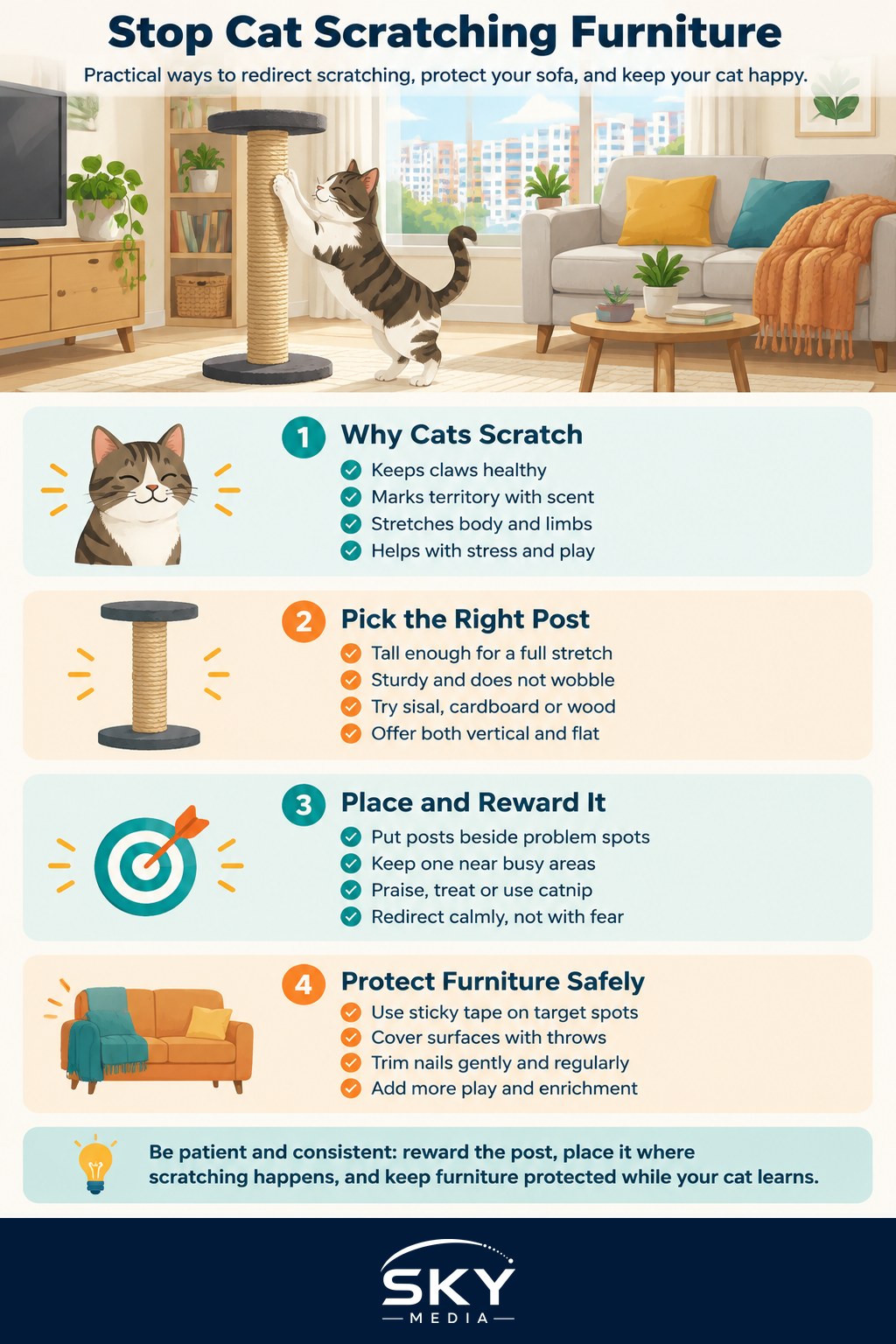
Why Cats Scratch in the First Place
Scratching is hardwired into cats. Understanding the reasons behind it makes redirection far easier, because you can offer a better outlet rather than simply saying no.
- Claw care. Scratching removes the worn outer sheaths of the claws and keeps them healthy.
- Marking territory. Cats have scent glands in their paws, so scratching leaves both a visible mark and a scent signal that says this space is theirs.
- Stretching. A good vertical scratch is a full-body stretch for the shoulders, back and legs.
- Stress relief and play. Scratching helps a cat burn energy and settle emotions, much like a person tapping a foot.
Because scratching meets real physical and emotional needs, punishing it does not work and can make a cat anxious or fearful of you. The aim is never to stop the behaviour, only to move it somewhere acceptable.
Choosing Scratching Posts Your Cat Will Actually Use
The single biggest reason a cat ignores a scratching post is that the post does not suit it. Cats have strong preferences, and matching those preferences is what makes redirection stick.
Look for these features:
- Height and sturdiness. A vertical post should be tall enough for your cat to stretch fully, and heavy or well-anchored so it does not wobble or tip. A shaky post feels unsafe and gets abandoned.
- The right texture. Many cats love sisal rope or sisal fabric. Others prefer cardboard, carpet or bare wood. If you are unsure, offer a couple of textures and watch which one your cat returns to.
- Vertical and horizontal options. Some cats scratch upright, others crouch and scratch flat. If your cat targets a rug or the base of the sofa, a horizontal cardboard scratcher may suit better than a tall post.
- Enough of them. One post for the whole home is rarely enough, particularly in a multi-cat household. Spreading a few around removes competition and gives every cat a legal outlet.
If you would like a deeper look at what your cat is telling you through posture and habits, our guide to reading your cat’s body language pairs well with this one.
Placement and Redirection That Works
Even a perfect post fails if it is hidden in a spare room your cat never visits. Placement is half the battle.
- Put posts where the scratching already happens. If your cat attacks the corner of the sofa, stand a post right next to it. You are competing with a spot your cat already likes, so make the alternative more convenient, not less.
- Use social hot spots. Cats often scratch near where they sleep, eat or greet you. A post by the bedroom door or the living room tends to get used far more than one tucked away.
- Make the post rewarding. Praise your cat, offer a treat, or dangle a toy near the post so the first scratches there feel great. A light sprinkle of catnip or a wand toy played against the post can spark interest.
- Reward the right choice, ignore the wrong one. When your cat uses the post, respond warmly. When it heads for the sofa, calmly interrupt by redirecting attention to the post rather than shouting or spraying water, which only teaches your cat to fear you.
Never consider declawing. It is the amputation of the last bone of each toe, it is inhumane, and it is banned or restricted in many places. It causes lasting pain and behaviour problems and does nothing to address why a cat scratches. Positive redirection and regular, gentle nail trims are the responsible route, and your vet can show you how to trim safely.
Protecting Furniture While Your Cat Learns
While new habits form, you can make the furniture itself less appealing without harming your cat.
| Approach | How it helps | Keep in mind |
|---|---|---|
| Double-sided sticky tape on target spots | Cats dislike the tacky feel and move on | Test on fabric first; it is a temporary aid |
| Furniture covers or throws | Shields the surface and changes the texture | Pair with a post nearby so scratching has an outlet |
| A post placed against the target zone | Offers a better option in the exact spot | Only works if the post suits your cat |
| Regular gentle nail trims | Reduces damage from any stray scratches | Ask your vet to demonstrate safe technique |
| More play and enrichment | Burns energy that might fuel scratching | Aim for short daily sessions |
Avoid citrus sprays, chilli or any product marketed as a deterrent unless you have checked it is safe, because some substances irritate a cat’s skin, eyes or airways. When in doubt, changing the surface and offering a better alternative is safer than applying anything to your cat’s environment.
When Scratching May Signal Something More
Most furniture scratching is ordinary behaviour. Occasionally, though, a sudden change is worth attention. See a licensed vet if you notice any of the following, because these can point to stress, discomfort or a medical issue rather than simple habit:
- A calm cat that suddenly starts scratching far more than usual
- Scratching paired with over-grooming, hiding, appetite changes or toileting problems
- Signs of pain when the paws are touched, or limping
- New scratching that begins after a house move, a new pet or another big change
A vet can rule out pain or illness, and if the cause turns out to be anxiety, they can suggest a humane behaviour plan. Sudden behaviour changes are always worth a professional look rather than guesswork.
Redirecting a cat away from the furniture takes a week or two of consistency, not force. Give your cat posts it genuinely likes, put them where the action is, reward the right choices, and protect the furniture gently in the meantime. Most Singapore households find the sofa is safe again once the cat has somewhere better to sink its claws.
Explore more
Scratching is only one piece of feline behaviour. If you are welcoming a new pet, see our guide to introducing a new cat, and for homes with more than one cat, multi-cat household harmony covers sharing space and resources so scratching and squabbles stay to a minimum.
Frequently Asked Questions
Is it okay to trim my cat’s claws to protect the sofa? Yes, regular gentle trims of just the tips can reduce damage and are a humane choice, unlike declawing. Go slowly, reward calm, and avoid the pink quick. Ask your vet or a groomer to demonstrate the first time.
How long does it take to train a cat to use a scratching post? Many cats take to a well-placed post within days or a couple of weeks, though some need longer. Consistency matters more than speed. Reward each use and adjust the type, height or location if your cat keeps ignoring it.
What if my cat scratches the post but still scratches the sofa? Cats often scratch in more than one place, so keep posts near the sofa spots and make the furniture less appealing with covers or tape. Add a second style, such as a horizontal scratcher, and keep rewarding use of the right items.
Do scratch deterrent sprays or pheromone diffusers work? Results vary, and some sprays can irritate a cat’s nose, eyes or skin, so check that a product is made for cats first. Pheromone diffusers help some cats feel calmer, but they do not replace a good post. Ask your vet before trying.
Why does my cat scratch the wall or door frame? Cats scratch vertical surfaces to stretch, mark scent and relieve stress, and a door frame sits at a convenient spot to claim. Place a tall, sturdy post right there and reward use. If it starts suddenly, check for stress or discomfort with a vet.
Further reading: Teaching Your Cat to Use a Scratching Post · Stopping Cat Spraying and Marking in Your Home