
Total Defence Day on 15 February marks the anniversary of the fall of Singapore in 1942, and each year it is a reminder that a resilient country is built partly in ordinary homes. One of the simplest things a household can do is keep a modest emergency food supply at home, enough to ride out a short disruption calmly without rushing to the supermarket with everyone else.
This guide explains how to size a sensible buffer for an HDB flat, how to rotate it so nothing goes to waste, and why a steady, everyday approach beats panic buying. It is general information; for official preparedness advice, refer to SCDF and the SGSecure resources.
Why a Pantry Buffer Fits the Total Defence Idea
Total Defence is Singapore’s whole-of-society approach to security, built around pillars that include Military, Civil, Economic, Social, Psychological and Digital Defence. Civil Defence in particular is about households and communities being able to look after themselves and each other during a crisis.
A pantry buffer supports this in practical ways:
- It keeps your family steady during short disruptions, such as a building water shutoff, a period of illness at home or supply hiccups.
- It reduces pressure on shops. When households already have a few days of supplies, there is less of a rush that empties shelves for others.
- It frees you to help. If your own needs are covered, you can check on an elderly neighbour instead of queueing.
Singapore also keeps national stockpiles of essentials, including rice, through government schemes. A home buffer is not a substitute for those systems; it simply makes your household more comfortable and less reliant on last-minute trips.
How Much to Keep: Thinking in Person-Days
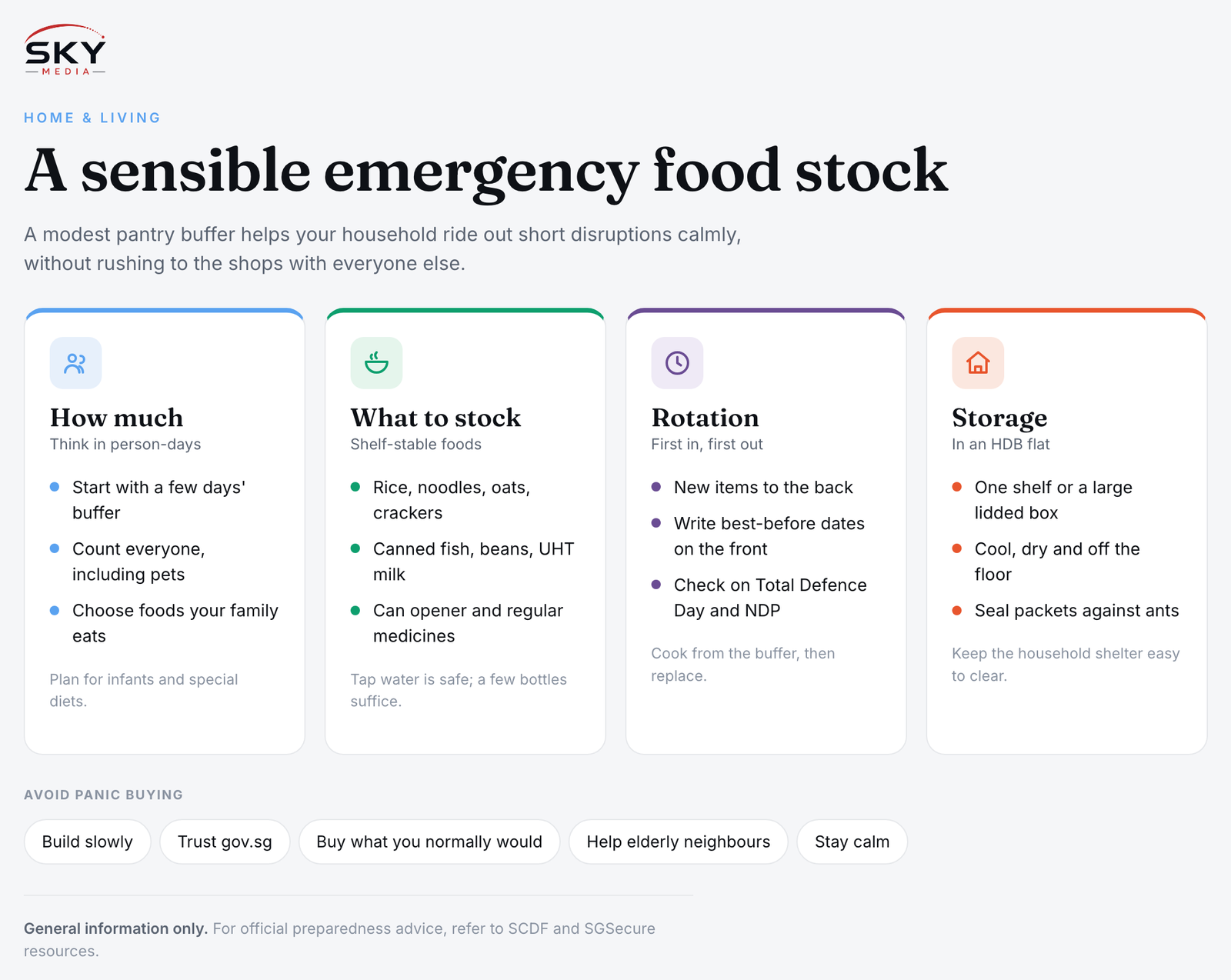
There is no single official quantity for every home, so a practical approach is to think in “person-days”. Decide how many days you want to cover, then multiply by the number of people in your household.
- Start small. A buffer of a few days is a reasonable starting point for most HDB households, and easy to store.
- Count everyone. Include children, elderly parents, a domestic helper and pets.
- Plan for real meals. Choose foods your family already eats, so the stock gets used and rotated.
- Consider dietary needs. Infants, people with diabetes or food allergies, and those with religious dietary requirements need specific items.
For water, Singapore’s tap water is safe to drink and supply is very reliable, so you do not need large tanks. A few bottles or a couple of clean, food-grade containers per person cover drinking and basic cooking during a short interruption such as a planned shutoff. Our guide on handling a water shutoff in your building explains how to prepare for those.
What to Stock in a Small Flat
Focus on foods that store well at room temperature, need little or no cooking, and that your household genuinely likes.
- Staples: rice, noodles, oats, bread alternatives such as crackers
- Proteins: canned fish, canned chicken, canned beans, peanut butter, UHT milk or soy milk
- Fruit and vegetables: canned or dried fruit, canned vegetables, long-life fruit juices
- Ready-to-eat items: instant noodles, cereal bars, ready-to-eat meals in shelf-stable packs
- Basics: cooking oil, salt, sugar, sauces, coffee, tea, Milo or similar drinks
- Non-food essentials: a manual can opener, disposable cutlery, rubbish bags, wet wipes and medicines your family already takes regularly
For electricity disruptions, a portable gas stove can be useful, but only use it in a well-ventilated area and follow the manufacturer’s safety instructions. It is also worth pairing your pantry with a basic tech emergency kit, such as a torch and power bank.
Rotation: First In, First Out
The biggest problem with emergency stocks is not having too little; it is forgetting about them until everything has expired. Rotation keeps your buffer fresh without wasting money.
- Use first in, first out. Put new purchases at the back and move older items to the front.
- Write dates clearly. Use a marker to write the best-before date on the front of each item.
- Shop from your buffer. Cook from the stock regularly, then replace what you used on your next normal shopping trip.
- Check twice a year. Pick two easy-to-remember dates, such as Total Defence Day in February and National Day in August.
- Replace stored water. Refresh water in your own containers regularly, and follow the best-before date on bottled water.
| Item type | Storage considerations | Rotation tip |
|---|---|---|
| Rice and dry noodles | Airtight containers to keep out humidity and pests | Use and refill as part of normal cooking |
| Canned food | Cool, dry spot; discard dented, bulging or rusty cans | Write the best-before date on the front |
| UHT milk and long-life drinks | Keep out of direct sunlight | Use in daily breakfasts and replace weekly |
| Bottled or stored water | Away from heat and chemicals, in food-grade containers | Refresh stored water regularly |
| Snacks and ready meals | Sealed packs in a cool cupboard | Pack into school or work bags before expiry |
Storing It All in an HDB Flat
Space is tight in most flats, but a few days of supplies does not need much room.
- Use one dedicated shelf or a large lidded box. Keeping everything together makes rotation easy.
- Keep it cool and dry. Avoid storing food next to the stove, in direct sunlight or near the washing machine. Our article on keeping food safe from spoiling in hot weather explains why heat and humidity matter.
- Store off the floor. A shelf or crate keeps items away from spills and pests.
- Use the household shelter sensibly. Many families store items in the household shelter. If you do, keep it tidy so it can be cleared quickly in an emergency, and follow SCDF’s guidance on keeping the shelter usable.
- Seal everything. Ants and weevils find their way into open packets quickly in Singapore’s climate.
Avoiding Panic Buying
When news of a disruption breaks, it can be tempting to rush to the shops. Panic buying creates artificial shortages, pushes elderly and lower-income neighbours out of the queue, and often leaves households with food they do not need.
A steady approach works better:
- Build your buffer slowly, adding a few items to each regular shopping trip.
- Trust official sources. Follow updates from government agencies rather than forwarded messages, and check gov.sg channels during a crisis.
- Buy only what you normally would when supplies are tight, so there is enough for everyone.
- Look out for others. Elderly neighbours or relatives may need help preparing their own buffer. Our guide on preparing a home emergency plan for seniors can help.
A sensible emergency food supply at home is not about fear. It is about being calm, prepared and ready to help others. Start small, rotate regularly and check your stock each Total Defence Day, and your household will be ready for most everyday disruptions.