
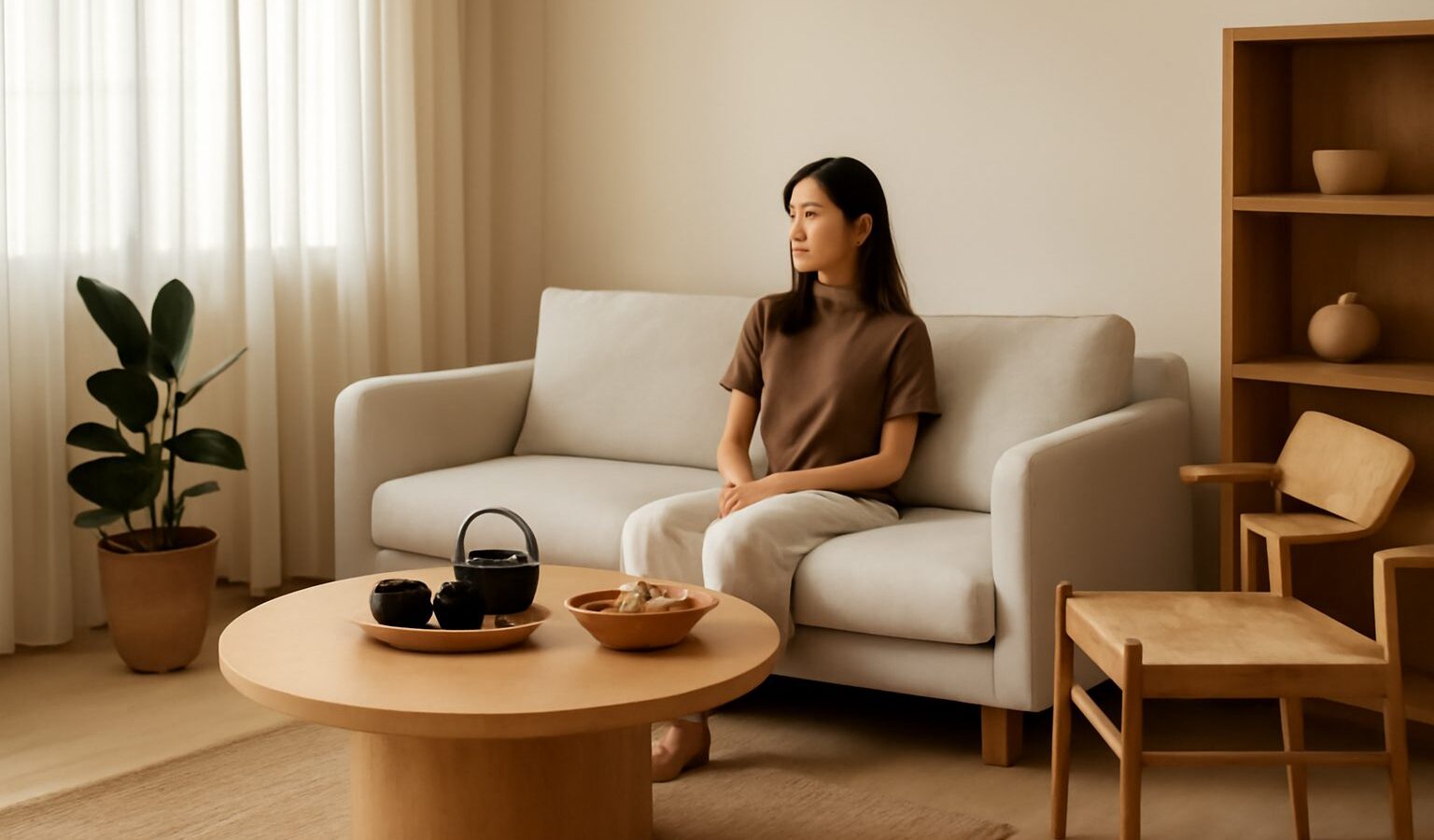
Japandi interior design in Singapore has become a quiet favourite for good reason. It marries the calm, natural restraint of Japanese design with the cosy, functional warmth of Scandinavian style, and the result is a home that feels serene without turning cold. For a typical HDB flat, where floor space is tight and clutter builds up fast, that balance is exactly what most of us are after. Best of all, the look leans on texture, light and careful editing rather than expensive furniture, so it suits owners and renters alike.
This guide walks through the ideas that make Japandi work, the palette and materials to reach for, and simple, rental-friendly ways to bring it into a three-room, four-room or BTO flat here.
What Makes Japandi Different From Plain Minimalism
Japandi is often mistaken for stark minimalism, but the two are not the same. Minimalism can feel clinical, all white walls and empty corners. Japandi keeps the discipline of fewer objects, then adds warmth back in through natural wood, soft textiles and gentle, earthy tones. It is sometimes called warm minimalism, and that phrase captures the feeling well.
Three ideas sit at its heart:
- Wabi-sabi: an appreciation of the imperfect and handmade. A slightly uneven ceramic bowl or a linen throw with natural creases is welcome, not a flaw.
- Functionality: every piece earns its place. Storage is built in and tidy, surfaces stay clear.
- Connection to nature: wood grain, stone, rattan, cotton and linen bring the outdoors in, which suits our tropical setting nicely.
The upshot for an HDB flat is a home that looks intentional and restful. You are not buying more; you are choosing better and keeping less.
Getting the Japandi Colour Palette Right
Colour does most of the heavy lifting here, and it costs little to get right. Japandi palettes stay muted and grounded, so the eye can rest.
Start with a neutral base on the walls: warm white, oatmeal, soft greige or a pale clay tone. These bounce our strong natural light around and make a compact living room feel larger. Avoid cool, blue-tinged whites, which can read as sterile.
Layer in deeper accents through furniture and textiles rather than paint: charcoal, ink black, muted sage, terracotta and the honey and walnut browns of wood. Keep the whole scheme within a narrow band of tones so nothing shouts. A useful rule is to pair light Scandinavian woods, such as oak and ash, with one or two darker Japanese-inspired notes, like a black-framed mirror or a dark stained shelf, for contrast.
If you rent and cannot paint, work the palette through a large rug, curtains, cushion covers and a throw. The room will read Japandi even with the landlord’s white walls untouched.
Furniture, Materials and Textures That Work
Japandi furniture tends to sit low, with clean lines and visible legs that let light travel underneath, so the floor stays visible and the room feels airy. In a small flat this openness matters more than you might expect.
Reach for natural materials and mix them so the space feels layered rather than flat:
- Wood: oak, ash, walnut or bamboo for tables, shelving and bed frames.
- Rattan and cane: for a headboard, cabinet fronts or a lounge chair, adding gentle pattern.
- Textiles: linen and cotton in curtains, bedding and cushions; wool or jute for a rug.
- Stone and ceramic: in a vase, tabletop pieces or lamp bases for weight and calm.
- Paper and matte metal: rice-paper style pendant lamps and black or bronze fixtures.
Keep upholstery simple and neutral, and choose matte finishes over gloss. In our humidity, natural fibres like linen and cotton also breathe better than synthetics, which is a practical bonus.
Where to shop locally without overspending: IKEA covers the Scandinavian side well, from oak-veneer storage to linen curtains. Taobao is strong for rattan pieces, ceramics and paper lamps at low cost, though check dimensions carefully. Muji suits the pared-back accessories, and local carpenters can build low, flush storage if you are renovating. Second-hand solid-wood pieces from Carousell fit the wabi-sabi spirit beautifully.
Styling an HDB Flat Room by Room
The principles stay the same across the home; only the details shift.
Living room. Float a low sofa and coffee table on a large natural-fibre rug. Keep one considered feature, perhaps a wood-slat panel or a single piece of art, and leave the rest of the walls calm. Hide cables and clutter in closed storage so surfaces stay clear.
Bedroom. A low platform bed, linen bedding in oatmeal or muted sage, and soft, layered lighting create real restfulness. Skip the bright ceiling light at night in favour of a warm bedside lamp.
Dining and kitchen. A solid-wood table with simple chairs, handmade ceramics on open shelving, and a paper pendant overhead pull the look together. Store small appliances behind cabinet doors.
Balcony or service yard. A single rattan chair, a stone pot and a leafy plant make a quiet corner. This is styling, not gardening, so keep it to one or two green touches for that link to nature.
Lighting deserves a special mention. Japandi loves warm, diffused light, so choose bulbs around 2700K to 3000K and layer floor and table lamps instead of relying on a single harsh downlight.
Comparing Japandi With Related Styles
If you are weighing Japandi against the other pared-back looks people favour in HDB flats, this quick comparison helps you choose what fits your home and habits.
| Style | Palette and mood | Materials | Best for |
|---|---|---|---|
| Japandi | Warm neutrals with dark accents, calm | Wood, rattan, linen, ceramic | Owners who want cosy, restful minimalism |
| Scandinavian | Light, bright, airy | Pale wood, wool, soft pastels | Small, dim flats needing more brightness |
| Muji-style | Very neutral, understated | Beech, cotton, simple storage | Renters and budget, low-fuss homes |
| Industrial | Dark, raw, moody | Concrete, metal, exposed brick | Bold owners with larger, well-lit spaces |
There is no wrong answer, and many flats blend two of these. Japandi in particular sits comfortably next to Scandinavian and Muji-style choices, so you can borrow freely.
Keeping It Practical in Our Climate
A few tropical realities are worth planning for. Solid wood can move with humidity, so seal and oil timber pieces and keep them out of direct afternoon sun by the window. Natural fibres like rattan and jute can attract mould in damp corners, so keep air moving with fans or the aircon on dry days, and wipe down surfaces during the monsoon months. Choose washable linen and cotton covers so cushions and throws stay fresh.
Because Japandi relies on tidiness, invest your effort in good, closed storage rather than more decor. When everything has a home, the calm looks after itself.
Explore More
If you like the pared-back mood, compare it with our guide to Scandinavian interior style for HDB homes and the even more understated Muji-style minimalist home ideas. To finish the look, see how to choose paint colours for your HDB flat and the right rugs and carpets for your home.