
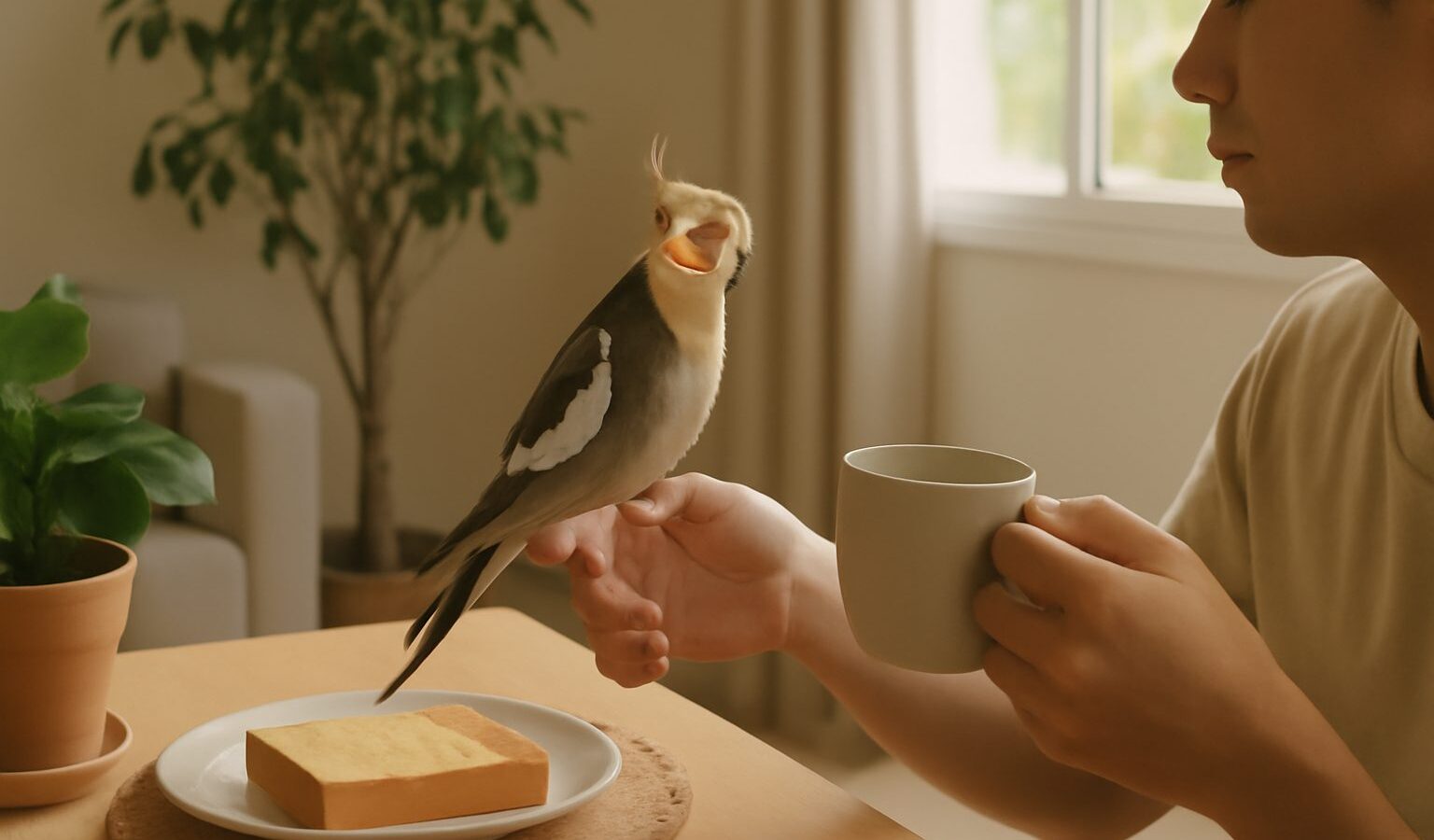
With their soft grey feathers, cheeky orange cheeks and expressive crest, cockatiels are among the most beloved companion birds in the world. They whistle, they mimic, they bond deeply with their people, and they can live for many years. If you are thinking about keeping a cockatiel in Singapore, that longevity is the first thing to take to heart. A cockatiel is a long-term companion, often for well over a decade, not a passing novelty. Welcomed thoughtfully into the right home, they are affectionate, intelligent and endlessly entertaining birds.
This guide offers general, caring advice on their needs. It is not veterinary advice, so for health concerns please consult a vet experienced with birds. Cockatiels hide illness well, and prompt professional care can make all the difference.
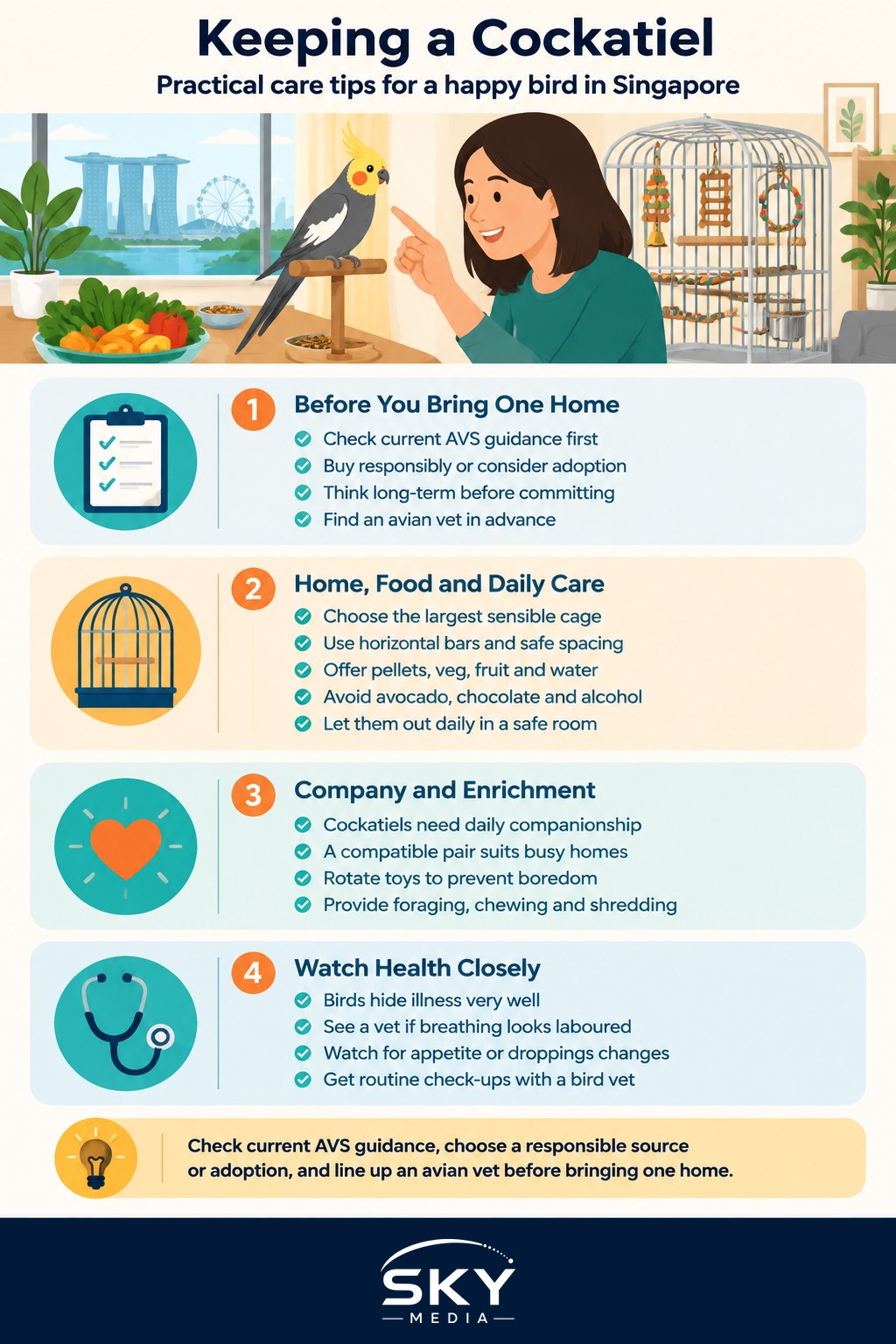
Before You Bring One Home
A little responsible groundwork sets you and your bird up for a happy life together.
First, check the rules and source responsibly. In Singapore, only certain animals may legally be kept as pets, so confirm the current Animal and Veterinary Service (AVS, under NParks) guidance before getting any bird. Cockatiels are generally kept here, but it remains your job to check the up-to-date position. When you do get one, buy only from a reputable, responsible source, and seriously consider adopting, as rescues and rehoming groups sometimes have cockatiels and other birds looking for a second chance. Choosing to adopt, or at least to source ethically, matters just as much for birds as it does across pet keeping, a theme we explore in adopting vs buying a pet.
Second, be honest about the commitment. Cockatiels need daily interaction, a proper diet, cleaning, enrichment and years of your time and money. They are social flock animals and can become lonely, stressed or feather-plucking if neglected. If your household cannot offer daily attention for the long haul, it is kinder to wait. Our guide to choosing the right pet for your lifestyle is a good honest gut-check before you commit.
Finally, plan to register with a vet who sees birds. Find an avian-experienced vet before you need one, and budget for a check-up and for any illness down the line.
Housing, Diet and Daily Care
Cockatiels are active birds that need room to move, stretch and flap. Choose the largest cage you sensibly can, wider rather than tall, with horizontal bars they can climb and safe bar spacing. Fit it with perches of varying natural thickness to keep feet healthy, food and water dishes, and plenty of toys. Place the cage in a lively but not chaotic part of the home, away from draughts, direct sun and the kitchen, as fumes from non-stick cookware and aerosols are dangerous to birds. Time out of the cage in a safe, bird-proofed room is essential too, so daily supervised freedom to fly and explore keeps a cockatiel physically and mentally well.
Diet is where many pet birds are unintentionally let down. An all-seed diet is like living on chips, and it leads to obesity and poor health over time. Aim instead for variety and balance:
- A good-quality formulated pellet as the everyday base, where your bird will accept it.
- A range of fresh vegetables and some fruit, offered daily and removed before they spoil.
- Seeds as a smaller part of the diet or as treats, not the whole meal.
- Clean, fresh water changed every day.
- A cuttlebone or mineral source for calcium.
Never feed avocado, chocolate, caffeine, alcohol or very salty foods, as these are toxic to birds. If you are unsure how to transition a seed-addicted bird onto a better diet, your avian vet can guide you.
Keep the environment clean with daily dish washing and regular cage cleaning, and offer bathing opportunities such as a shallow dish or a gentle misting, which cockatiels often enjoy.
Company, Enrichment and Health
Cockatiels are flock animals to their core, and companionship is not optional for them, it is a genuine welfare need. If you can offer plenty of daily interaction, a single cockatiel can bond wonderfully with you. If your schedule is busy, keeping a compatible pair means they always have company. Either way, talk to them, whistle with them, and make them part of family life.
Enrichment keeps that bright mind occupied. Rotate toys to prevent boredom, offer foraging opportunities so they work for treats, and provide safe things to chew and shred. A bored cockatiel can develop problem behaviours such as screaming or feather-plucking, which are often signs of unmet needs rather than naughtiness. For broader ideas on housing and stimulating birds well, our guides to keeping pet birds in Singapore and setting up an aviary for pet birds are useful companions.
On health, watch your bird closely every day. Because birds instinctively mask illness, subtle changes can be the only early clue. Signs that warrant a prompt visit to an avian vet include fluffed-up sitting, tail-bobbing or laboured breathing, loss of appetite, changes in droppings, discharge from eyes or nostrils, or sudden feather-plucking. Any bird that seems unwell should be seen quickly, as they can deteriorate fast. Routine check-ups with an avian vet help catch problems early and keep your companion in good shape.
A Delightful Long-Term Friend
Give a cockatiel a roomy cage, a balanced diet, daily company and enrichment, and attentive care from an avian vet, and you will gain a charming, devoted little friend for many years. Come to that relationship with responsibility, checking AVS rules, sourcing ethically or adopting, and committing to their daily needs, and you will be rewarded with whistles, head scratches and the gentle companionship these lovely birds are famous for.
Frequently Asked Questions
Can a cockatiel learn to talk or whistle tunes? Cockatiels are better known for whistling and mimicking sounds than clear speech, and males tend to be the more talented. Many pick up tunes if you whistle regularly. Individual birds vary, so patience and daily interaction matter more than expectations.
Should I keep one cockatiel or a pair? A single bird can bond closely with you if you give plenty of daily interaction. If your schedule is busy, a compatible pair keeps each other company, though they may focus less on you. Whichever you choose, plan for the full cost and care.
Why is my cockatiel plucking its feathers or screaming? Both are often signs of unmet needs such as boredom, loneliness, poor diet or stress, though illness can also play a part. Review enrichment, company and diet, and see an avian vet to rule out health causes.
How do I get a seed-only cockatiel to eat pellets and vegetables? Change the diet gradually, mixing small amounts of pellets with the usual seed and offering fresh vegetables daily. Patience helps, because some birds refuse new foods at first. Never starve a bird into switching, and ask your avian vet for a plan.
Which household items are dangerous to cockatiels? Fumes from non-stick cookware and aerosol sprays are dangerous to birds, so keep the cage away from the kitchen. Avocado, chocolate, caffeine, alcohol and very salty foods are toxic. Bird-proof the room for out-of-cage time, covering mirrors and closing windows.
Official sources: Animal & Veterinary Service