
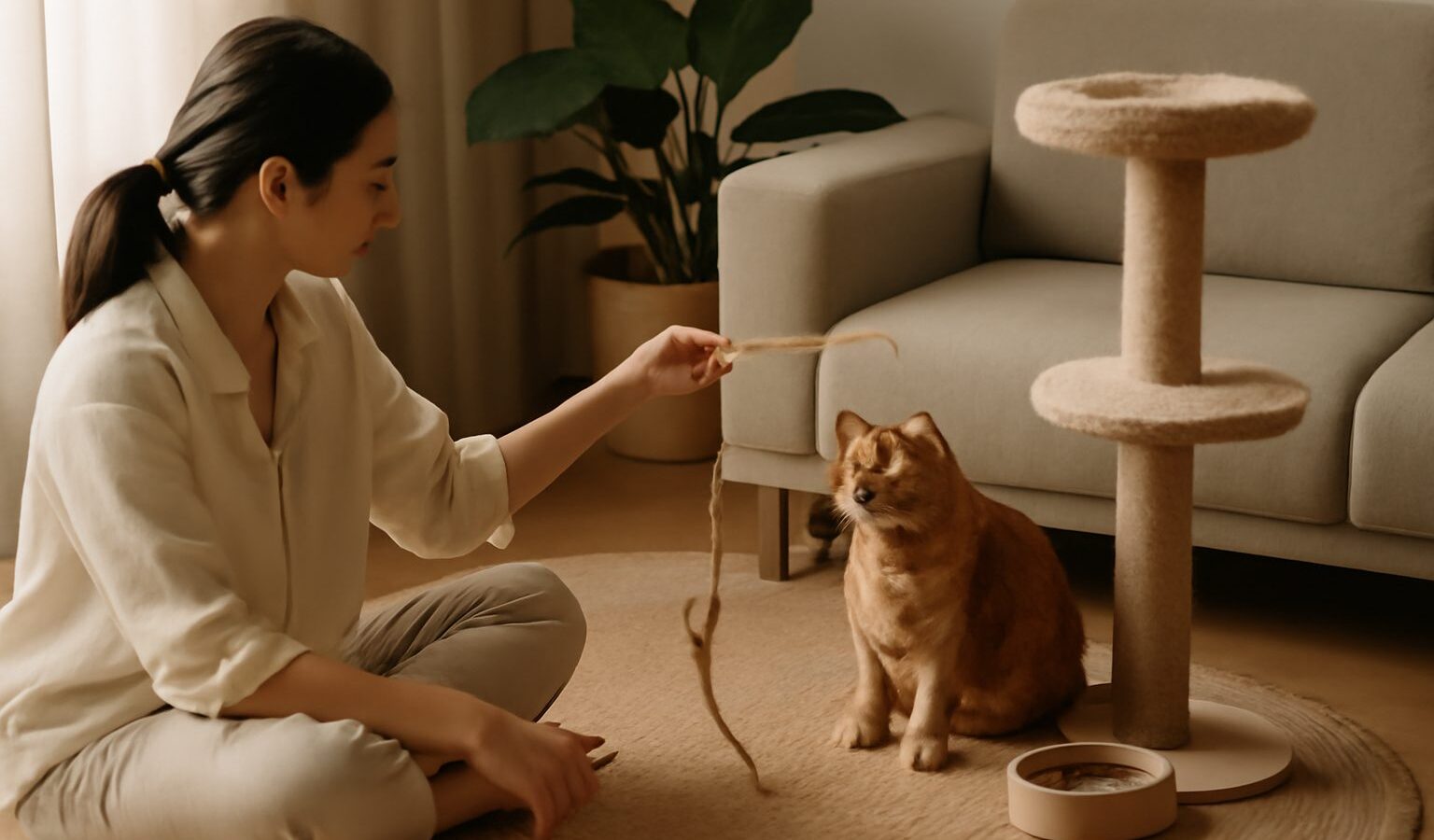
Most cats in Singapore live indoors, and for good reason. Home keeps them safe from traffic, disease and the dangers of high-rise living. The trade-off is that four walls can be short on the sights, smells and challenges a cat would meet outside. This is where indoor cat enrichment comes in. With a little thought, you can turn an ordinary flat into a stimulating space that keeps your cat active, calm and genuinely content. This article is general information, and any concern about your cat’s health or behaviour is worth raising with your licensed vet.
Why Enrichment Matters for Indoor Cats
Cats are hunters at heart, built to stalk, pounce, climb and explore. When those instincts have nowhere to go, a cat can grow bored, restless or stressed, and that often shows up as unwanted behaviour or low mood. A well-enriched home channels those natural drives in healthy ways, which supports both body and mind.
The benefits are real and practical. Regular play helps keep an indoor cat at a healthy weight, which matters in our climate where an overweight, under-exercised cat can become sluggish. Mental stimulation eases boredom-related habits such as over-grooming, night-time yowling or scratching furniture. Perhaps best of all, shared play deepens the bond between you and your cat. Enrichment is not a luxury. It is part of meeting a cat’s basic needs.
The Building Blocks of an Enriched Home
You do not need a huge flat or an expensive shopping list to enrich a cat’s world. Good enrichment covers a few different needs, and small additions in each area go a long way.
- Vertical space: Cats love height. Shelves, a cat tree or a cleared windowsill lets your cat climb, perch and survey its territory. Keep windows and balconies securely screened, as high-rise falls are a serious danger.
- Scratching outlets: Scratching is a natural need, not misbehaviour. Offer sturdy posts and pads in different textures so your cat can stretch and mark without turning to the sofa.
- Hiding spots: Boxes, covered beds and quiet nooks give a cat somewhere to retreat and feel secure, which lowers stress.
- A window view: A safe perch by a screened window offers a daily show of birds, clouds and passers-by, natural entertainment that costs nothing.
- Resources spread out: Place food, water, litter and resting spots in sensible locations, especially in a multi-cat home, so no cat feels cornered.
Play That Satisfies the Hunter
Interactive play is the heart of enrichment, because it lets your cat act out the full hunting sequence of stalk, chase, pounce and catch. Aim for short, regular sessions rather than one long burst, and let your cat actually catch the toy at the end so the game feels rewarding rather than frustrating.
Wand and teaser toys are ideal for mimicking prey, moving in quick darts and pauses like a real insect or mouse. Rotate toys so they stay novel, since a toy that vanishes for a week feels new again when it returns. Food puzzles and treat balls turn mealtime into a foraging challenge, slowing down fast eaters and giving the brain a workout. You can even scatter a portion of dry food for your cat to hunt around the room.
A word of care on play: never use your hands or fingers as toys, as this teaches biting and scratching. Skip laser pointers as the only game, since a cat never gets to catch the light, and always finish a laser session by letting it pounce on a real toy. Put away string, ribbon and small parts after play, because swallowed string is a genuine emergency that can injure the gut.
Matching Enrichment to Your Cat
Not every cat wants the same things, and the right mix changes with age and personality. The table below offers a starting point, though your own cat will show you its preferences.
| Cat type | Enrichment that tends to suit | Watch out for |
|---|---|---|
| Kitten | Frequent short play, safe toys to chase | Small parts and string that could be swallowed |
| Young adult | Active wand play, climbing, puzzles | Boredom and energy building up without an outlet |
| Senior cat | Gentle play, easy-access perches, warmth | Reluctance to jump, which may signal joint pain |
| Shy or anxious cat | Hiding spots, calm routine, quiet games | Forcing interaction, which raises stress |
| Multi-cat home | Duplicate resources, separate spaces | Competition and tension over shared items |
Watch how your cat responds and adjust. Enrichment works best when it fits the individual in front of you rather than a one-size-fits-all plan.
Signs of Boredom and When to See a Vet
A bored or stressed cat often tells you through its behaviour. Look out for over-grooming to the point of bald patches, destructive scratching, excessive night-time activity, overeating, or a general flatness and withdrawal. Often, more play, more climbing and a richer environment help these settle.
That said, some changes can point to a health problem rather than boredom, and it is not always easy to tell them apart. Please see your vet if your cat suddenly stops jumping or playing, over-grooms or pulls out fur, changes its appetite or toileting habits, hides far more than usual, or seems in pain. Treat difficulty breathing, straining in the litter tray with little result, repeated vomiting, collapse or a suspected swallowed string as reasons to seek veterinary care urgently. When behaviour changes quickly or dramatically, a vet check comes first, before you assume it is simply boredom.
A Richer Life Indoors
An indoor life and a full, happy life are not at odds. With vertical space to climb, outlets to scratch, safe places to hide, a window to watch and daily interactive play, your cat can thrive within the safety of home. Start with one or two changes, watch what lights your cat up, and build from there. A little enrichment each day keeps an indoor cat active in body, engaged in mind and closely bonded to you.
Explore More
A stimulated cat is a healthier cat. If yours is gaining weight, our advice on managing your pet’s weight covers habits that help across the household. Cat owners with dogs too can read our guides to dog paw care in the heat and tick, flea and heartworm prevention.