
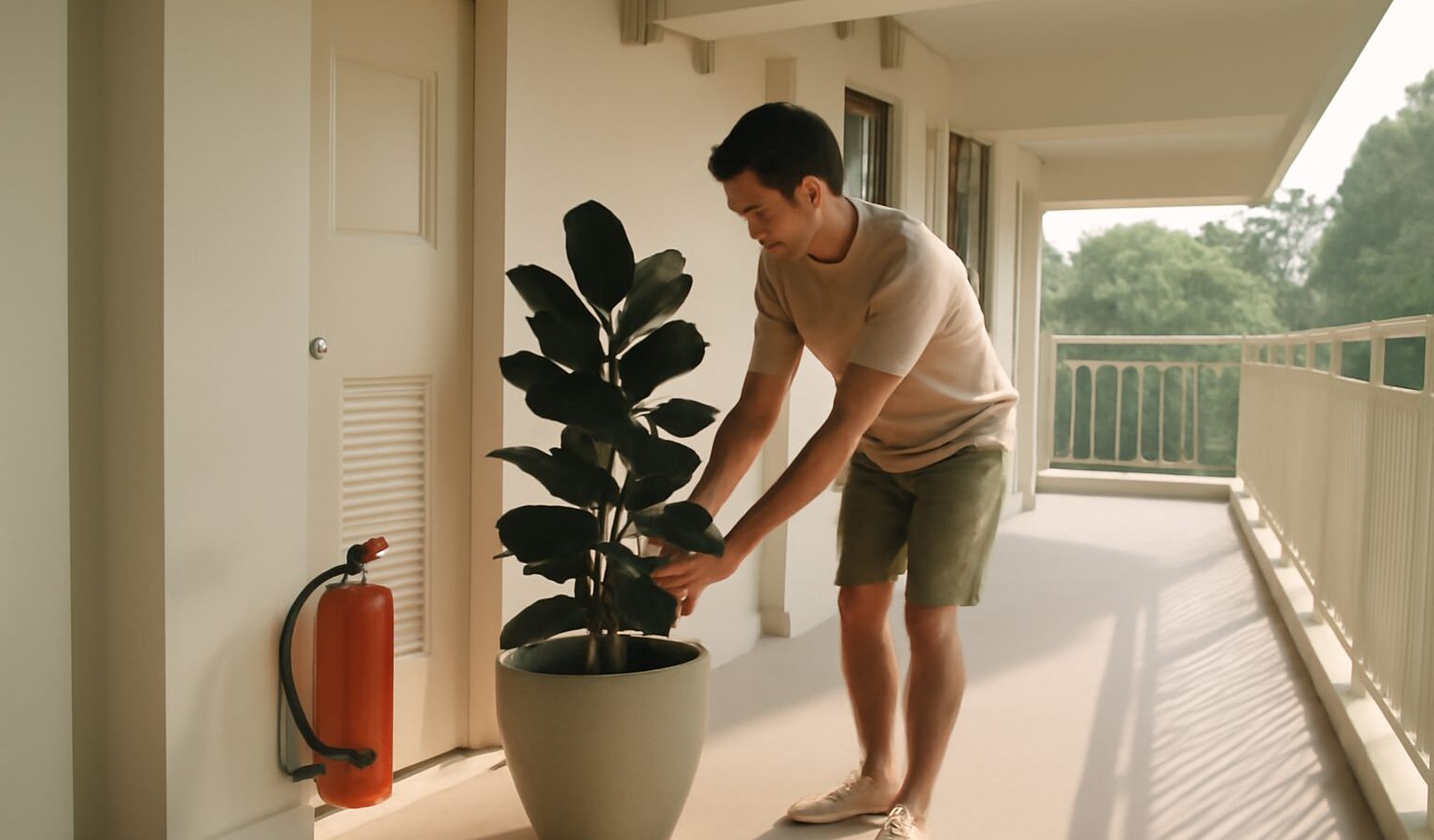
The common corridor outside your flat is more than a walkway. It is a shared escape route, and keeping your HDB corridor Singapore neighbours all rely on clear and tidy is one of the simplest ways to look after everyone on your floor. In an emergency, a corridor free of clutter lets people move quickly, lets firefighters bring in equipment, and gives everyone the best chance of getting out safely. This guide covers the practical basics of what belongs in the corridor, what does not, and how to stay on the right side of the rules while being a considerate neighbour.
The short version is straightforward. The common corridor must be kept clear so that people can pass and escape freely at all times. Bulky items, anything flammable, and objects that narrow or block the path are the main things to avoid. Rules on this are set and enforced by your town council and the Singapore Civil Defence Force (SCDF), so when you are unsure, they are the ones to check with.
Why a Clear Corridor Matters
Fire and smoke spread faster than most people expect. When a corridor is blocked by a bicycle, a tall shoe rack or stacks of cardboard, it slows down everyone trying to leave and can turn a manageable situation into a dangerous one. Smoke also makes it hard to see, so even a small obstruction can trip someone in a hurry, including elderly residents and young children.
There is a second reason that is easy to forget. Many items commonly left in corridors can catch fire or feed a fire once it starts. Cardboard boxes, old newspapers, paint tins, and stored gas canisters are all things that turn a corridor into a hazard rather than a safe passage. Keeping these out of the shared space protects the whole floor, not just your own household.
Being considerate is part of the picture too. A corridor cluttered with one household’s belongings can make neighbours feel the shared space has been taken over, and it can attract pests or trip passers-by. A clear corridor is a small courtesy that keeps relations on your floor friendly.
What You Can and Cannot Keep Outside
Town councils generally allow a few modest, tidy items directly outside your own unit, provided they do not obstruct the path or block escape. A small plant, a slim shoe cabinet kept flush against your wall, or a folded gate can often be acceptable, but this varies between town councils and estates. Larger, protruding or flammable items are a different matter and are the ones that lead to warning notices and, in some cases, fines.
Here is a general guide to help you sort common items. Always defer to your own town council and SCDF for the rules that apply to your block, as these can differ.
| Item | Usually a problem | Why |
|---|---|---|
| Bicycles and PMDs | Yes, if they block the path | Narrow the escape route and can be a trip hazard |
| Tall or wide shoe racks | Yes, if they protrude | Reduce corridor width for escape |
| Cardboard, newspapers | Yes | Flammable and feed a fire |
| Paint, thinners, gas canisters | Yes | Flammable or explosive materials |
| A small potted plant | Often allowed if tidy | Minimal obstruction, but check your town council |
| Bulky furniture or appliances | Yes | Block the path and may be flammable |
If in doubt, keep it inside. A useful test is to imagine your corridor full of smoke and ask whether someone could still walk or run past your unit without stumbling. If the answer is no, the item should not be there.
Rules, Notices and Fines
Corridor clutter is taken seriously because it directly affects fire safety. Your town council carries out inspections and can issue notices asking you to remove obstructing items, and SCDF has powers under fire safety regulations to require blocked escape routes to be cleared. Ignoring these notices can lead to enforcement action and penalties. The exact amounts and processes are set by the authorities, so rather than rely on figures you have heard, check directly with your town council or SCDF if you receive a notice or want to know what is permitted.
Storing flammable materials in common areas is a particular concern. Items such as spare gas cylinders, large quantities of paint or fuel, and other combustible goods should never be kept in the corridor or stairwell. If you run a small home activity that involves such materials, speak to the relevant authority about safe storage.
Being a Considerate Neighbour
Good corridor habits are as much about neighbourliness as rules. If your children leave bikes or scooters outside, encourage them to bring these in or store them where they will not block the way. When you receive large deliveries, break down and dispose of the boxes promptly rather than leaving them stacked outside. During festive periods, keep decorations modest and clear of the walkway, and avoid anything with open flames in the shared space.
If a neighbour’s items are blocking the corridor, a friendly word often solves it faster than a complaint. Many people simply have not thought about the escape route, and a gentle reminder is usually well received. If that does not work, your town council is the right body to raise it with, as they can assess the situation and act if needed.
A clear corridor is a shared achievement. When every household keeps its stretch tidy and free of hazards, the whole floor is safer, the space feels more pleasant, and everyone can get out quickly if the worst happens. It costs nothing but a little thought, and it is one of the easiest ways to be a good neighbour in an HDB block.
Explore more
Common HDB Living Mistakes That Lead to Fines
Fire Safety and SCDF for Newcomers
Setting Up Your HDB Home
Using Self-Storage