
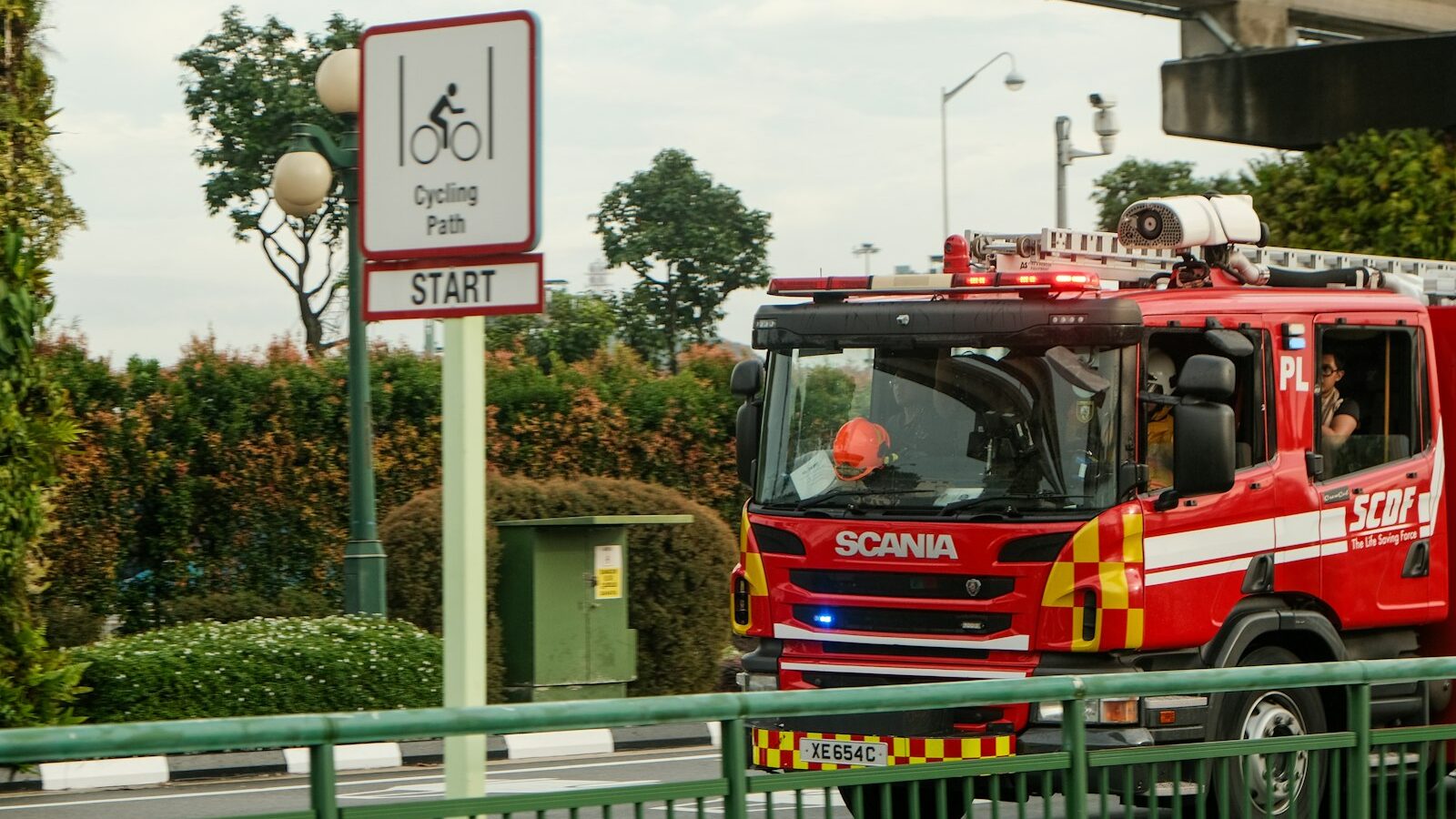
Settling into a new home in a new country brings a long list of things to learn, and fire safety is one many newcomers put off until something goes wrong. It should not be. Good fire safety Singapore habits are simple, cheap, and could save your life or your neighbour’s. This guide introduces the Singapore Civil Defence Force (SCDF), the body that answers fire and medical emergencies here, explains how to call for help, and walks through the everyday hazards in a Singapore flat, from lithium battery charging to the wok on your stove. Treat it as practical orientation; for the exact rules and current requirements, the SCDF is always the authority.
The SCDF and How to Call for Help
In Singapore, the SCDF runs firefighting, rescue, and the emergency ambulance service. The single number to remember is 995, which reaches the SCDF for a fire or a medical emergency such as a serious injury, chest pains, or difficulty breathing. For a crime, an accident, or anything needing the Police, dial 999 instead. Both are free and answered around the clock.
This differs a little from what mainland newcomers are used to, where fire, ambulance, and police each have their own number. Here the mental shortcut is easy: 995 for fire and ambulance, 999 for police.
A few things help the operator help you faster:
- Stay calm and give your exact location first: block number, unit, street, and the nearest landmark. If you are calling from an HDB block, the block and level matter most.
- Say what has happened plainly: what is on fire, who is hurt, whether anyone is trapped.
- Do not hang up until the operator says you may.
Not every situation is a 995 emergency. For a non-urgent medical transfer, Singapore has had a separate non-emergency ambulance line, though the arrangements for non-emergency conveyance are changing. Check the SCDF website for the current non-emergency ambulance option rather than tying up 995, which must stay clear for true emergencies. Misusing the emergency line can delay help for someone whose life is in danger.
The MyResponder App and Community First Response
One feature that surprises newcomers is how much Singapore leans on ordinary residents to help in an emergency. The SCDF’s MyResponder app alerts registered members of the public, called Community First Responders, to nearby cardiac arrests and minor fires so trained neighbours can act in the crucial minutes before an ambulance arrives. The app also shows the nearest AED (defibrillator) locations and includes a “Call 995” button that can send your location to the SCDF operations centre.
You do not need to be a medical professional to download it and learn the basics. Even if you never respond to an alert, having MyResponder installed means you can summon help quickly and see where the nearest AED is if someone collapses in your block or office. It is a small, civic-minded step that plugs you into the way this city looks after itself.
Everyday Fire Hazards in a Singapore Home
Most home fires start from a handful of familiar sources. Knowing them lets you remove the risk before it becomes an emergency.
- Battery charging. Lithium-ion batteries in personal mobility devices (PMDs), e-bikes, and power banks are a well-known fire risk. Charge them on a hard, clear surface, never overnight or unattended, and never in a corridor or by your only exit. Use only the original charger and stop using any battery that swells, overheats, or smells odd. The SCDF publishes specific guidance on safe charging, worth reading if you own an e-bike or PMD.
- Cooking. Never leave a hot wok, pan, or pot of oil unattended, even for a moment. Keep cloths, packaging, and kitchen roll away from the flame, and turn handles inward. If oil catches fire, do not throw water on it.
- Electrical overload. Avoid daisy-chaining extension sockets or loading one point with many high-power appliances. Switch off and unplug when not in use.
- Open flames and incense. Candles, joss sticks, and festive offerings should sit on a stable, non-flammable surface, away from curtains, and never be left burning when you leave or sleep.
- Blocked exits. Do not store shoes, bicycles, or bulky items along common corridors and staircases. They feed a fire and block everyone’s escape.
Smoke Detectors, Escape Planning, and What to Do in a Fire
A working smoke detector buys you the seconds that matter. In Singapore, home fire alarm devices are required for new homes and for existing homes undergoing certain fire safety works, while older homes are strongly encouraged to fit one. Because the exact requirement depends on your property and when works were done, confirm what applies to your home with the SCDF. Either way, a smoke detector is inexpensive, and testing it now and then is a good habit.
Plan your escape before you ever need it:
- Know two ways out of your home and building, and keep the routes clear.
- Agree a meeting point outside with everyone you live with.
- If there is a fire, stay low under the smoke, feel doors before opening them, and get out; do not stop to gather belongings.
- Do not use the lift. Use the stairs.
- Once out, stay out and call 995. Never go back in for possessions.
If a small fire is safely within reach and you have the right extinguisher, you may try to put it out, but if in any doubt, leave and let the SCDF handle it. Learning basic first aid, and where your nearest AED is, rounds out your readiness for the medical side of an emergency.
Emergency or Not? Who to Call and What to Do
Newcomers often freeze over which number to dial. This table sorts the common situations.
| Situation | Who to call | What to do |
|---|---|---|
| Fire in your home or block | 995 (SCDF) | Get everyone out, stay low, use stairs, call from a safe place |
| Someone collapses, chest pains, severe injury | 995 (SCDF) | Give location, start first aid or CPR if trained, follow the operator |
| A crime, accident, or someone in danger | 999 (Police) | Give location and details, keep yourself safe |
| Non-urgent hospital transfer | See SCDF for the current non-emergency option | Do not use 995 for this |
| Faulty corridor light, litter, common-area pests | OneService app or town council | Report with a photo and location; not an emergency |
| Gas smell in your home | Your gas supplier’s emergency line, and 995 if serious | Do not switch anything on or off, ventilate, leave if strong |
When it is a genuine fire or a life at risk, never hesitate over the “right” channel: call 995. It is always better to call and be reassured than to wait.
Building Safe Habits From Day One
Fire safety is not a one-off task but a set of small routines: unplugging the charger before bed, keeping the stove attended, leaving the corridor clear for your neighbours as much as for yourself. These habits also make you a better member of the community you have joined, because a fire in one unit threatens the whole block. Save 995 in your phone, install MyResponder, walk your escape route once, and check that smoke detector. A quiet evening spent on this is the cheapest insurance you will ever buy in Singapore.
Explore more
Some hazards you spot, like a blocked common corridor or a faulty void-deck fitting, are municipal issues rather than emergencies; our guide to using the OneService app in Singapore shows how to report them to the right agency. And if you live in a private development, read strata living and the MCST in condos explained to understand who manages fire safety and evacuation in your building.