
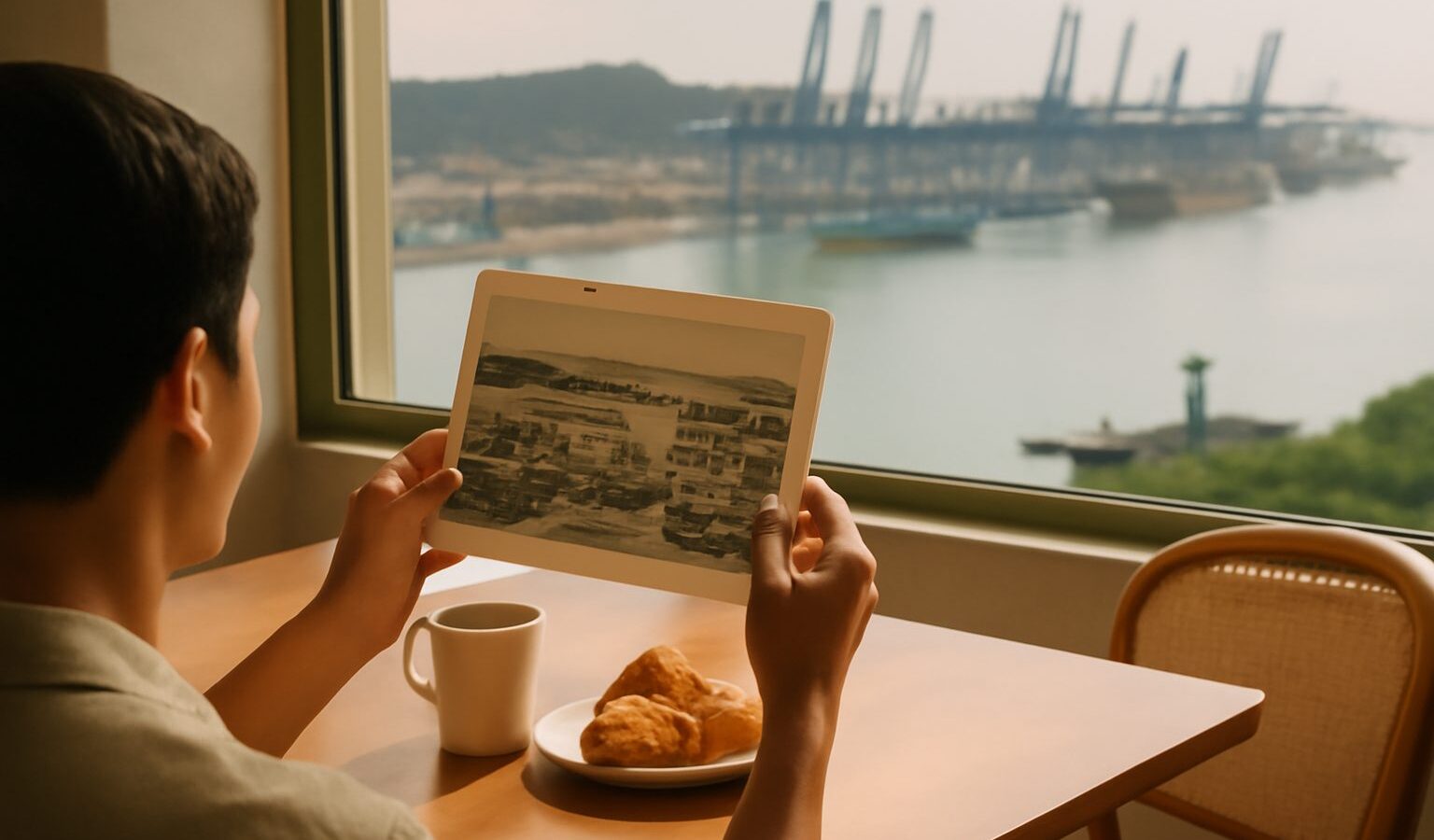
Few places explain Singapore’s rise more directly than the sheltered channel on its southern shore. The story of keppel harbour history is, in many ways, the story of the island itself, a natural deep water anchorage that helped turn a small settlement into one of the busiest ports on earth. Protected from open sea by a line of southern islands, the harbour offered ships a calm, deep berth close to the great trade routes, and generations of merchants, engineers and dockworkers built upon that advantage.
A Natural Deep Water Port
Long before modern cranes and container gantries, the waters off the south of the island were valued by mariners for their depth and shelter. The channel that became known as Keppel Harbour, once referred to by earlier names including New Harbour, runs between the main island and the offshore islands, giving vessels protection from wind and swell. This natural gift of geography was the foundation on which everything else was built.
The harbour takes its later name from a nineteenth century naval officer whose survey helped confirm the value of the channel for larger ships. As steam replaced sail and vessels grew heavier, the ability to take on coal, fresh water and repairs in a deep, safe harbour became decisive. Singapore’s position at the meeting point of major sea lanes meant that a ship calling here could break a long voyage, resupply and move on, and the harbour made that possible on a growing scale.
Docks, Coal and the Making of a Hub
Through the second half of the nineteenth century and into the twentieth, the harbour was ringed with the machinery of a working port. Dry docks were cut to repair hulls, wharves were extended to handle rising cargo, and coaling stations kept the steamers moving. The dock companies that operated here were central to the local economy, employing large workforces and drawing labour and enterprise from across the region.
The port’s role as a coaling and transshipment centre reinforced Singapore’s position as an entrepot, a place where goods were landed, sorted and sent onward rather than simply consumed. Rubber, tin, spices and manufactured goods passed across its quays. This entrepot function is a defining thread in the island’s development and connects closely to the wider story told in Singapore maritime heritage. The harbour also witnessed hard chapters, including the disruption of the Second World War, a period covered in Singapore in WWII.
Over time the facilities modernised. The old dock companies were reorganised under a single port authority, and Keppel became one of the principal terminals as Singapore embraced containerisation in the later twentieth century. The shift to standardised steel containers revolutionised how cargo moved, and the harbour’s terminals were among those that helped the island become a global leader in container throughput.
Its Legacy Today
For decades the container terminals along the southern shore were among the most productive in the world, a visible engine of the national economy. In recent years, however, Singapore has been progressively shifting its container operations to a vast new mega port in the west, a long term plan that frees up the historic southern waterfront for new uses.
This transition gives the harbour a fresh chapter. Land once dedicated to shipping is being reimagined for homes, offices and public spaces along the water, while the memory of the port is woven into the identity of the district. The nearby cruise and ferry terminals, the marina developments and the promenades all trace their lineage back to the channel that first drew ships here.
The heritage of Keppel Harbour is not only industrial. It is a reminder of how geography and human effort combine. The deep, sheltered channel was a natural endowment, but it took generations of engineering, labour and enterprise to turn it into a great port. To see how this fits into the broader arc of the island’s growth, the Singapore history timeline sets out the key milestones, and the conservation of significant port structures relates to the wider subject of national monuments Singapore.
Standing at the southern waterfront today, with the city rising behind and the islands scattered offshore, it is easy to feel the continuity. The container ships may be moving west, but the harbour that made Singapore a maritime nation remains at the heart of its story, and understanding keppel harbour history is a way of understanding how a small island came to sit at the crossroads of the world’s trade.