
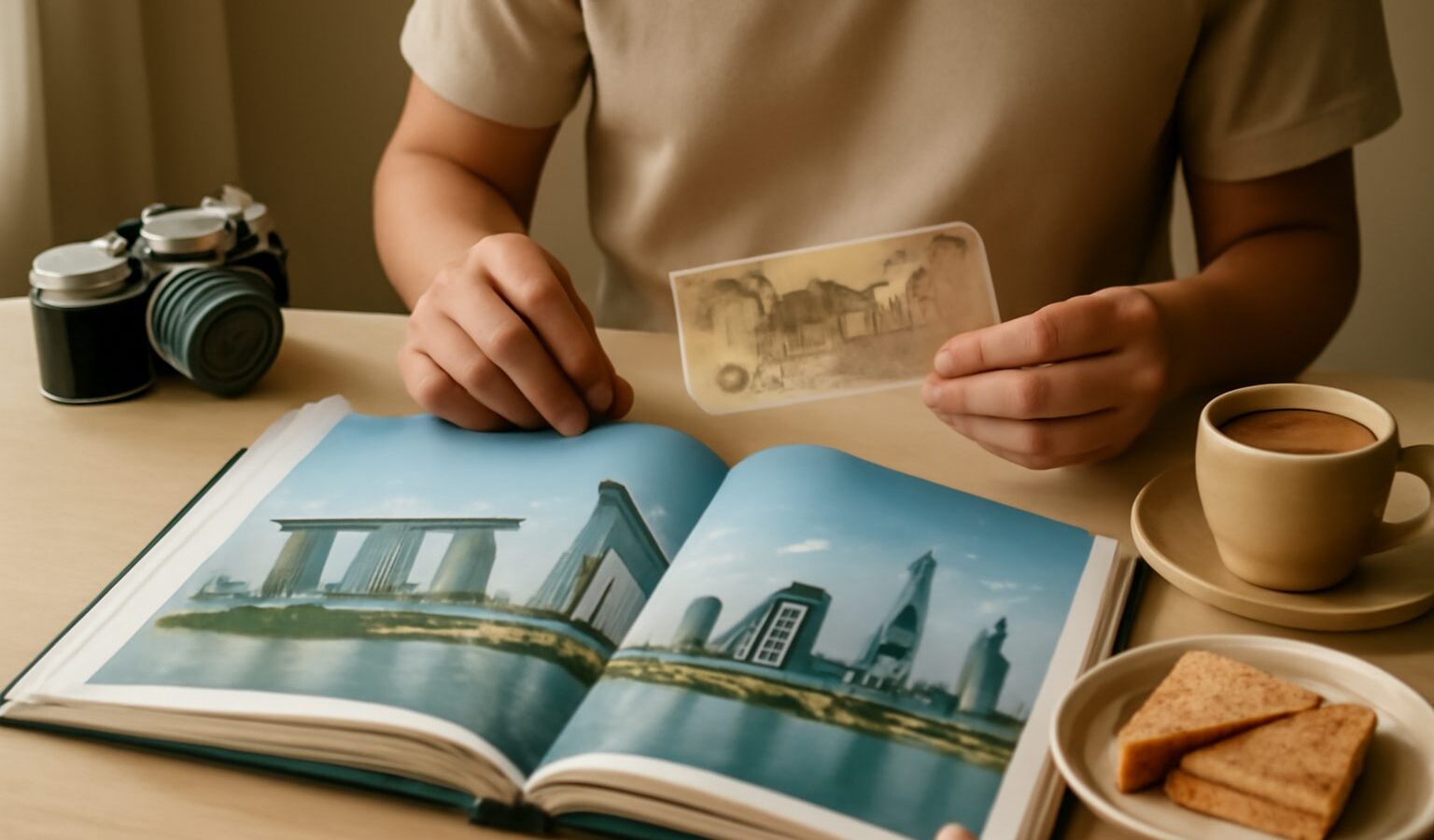
Singapore tourism history is the story of how a working port turned itself into one of Asia’s most visited destinations. Long before it became known for gardens, theme parks and integrated resorts, the island drew travellers as a crossroads of trade. This guide traces that journey in general terms, from the early attractions of a colonial port to the planned tourism of the modern city.
A port that travellers passed through
In its earliest decades as a trading settlement, Singapore was less a place people came to see than a place they passed through. As a free port at the crossing of major sea routes, it drew merchants, sailors, officials and pilgrims from across Asia and beyond. Many were in transit, waiting for a ship or breaking a long voyage.
Even so, these travellers formed the first tourists in a loose sense. They needed places to stay, to eat and to be entertained, and they were curious about the sights of a bustling multiracial port. The waterfront, the markets, the temples and mosques, and the mix of peoples on the streets were themselves attractions to a visitor from far away.
The colonial-era sights
As the settlement matured, a set of recognisable visitor sights took shape. The grand hotels that grew up to serve travellers became landmarks in their own right, offering a taste of comfort and glamour to those arriving by sea. The botanic gardens gave visitors a place to walk among tropical plants. Civic buildings, places of worship and the busy river all featured in the impressions that travellers carried home.
Guidebooks and travel writing of the period presented Singapore as an exotic yet orderly stop, a place where the traveller could sample the East with the conveniences of a well-run port. Attractions in this era were rarely purpose-built for tourism. They were the ordinary features of the city, its architecture, its gardens, its harbour and its street life, seen through a visitor’s eyes.
The turn to planned tourism
After Singapore became self-governing and then independent, tourism came to be seen not as an accident of the port but as an industry to be built deliberately. A national body was established to promote Singapore as a destination, to market it abroad and to develop the facilities that visitors would need.
This marked an important shift. Tourism was now something to be planned and invested in. The country worked to improve its hotels, its air links and its services, and to present itself to the world as a clean, safe and efficient place to visit. Over time, attractions began to be developed with visitors specifically in mind, rather than left to chance.
Building attractions for visitors
From this period onward, Singapore steadily added purpose-built and enhanced attractions. Recreational islands were developed for leisure. A famous wildlife park allowed visitors to see animals in landscaped, open settings, and later a night version added a new experience. Cultural precincts and heritage districts were conserved and presented so that visitors could explore the city’s Chinese, Malay, Indian and colonial layers.
The country also leaned into its identity as a garden city. Parks, tree-lined roads and green spaces became part of the visitor experience and part of Singapore’s image abroad. This greening was as much about the quality of life for residents as about tourism, but the two reinforced each other. A pleasant, green city was also an attractive city to visit.
Shopping, dining and events were folded into the offer as well. Orchard Road grew into a shopping destination, and a calendar of festivals and events gave visitors reasons to come throughout the year.
The modern era of large attractions
In more recent decades, Singapore has pursued large, headline attractions designed to draw international visitors and to give the city a distinctive skyline and experience. Integrated resorts brought together entertainment, dining, conventions and other facilities on a large scale. New waterfront gardens and reclaimed districts added striking spaces for both residents and tourists.
The city also positioned itself as a hub for business travel, conventions and major events, using its connectivity and reliability as selling points. The result is a destination that offers several kinds of visit at once: leisure and family attractions, cultural and heritage exploration, shopping and dining, and business and events.
How Singapore’s attractions have changed
The character of Singapore’s attractions has shifted over time, from things travellers happened upon to things designed for them. The table below sketches that broad evolution in general terms.
| Era | Typical attractions | What drew visitors |
|---|---|---|
| Early port city | Harbour, markets, streets, places of worship | A crossroads of trade and peoples |
| Colonial period | Grand hotels, botanic gardens, civic landmarks | An exotic yet orderly Eastern port |
| Early nation-building | Wildlife parks, recreational islands, heritage districts | Planned attractions and a garden city |
| Modern era | Integrated resorts, waterfront gardens, major events | Large-scale, world-class experiences |
Why the history matters
Looking at Singapore tourism history helps make sense of the city visitors see today. The layering is deliberate. Conserved shophouses sit near modern towers, gardens wrap around a dense downtown, and cultural precincts survive alongside new resorts. Each era left something behind, and the modern tourism offer is really an accumulation of all of them.
It also shows a consistent approach: to treat the visitor experience as something to be planned, improved and marketed, while drawing on the genuine assets of the place, its position, its greenery and its multicultural heritage. That combination of natural advantage and deliberate effort is a thread that runs through the whole story.
For the traveller and the resident alike, the attractions of Singapore are best understood not as a fixed list but as a record of choices made over many decades about what kind of city, and what kind of destination, this small island wanted to be.
Explore more: A Singapore history timeline · Museums and heritage centres in Singapore · National symbols of Singapore