
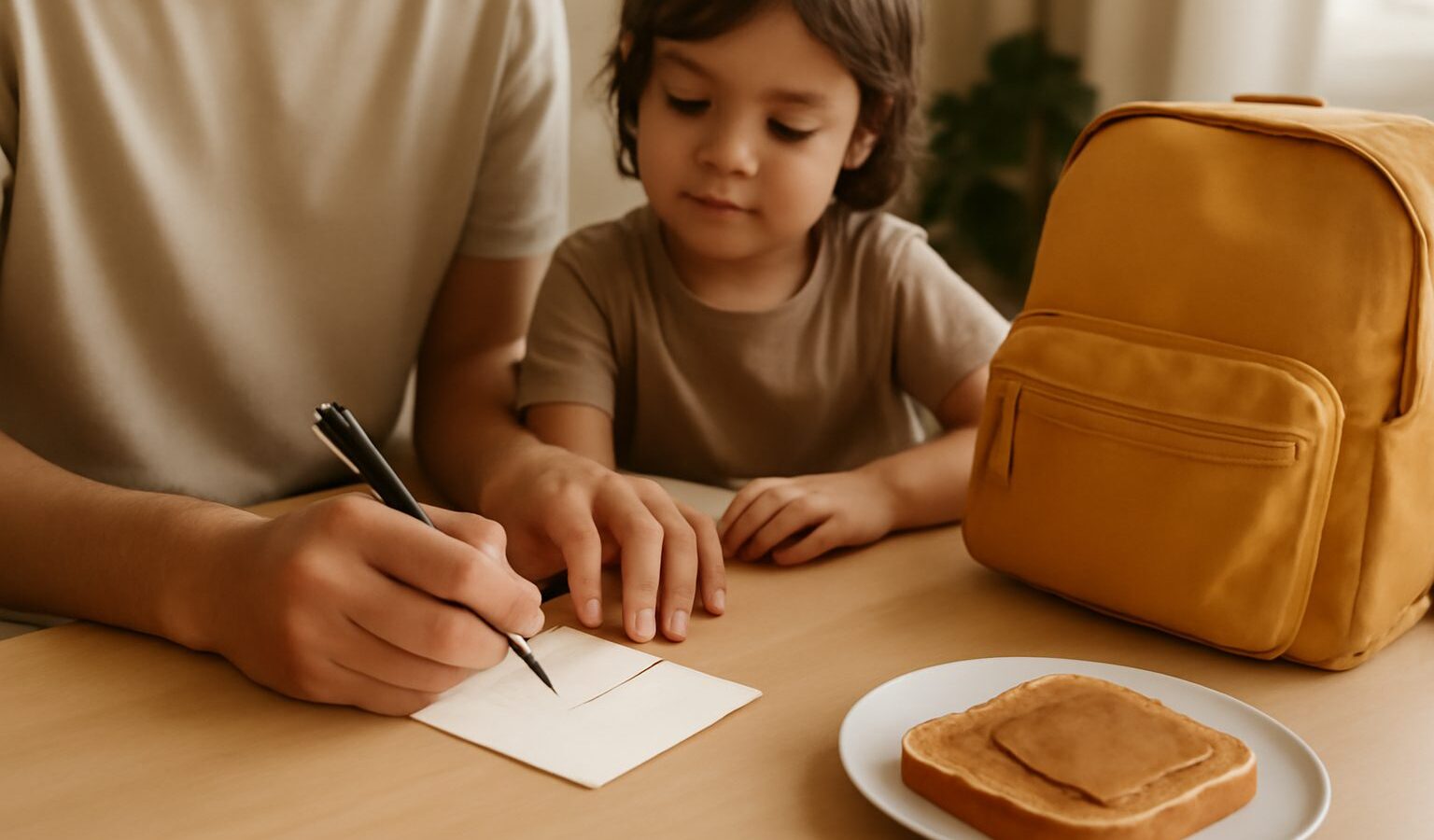
A kids emergency contact card is a small, laminated card your child carries that tells a responsible adult who to call and what they need to know if something goes wrong. Young children often forget phone numbers under stress, school staff on an excursion may not have the class file at hand, and a grandparent or helper minding the kids for the afternoon may not know about an allergy.
This guide covers the card itself: what to print on it, what to keep off it for privacy, which version suits school, outings and caregivers, and how to keep it current. It is general safety information, not medical advice. For anything about your child’s health condition, follow the plan agreed with your doctor or polyclinic.
Why a Physical Card Still Matters
Many parents already keep emergency details on their own phone, and it is worth setting those up properly too (see our guide to emergency contacts and medical ID on your phone). But a child’s card solves a different problem. It works when:
- Your child does not have a phone, or the battery is flat.
- The adult helping is a stranger, such as a shop staff member at a mall or a station staff member at an MRT station, who cannot unlock anything.
- Your child is too upset, too young or too shy to speak clearly.
- A relief teacher, enrichment class coach or bus uncle needs a parent’s number quickly.
A card is also something you can teach with. Showing your child the card and explaining when to hand it over turns a vague “tell an adult” into a concrete action. Pair it with practice from how to teach your child to memorise contact details, so the card is a backup, not a replacement for knowing a number by heart.
What to Put on the Card
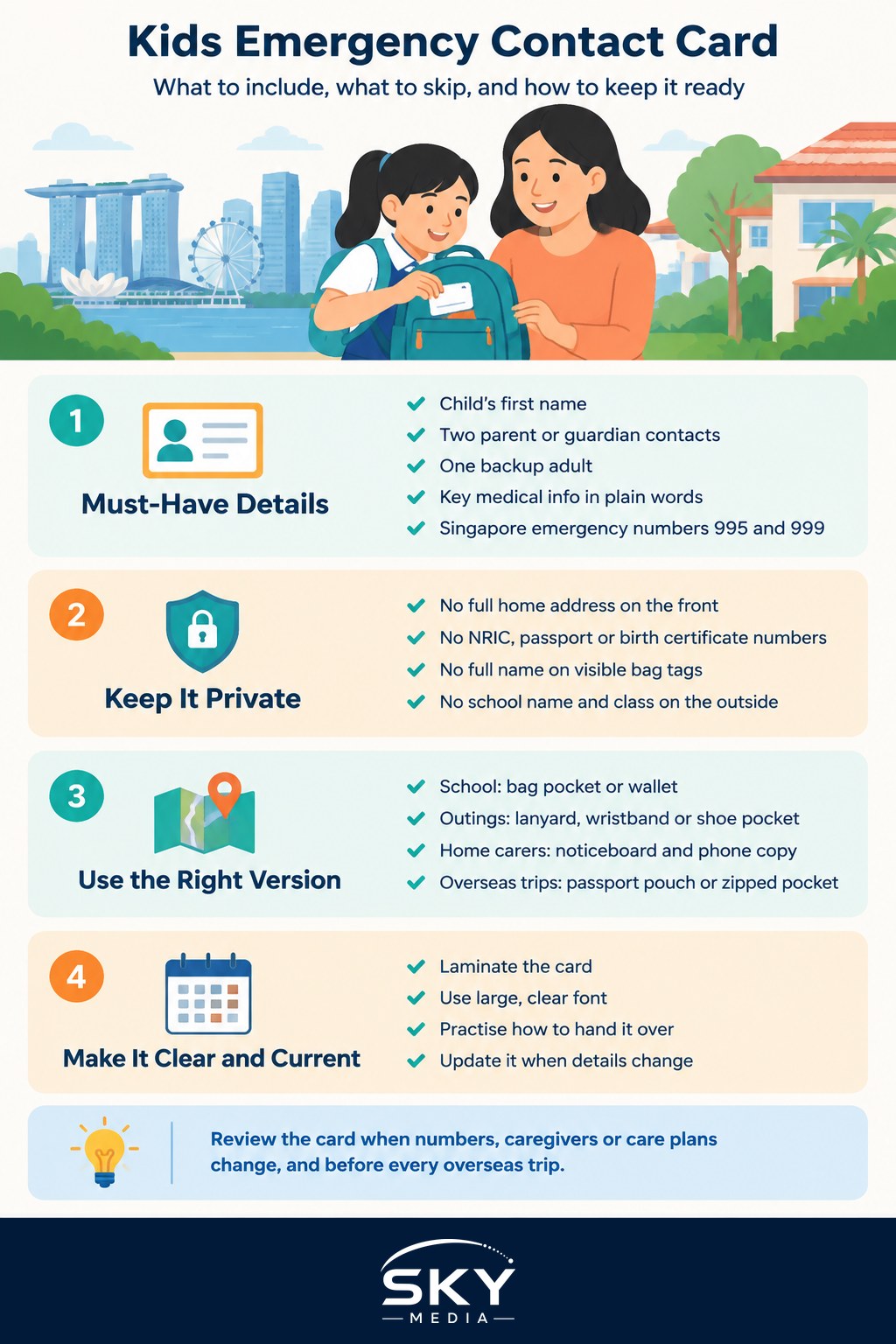
Keep it short enough to read in ten seconds. A business card or credit card size fits most bag tags and wallets. Include these items:
- Child’s first name. First name only on the outside is enough for most uses (more on privacy below).
- Two parent or guardian contacts. Name, relationship (for example “Mum” or “Dad”) and a mobile number with the +65 country code if your number is local, so overseas visitors and roaming phones can dial it correctly.
- One backup adult. A grandparent, aunt or trusted neighbour who usually answers. Ask their permission first.
- Key medical information, in plain words. Severe allergies, conditions such as asthma or epilepsy, and the note “carries an inhaler” or “carries an adrenaline auto-injector in the front pocket” if that applies. Do not list doses. Write “see care plan with school” where a written plan exists.
- Language note. If your child mainly speaks Mandarin, Malay, Tamil or another language, add “Speaks: Mandarin” so the helper knows how to calm them.
- Emergency numbers in Singapore. 995 for ambulance and fire, and 999 for police. Printing these helps a confused adult or an older child.
- A one-line instruction. For example: “If I am lost or hurt, please call my parent. Thank you.”
For a child with additional needs, add one calm line such as “Non-verbal, understands simple instructions” or “May not respond to name when anxious.” It helps the adult respond with patience.
What to Leave Off for Privacy and Safety
A card that falls out of a bag can be read by anyone, so think about what a stranger could do with it.
- No full home address. A phone number is enough to reunite a child with you. If you want an address for a very young child, keep it on the inside fold or in a separate pouch, not on the visible face.
- No NRIC, birth certificate or passport numbers. These are not needed in an emergency and are sensitive.
- No full name on visible bag tags. A stranger calling a child by their full name can make the child think the stranger is known to the family. First name on the outside, full name inside if needed.
- No school name and class on the outside. This is a common habit, but it tells a stranger where the child will be every weekday.
Choosing the Right Card for Each Situation
You do not need one card for everything. Many families keep two or three versions, each matched to who will read it.
| Situation | Where the card goes | What to emphasise |
|---|---|---|
| School days | Inside the school bag front pocket or wallet | Parent numbers, allergies, “care plan with school” note |
| Outings and holidays | Lanyard card, wristband or inside a shoe pocket | Big parent numbers, language note, meeting point instruction |
| Caregivers and helpers at home | Fridge or kitchen noticeboard, plus a photo on their phone | Full medical summary, doctor or clinic name, nearest A&E, backup adult |
| Overseas trips | Inside a passport pouch or zipped pocket | Numbers with country code, hotel name and room once checked in |
For crowded outings such as National Day celebrations, festive light-ups, theme parks or the airport, a bright wristband or lanyard works better than a card hidden in a bag, because an adult can see it immediately. Agree on a meeting point at the start, such as “the information counter”, and write it on the back with a non-permanent marker.
A Fuller Version for Caregivers
The card your child carries is deliberately minimal. The version you give a grandparent, a domestic helper or a babysitter can hold more, because it stays inside the home. Include:
- Both parents’ work and mobile numbers, and the best time to call each.
- Your child’s regular clinic or GP, and the polyclinic you use.
- The nearest hospital with a children’s emergency department, so no one has to search while panicking.
- Allergies and conditions in plain language, plus where any prescribed medication is kept and a copy of the written care plan from your doctor.
- A reminder to call 995 for a life-threatening emergency. Our guide on what to do in a medical emergency in Singapore explains the difference between 995 and the non-emergency ambulance line, which is useful for caregivers to read once.
If your helper is more comfortable in another language, write a translated line under each heading.
This caregiver sheet also belongs in your wider household records. If you have not set one up, our guide to a family emergency contact and money file shows how to keep contacts, insurance details and key documents in one place.
Making the Card Durable and Easy to Use
- Laminate it. Singapore’s humidity and the odd spilled water bottle will wreck plain paper. Self-laminating sleeves from a stationery shop work well.
- Use a large, clear font. At least 11 to 12 point for numbers, dark ink on a light background.
- Add a photo for young children. A small recent photo on the caregiver version helps if you ever need to describe your child.
- Show your child where it is. Practise the sentence “I’m lost, please call my mum, here is my card” at home. Keep it light, like a game, not a warning.
- Tell the school. Teachers already hold contact details on file, but letting the form teacher know a card is in the bag helps on excursions.
Keeping the Card Up to Date
A card with an old number is worse than no card. Set a reminder to review it:
- At the start of each school year or term.
- Whenever a phone number changes or a new caregiver joins.
- After any new diagnosis, allergy or change to a care plan from your doctor.
- Before every overseas trip.
Write the date in small print on the back, so you can see at a glance when it was last checked. When you update the card, update the copies at home, with grandparents and in your phone at the same time.
A good kids emergency contact card takes less than an hour to make. It gives your child a clear thing to do when they feel lost, and gives the adult helping them everything they need to bring the family back together quickly.
Frequently Asked Questions
Should I put my child’s home address on the emergency card? Leave it off the visible face. A phone number is enough to reunite a child with you. If you want an address for a very young child, keep it on the inside fold or in a separate pouch.
Why is the school name left off the outside of a kids’ card? It tells a stranger where your child will be every weekday. Put the school and class inside if needed, and keep only a first name on any visible bag tag.
What languages should the emergency card be written in? Write in plain English and add a line such as ‘Speaks: Mandarin’ if your child mainly uses another language, so a helper knows how to calm them. For the caregiver sheet, add a translated line under each heading.
What should I tell my child to do if they get lost? Practise a simple sentence such as ‘I am lost, please call my mum, here is my card’ at home, in a light, game-like way. Agree on a meeting point at the start of crowded outings.
How often should I update my child’s emergency card? Review it at the start of each school year or term, when a number changes or a caregiver joins, after any new diagnosis or care plan change, and before overseas trips. Write the check date on the back.