
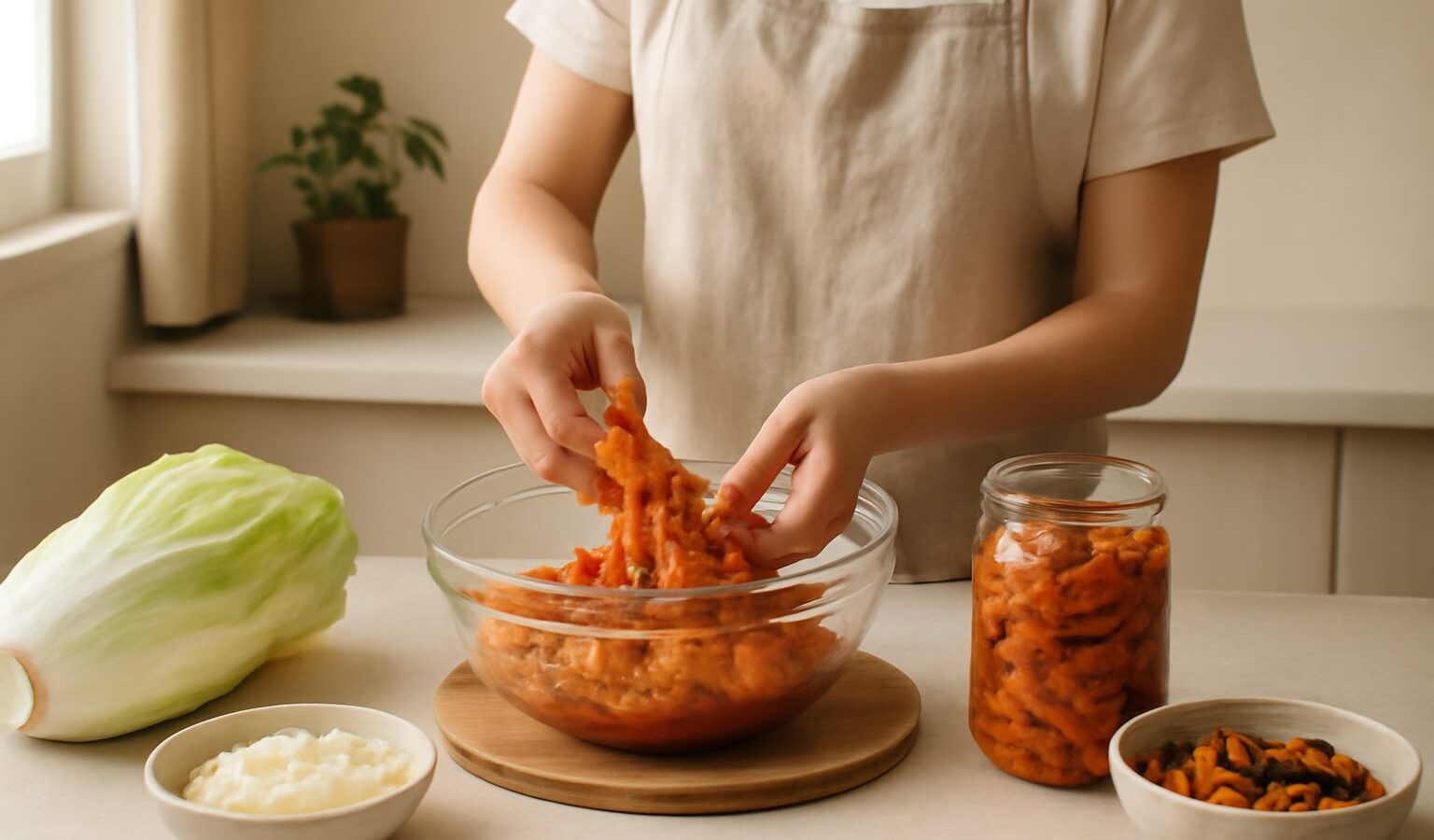
Opening a jar of kimchi you made yourself, catching that bright, tangy, garlicky smell, is one of the small joys of home cooking. Kimchi making in Singapore is a wonderfully accessible hobby, cheap to start, endlessly customisable, and deeply satisfying to watch bubble away on your counter. It is fermentation at its friendliest, the same living transformation that turns cabbage and chilli into something complex and alive. With a little care around hygiene and technique, anyone can make a jar worth being proud of. This guide walks you through the essentials the safe, simple way.
What Kimchi Is and Why Ferment It
Kimchi is a traditional Korean fermented vegetable dish, most famously made from napa cabbage, salted and then coated in a spiced paste before being left to ferment. During fermentation, natural bacteria already present on the vegetables convert sugars into acids, which gives kimchi its sour tang, preserves it, and creates that signature depth of flavour. It is the same broad family of good fermentation that gives us sauerkraut, yogurt, and sourdough.
The appeal is many-sided. There is the flavour, which fresh homemade kimchi delivers in spades. There is the thrift, since a big batch costs little and lasts weeks. And there is the quiet fascination of tending something living, watching and tasting as it changes day by day. For anyone who enjoys the slow, hands-off magic of fermentation, kimchi is a brilliant entry point.
Hygiene and Safe Fermentation First
Fermentation is safe and forgiving when you follow a few sensible rules, so let us cover them clearly before the fun begins. Cleanliness is everything. Wash your hands, and thoroughly clean and dry every jar, bowl, and utensil before you start, ideally sterilising your jars with boiling water. Bad bacteria get a foothold when hygiene slips.
Salt is your safety tool as much as your seasoning. Getting the salt level right creates the conditions where the good bacteria thrive and harmful ones cannot, so follow a tested recipe rather than guessing the amount. Keep your fermenting vegetables submerged under their brine, since exposure to air is where unwanted mould grows. A little pressing down each day helps.
Trust your senses. Kimchi should smell sour, funky, and pleasant. If you ever find fuzzy mould, a slimy texture, or a genuinely foul, off smell, throw the batch out. When in doubt, throw it out. Once fermentation reaches a taste you like, move the jar to the fridge, which slows things down and keeps it safe to eat over the following weeks. A quick allergen note too: kimchi paste often contains fish sauce or fermented shrimp and, in some recipes, wheat, so check if you are cooking for others with seafood or gluten sensitivities. A vegan version using seaweed stock is easy to make.
What You Need to Start
The kit list is refreshingly short and cheap:
- A large mixing bowl for salting and coating.
- Clean glass jars or a food-grade container with a lid.
- Coarse salt for the initial salting, plus gloves if you dislike chilli on your hands.
- The paste ingredients, typically Korean chilli flakes, garlic, ginger, and a savoury element.
Korean chilli flakes, called gochugaru, are the one specialist ingredient, and they give kimchi its colour and gentle heat without harsh sharpness. You can find them easily at Korean and general Asian supermarkets here.
The Basic Method
The rhythm is simple. First you salt the cabbage and let it sit for a couple of hours until it wilts and softens, then rinse and drain it well. Meanwhile you blend a paste of chilli flakes, garlic, ginger, and your savoury seasoning. You coat the drained cabbage thoroughly in the paste, wearing gloves, and pack it firmly into a clean jar, pressing down so the brine rises to cover it.
Then you wait. Leave the jar at room temperature for a day or several, tasting daily, until it reaches a sourness you enjoy. Here is a Singapore-specific tip: our warm climate speeds fermentation up considerably, so your kimchi may be ready far faster than recipes written for cooler countries suggest. Start tasting early, and do not leave it out too long. Once it is right, refrigerate it.
How to Get Better and Keep Exploring
Kimchi rewards experimentation. Once you have the cabbage version down, try radish kimchi, cucumber kimchi, or adjusting the chilli, garlic, and savoury balance to your taste. Keep a simple log of your salt ratios and fermentation times so you can repeat your best batches, especially given how our heat affects timing.
If you enjoy tending living food like this, you will likely love the wider world of ferments. Explore the broader craft in fermentation and pickling as a hobby, try the fizzy fun of home kombucha brewing, or branch into making yogurt at home, all of which share the same gentle, microbe-powered magic.
Where to Find Ingredients in Singapore
Korean supermarkets are treasure troves for gochugaru, napa cabbage, fish sauce, and proper fermentation containers, while general Asian grocers and wet markets stock most of what you need too. Online communities of home fermenters are generous with troubleshooting advice, and occasional cooking workshops cover Korean home cooking if you prefer learning hands-on with a guide.
Making kimchi at home is a hobby that fills your fridge with flavour and your kitchen with a little living science. Keep things clean, follow a tested recipe, trust your nose, and enjoy watching your jar come to life. Before long you will have a house kimchi all your own, ready to brighten any Singapore meal.