
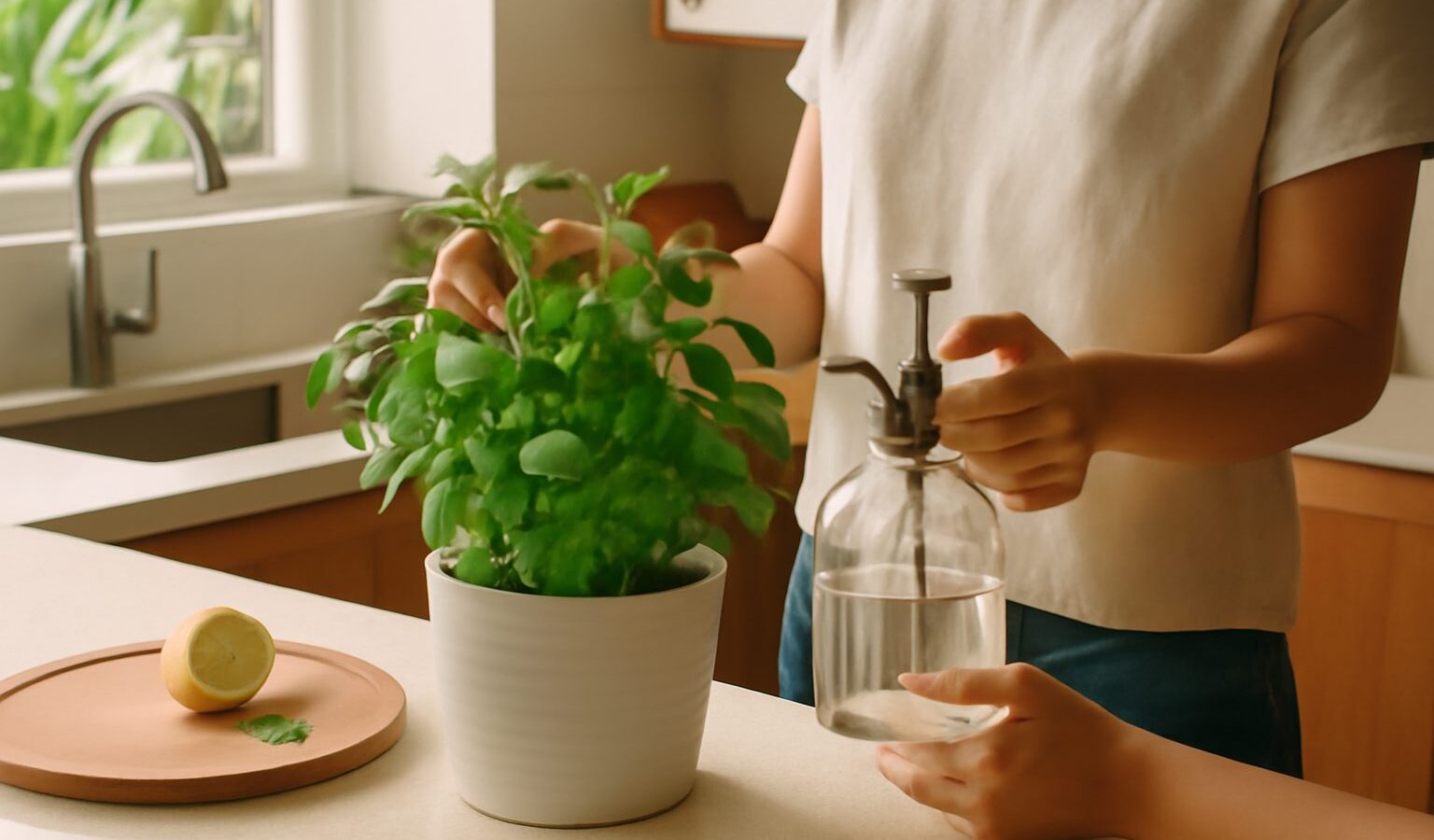
It is a familiar story. You buy a cheerful pot of basil from the supermarket, set it beside the sink, and within two weeks it is yellow, floppy and covered in tiny flies. Kitchen counter herbs in Singapore struggle for very specific reasons: most HDB and condo kitchens get little direct sun, the air is warm and humid, and the spot next to the stove or rice cooker swings between steam and dryness. The good news is that a few small, culinary herbs can live happily on a counter if you choose wisely and adjust how you care for them.
This guide is not about balcony planters or corridor gardens. It focuses only on the narrow, often dim strip of counter where you actually cook.

Why Counter Herbs Struggle in Singapore Kitchens
Before buying another pot, it helps to know what you are up against.
- Low light. Herbs evolved to grow outdoors. Even a bright-looking kitchen usually gives far less light than open sky. Many kitchens face an air well, a corridor or a service yard rather than open space.
- Overwatering. In our humid climate, potting mix dries slowly indoors. Daily watering is the most common reason counter herbs rot.
- Heat pockets. The area beside a stove, oven or kettle can get very hot while you cook, then cool quickly. Fridge vents also blow warm air.
- Crowded supermarket pots. Many potted herbs from shops are dozens of seedlings squeezed into one small pot, grown for looks rather than long life.
- Pests. Damp soil attracts fungus gnats, the tiny black flies that hover around pots.
If you have more space by a window or a ledge, our broader guide to growing herbs indoors covers bigger setups. On a counter, the trick is working with the limits rather than against them.
Choosing Herbs That Cope With a Dim Counter
Some herbs simply need more light than a typical kitchen can give. Others are more forgiving. Here is a practical guide.
| Herb | Light needs | Counter verdict | Tips |
|---|---|---|---|
| Mint | Moderate, tolerates some shade | Good choice | Keep moist but not soggy; trim often to stop legginess |
| Laksa leaf (Vietnamese coriander) | Moderate, likes humidity | Good choice | Grows quickly from cuttings in water before potting |
| Spring onion | Moderate | Good choice | Regrow root ends in a glass of water, change the water often |
| Chives | Moderate to bright | Workable near a window | Snip from the outside; leave the centre to keep growing |
| Thai basil | Bright | Needs a grow light | Pinch off flowers to keep leaves coming |
| Rosemary or thyme | Very bright, drier air | Not suited to a dim counter | Better on a sunny ledge or balcony |
| Coriander (cilantro) | Bright, prefers cooler weather | Hard indoors | Treat as short-lived; sow small batches every few weeks |
As a rule, soft, leafy herbs that like moisture do better than woody Mediterranean ones. If you love rosemary and thyme, our guide to growing Mediterranean herbs explains the brighter, drier conditions they need.
Setting Up the Right Spot on Your Counter
Small changes in position make a big difference.
- Get as close to the window as you can. Even a few steps away from a window, the light drops sharply. If your counter runs along a window, use that end.
- Keep away from the stove and kettle. Steam and heat bursts stress leaves. Aim for at least an arm’s length away.
- Avoid the space beside the fridge vent. The warm draught dries plants out unevenly.
- Rotate the pot every few days. Herbs lean towards light. Turning them keeps growth even.
- Use a saucer or tray. It protects the counter and lets you see if water is pooling.
If the brightest spot is a window sill above the sink, check that the window opens without knocking the pot over, and that splashes from washing up will not keep the soil soaked.
Watering, Soil and Pots for Humid Indoor Conditions
Most dead counter herbs are drowned, not dried out.
- Water by touch, not by schedule. Push a finger into the soil up to the first knuckle. Water only when it feels dry at that depth. In a dim, humid kitchen, that might be every few days rather than daily.
- Water thoroughly, then drain. Pour until water runs from the base, wait a few minutes, then empty the saucer. Herbs hate sitting in water.
- Repot crowded supermarket herbs. Gently split the clump into two or three smaller groups and plant each into its own pot with fresh potting mix. They will have more room and airflow.
- Choose pots with drainage holes. Decorative pots without holes are best used as an outer cover only.
- Use a free-draining mix. A general potting mix with some perlite helps excess water escape.
To tackle fungus gnats, let the top layer of soil dry out between waterings and remove any fallen leaves sitting on the soil. Yellow sticky traps, available at most nurseries and hardware shops, catch the adults.
When a Small Grow Light Is Worth It
If your counter is genuinely dim, a compact LED grow light can turn a struggling pot into a productive one. Look for:
- Full-spectrum white LEDs, which look natural in a kitchen and suit leafy herbs.
- A clip-on or under-cabinet design, so it does not take up counter space.
- A built-in timer, so the light runs for a consistent period each day without you remembering.
Place the light fairly close above the plants, following the maker’s guidance, and raise it as the herbs grow. Grow lights use little electricity compared with major appliances, but check the product’s power rating if you are watching your utility bill.
Harvesting and Using Your Counter Herbs
Regular, gentle harvesting is one of the best ways to keep herbs alive.
- Pinch from the top. Snip just above a pair of leaves. The plant will branch out and become bushier.
- Never take more than about a third at once. Leaving enough leaves lets the plant keep feeding itself.
- Remove flowers on basil and mint to keep the plant focused on leaves.
- Use what you cut. Freshly picked herbs lift everyday cooking, from mint in a salad to laksa leaf in noodles. Our guide to fresh herbs has ideas for how to use each one.
If a plant gives you more than you can cook with, cut generously before it gets leggy and dry or freeze the extra.
A Simple Weekly Routine
To keep things easy, try this short routine:
- Check soil moisture every two or three days and water only if dry.
- Rotate pots once or twice a week.
- Harvest a little from each plant.
- Wipe dust off leaves occasionally with a damp cloth.
- Every few months, top up with fresh potting mix or a gentle liquid feed, following the product label.
Kitchen counter herbs will never be quite as lush as a sunny rooftop garden, but with the right picks, careful watering and a little extra light, you can keep a small, steady supply of fresh flavour within reach of your chopping board.