
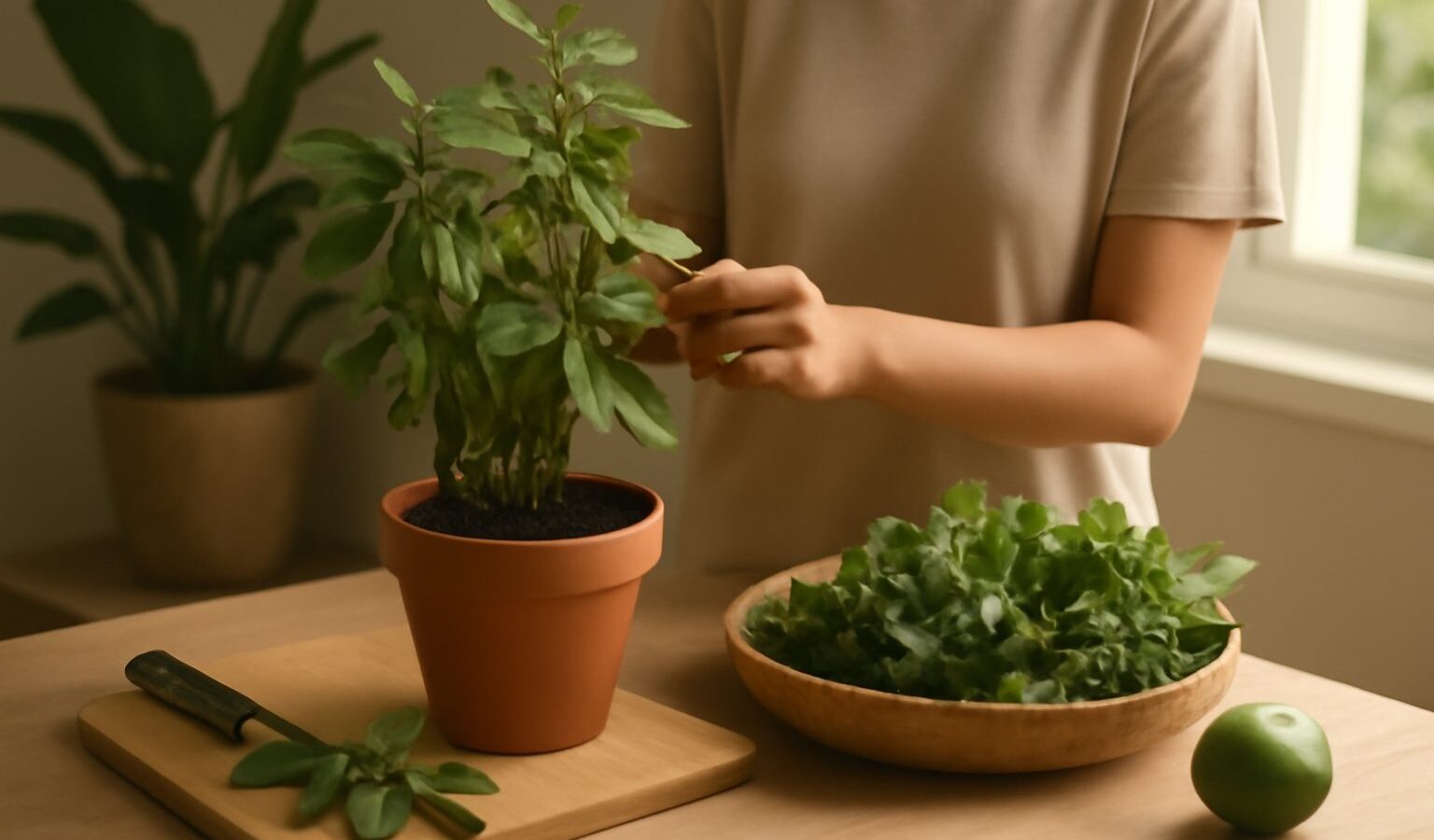
That sweet, faintly aniseed scent rising from a stir-fry or a bowl of pho usually comes from one herb: Thai basil. With its purple stems and glossy green leaves, it is both handsome and hardworking, and it grows beautifully in our climate. If you want fresh thai basil singapore recipes call for so often, a single pot on a sunny ledge will keep you supplied for months. This guide covers Thai basil and a range of other Asian herbs that flourish here.
Why Thai Basil Loves the Heat
Thai basil is a warm-climate herb through and through. It revels in the heat and strong sun that our weather delivers all year, growing faster and more fragrant than it ever would in a cool climate. There is no short season to race against, so with a little care you can harvest continuously.
The plant forms a bushy, upright clump of aromatic leaves on distinctive purple stems, topped in time with spikes of small purple flowers. It is more robust than the sweet basil used in Italian cooking, standing up better to our humidity and to the heat of a wok.
Because it grows so readily, Thai basil is an ideal first herb for a nervous beginner. Give it sun, water and the occasional trim, and it rarely disappoints.
Growing Thai Basil Well
Thai basil needs plenty of light. Aim for at least five to six hours of direct sun a day, on a bright balcony, a sunny windowsill or an open ledge. In too much shade the plant grows tall, thin and leggy, with sparse leaves and weak flavour.
You can grow it from seed or, more quickly, from a cutting. A stem stood in a glass of water will root within a week or two, ready to pot up. Use a good free-draining potting mix in a container with drainage holes, as basil dislikes sitting in waterlogged soil.
Water when the top of the soil feels dry, keeping the plant evenly moist but not soggy. In strong sun a small pot can dry out fast, so check daily during hot spells. A larger pot holds moisture more steadily and gives the roots room to support a bigger, more productive plant.
Feed lightly every few weeks with a diluted balanced fertiliser. Too much feeding produces soft, floppy growth with less flavour, so a gentle hand is better than a heavy one.
Pinching, Flowering and Harvest
The single most useful habit is regular pinching. When you harvest, snip the stem just above a pair of leaves rather than picking individual leaves. This prompts the plant to branch, becoming bushier and more productive with every cut.
Watch for flower spikes forming at the tips. Once a herb flowers, it channels energy into seed and the leaves can turn bitter. Pinch off flower spikes as soon as you see them to keep the plant leafy and the flavour sweet. If you do want seed, let a few late spikes bloom at the end of the plant’s life.
Harvest often and generously. Always wash home-grown herbs before eating, and be sure of your identification if you are growing several look-alike plants together. Thai basil is best used fresh, added at the end of cooking so its aroma is not lost to the heat.
Other Asian Herbs to Grow Alongside
Thai basil sits happily among the other aromatic herbs of Asian cooking, most of which enjoy the same warm, bright conditions. The table below compares a few worth adding to your collection.
| Herb | Light | Best use | Growing note |
|---|---|---|---|
| Thai basil | Full sun | Stir-fries, pho | Pinch flowers, harvest often |
| Mint | Part shade | Drinks, salads | Vigorous, keep in its own pot |
| Coriander | Part shade | Garnish, sauces | Prefers cooler, shadier spots |
| Spring onion | Full sun to part shade | Garnish, soups | Regrows from kitchen scraps |
| Chilli | Full sun | Sauces, cooking | Compact bush, loves the heat |
Mint grows fast and spreads by runners, so keep it contained in its own pot rather than letting it invade a shared bed. Coriander is trickier here, as it dislikes intense heat and tends to bolt to flower quickly, so give it a shadier, cooler position and treat it as a short-lived crop. Spring onions are almost effortless, regrowing from the root ends left over from cooking.
Chilli plants, meanwhile, love our sun as much as Thai basil does and make a compact, productive bush for a balcony. Grouped together, these herbs cover most of what a home cook reaches for day to day.
Troubleshooting Common Problems
A few small issues crop up again and again, and all are easily fixed. If your Thai basil looks pale and stretched, it is almost always short of light, so move it to a brighter, sunnier spot. If the leaves lose their punch, you may be feeding too heavily or letting the plant flower unchecked, so ease off the fertiliser and pinch out those flower spikes promptly. Wilting despite moist soil usually means the roots are struggling in waterlogged compost, so check that the pot drains freely and let the surface dry a little between waterings.
Pests are rarely a serious problem on well-grown herbs, but keep an eye out for aphids and caterpillars on tender new growth. Because these leaves go straight into your cooking, avoid sprays and simply pick pests off by hand or dislodge them with a jet of water. Good airflow between pots, strong light and regular harvesting keep plants vigorous enough to shrug off most trouble. A healthy, well-lit Thai basil plant is naturally resilient and will keep producing fragrant leaves for months on end.
Building an Everyday Herb Collection
You do not need much space to keep these herbs going. A sunny balcony rail, a bright kitchen window or a small ledge will hold several pots. Cluster plants with similar sun and water needs, keep spreaders like mint separate, and harvest little and often.
Start with Thai basil, since it is generous, forgiving and endlessly useful, then add mint, chilli, spring onions and the rest as you go. With regular pinching and a sunny spot, you will always have fragrant, fresh leaves ready for the next meal.