
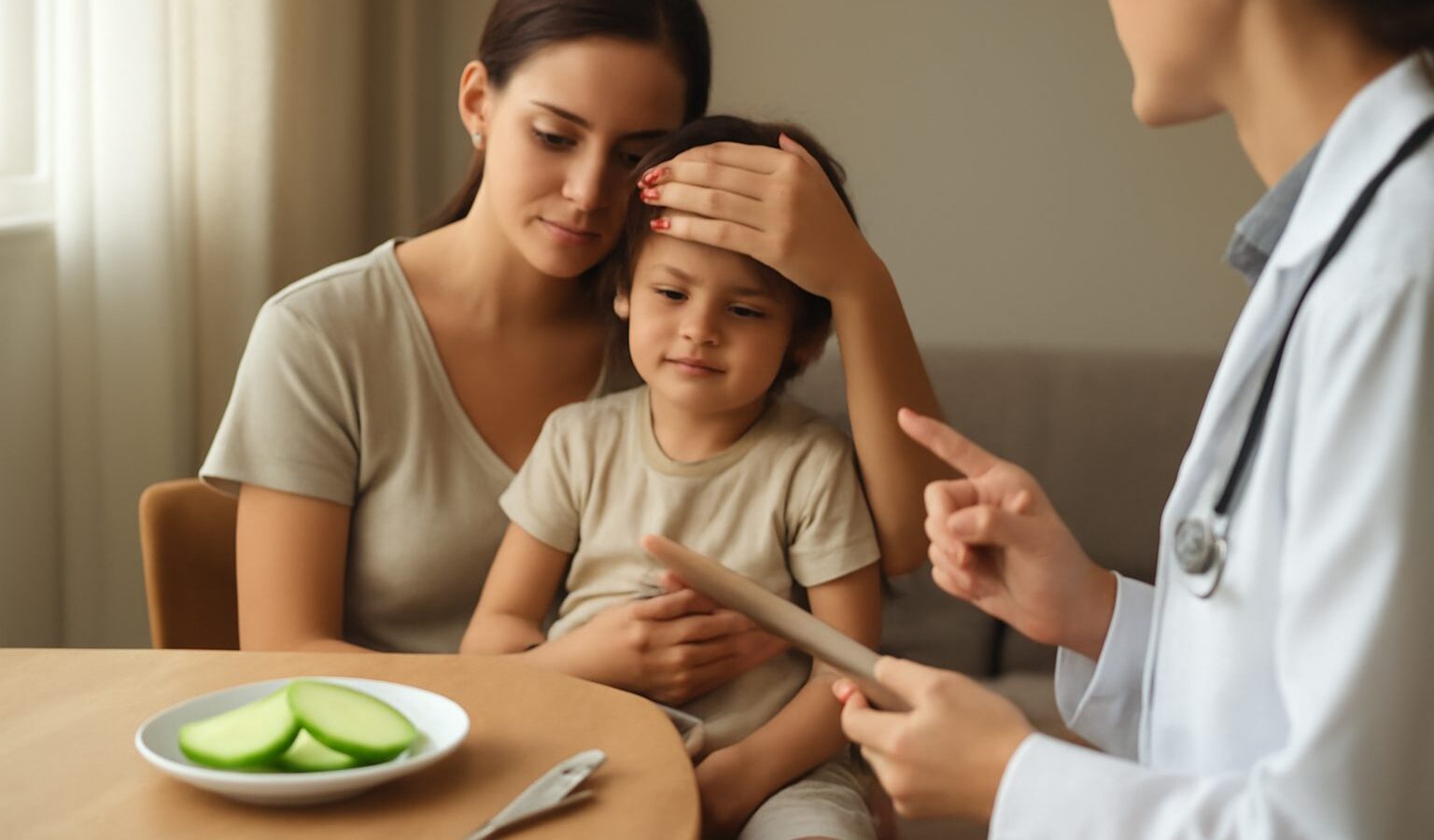
Few things unsettle a parent more than a child who is not quite right. The tricky part is rarely the obvious emergency. It is the ordinary muddle of a warm forehead at bedtime, a cough that lingers, or a toddler who has gone quiet and clingy. Knowing when to see a doctor for your child is less about memorising a list and more about learning to read your own child and trusting what you notice. This general guide is here to help you feel steadier, not to replace the advice of your own GP or paediatrician.
Most childhood illnesses in Singapore are mild and pass on their own with rest, fluids and comfort. But some need a doctor sooner rather than later, and a small number need urgent care straight away. The aim is to hold both truths calmly: you do not need to rush to the clinic for every sniffle, and you should never talk yourself out of a visit when your instinct is loud.
Why the Right Call Feels So Hard
Young children cannot tell you where it hurts or how bad it feels. A baby communicates through crying, feeding and sleep, and a toddler may say their “tummy” hurts when they mean something else entirely. Symptoms also change quickly. A child can seem floppy and feverish at 2pm and be bouncing on the sofa by 5pm, which leaves you second-guessing whether it was ever serious.
On top of that, our humid climate keeps common bugs circulating all year, and preschools and playgrounds pass them around freely. Coughs, colds, hand-foot-mouth disease and stomach upsets are part of early childhood. Knowing that most of these are self-limiting takes some of the fear out of the guesswork, so you can focus on the smaller number of situations that genuinely need attention.
Trusting What You Know About Your Child
You are the expert on your own child’s baseline. Doctors take a parent’s gut feeling seriously precisely because you notice the subtle shift that a stranger would miss. A useful question to ask yourself is not “is this symptom on a list” but “how different is my child from their normal self”.
Pay attention to the whole picture rather than a single number on the thermometer:
- Alertness and mood. A child who still makes eye contact, responds to you and perks up between bouts of feeling rotten is usually reassuring. A child who is unusually drowsy, limp or very hard to rouse is not.
- Drinking and wet nappies. Ongoing sips of fluid and regular wet nappies matter more than appetite for food. Fewer wet nappies, no tears, a dry mouth or sunken eyes can point to dehydration.
- Breathing. Fast, laboured breathing, the tummy or ribs sucking in with each breath, grunting, or a blue tinge to the lips is a signal to act quickly.
- How they look over time. One worrying moment matters less than a clear trend. A child who is steadily getting worse over hours deserves a review.
If your instinct says something is wrong even when you cannot name it, that instinct is a reason to seek help, not to feel silly.
General Signs It Is Worth Seeing a Doctor
The situations below are common reasons to book a same-day or next-day appointment with your GP or polyclinic. They are general prompts, not a diagnosis, and your doctor is the person to weigh them up for your child:
- A fever in a baby under three months, which should always be checked promptly.
- A fever that persists for more than a couple of days, or that keeps climbing despite the usual comfort measures.
- A rash that does not fade when you press a glass against it, or that spreads rapidly.
- Ear pain, a very sore throat, or a cough that is getting worse rather than better.
- Vomiting or diarrhoea that will not settle, especially if your child cannot keep fluids down.
- Pain that seems severe, or a limp or refusal to use an arm or leg.
- Any symptom that keeps you up at night with worry, or a child who simply is not recovering as you would expect.
For everyday guidance on the bugs that go around, our piece on recognising common childhood illnesses walks through what to expect and how to offer comfort at home.
Polyclinic, GP or Children’s Emergency: Where to Go
Choosing where to go is often as confusing as deciding whether to go at all. The table below is a general guide to matching the situation to the setting in Singapore. When in doubt, call your GP or the clinic first, and if a child is seriously unwell, do not wait.
| Situation | Best first stop | Why |
|---|---|---|
| Mild cough, cold, low fever, child still playful | GP or polyclinic (same or next day) | Convenient, familiar, good for routine assessment and advice |
| Symptoms that are worsening or not improving over days | Your regular GP or paediatrician | Continuity of care and a doctor who knows your child’s history |
| Serious breathing trouble, seizure, unresponsive or very floppy child | Children’s emergency at KKH or NUH, or call 995 | Immediate specialist assessment for a potentially urgent problem |
| You are frightened and unsure, day or night | Call your GP, the clinic, or a 24-hour service for advice | Talking it through helps you decide the right next step |
Keep your child’s health booklet, HealthHub records and any regular medicines handy, as these help whoever sees your child.
When It Is Truly Urgent
Some signs mean you should seek emergency care without delay, by heading to a children’s emergency department or calling 995. These include serious difficulty breathing, a seizure, a child who is unresponsive or cannot be woken, a stiff neck with a fever and a rash that does not fade, signs of a severe allergic reaction such as swelling of the lips or tongue and trouble breathing, or a serious injury. If your child shows any of these, act first and ask questions later. It is always better to be checked and reassured than to wait at home hoping it passes.
For food allergies in particular, our guide to introducing allergenic foods safely explains the signs of a reaction and why severe symptoms are a 995 emergency.
Getting Ready for the Visit
A short bit of preparation makes an appointment far more useful. Before you go, jot down when the symptoms started, how they have changed, your child’s temperature if you took it, how much they are drinking, and anything you have already tried. Bring their health booklet so the doctor can see their vaccination history, and note any medicines or allergies.
During the visit, it is fine to say plainly, “I am worried because this is not like her.” Ask what to watch for at home, what would mean coming back sooner, and how long recovery usually takes. Leaving with a clear plan is often the most reassuring part of the whole thing.
Looking After Yourself Too
A sick child, broken sleep and a house of laundry take a real toll, and the anxiety can linger even after your child is well. If worry about your child’s health is starting to feel constant or overwhelming, that is worth taking seriously for your own sake. Lean on your partner, family or helper, and if the low or anxious feeling does not lift, speak to your own GP or reach out to mindline at 1771. Caring for yourself is part of caring for your child. Learning to trust your judgement, one small illness at a time, is a skill that grows with every fever you weather together.
This article offers general information only and is not medical advice. Always follow the guidance of your own doctor, paediatrician or a qualified health professional, and refer to HealthHub, KKH and NUH for care specific to your child.