
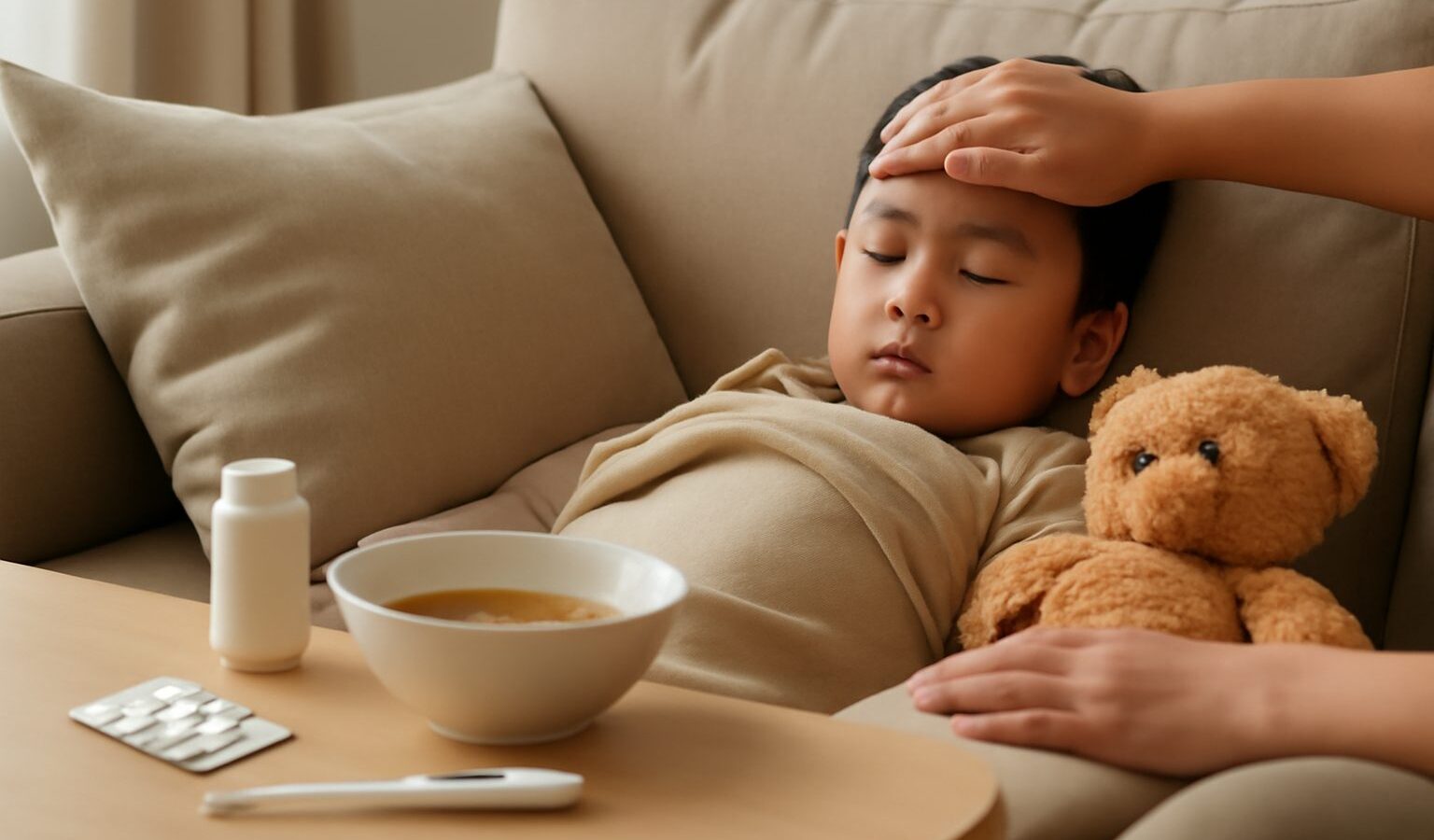
Sooner or later, every parent finds themselves peering at a flushed little face at 2am, wondering whether this is an ordinary bug or something more. It is one of the most unsettling parts of raising young children, and it does not fully go away, though it does get easier as you learn your child’s patterns. This guide is here to help you feel steadier when common childhood illnesses come knocking. It is general information only, not medical advice, and your GP, polyclinic or paediatrician is always the right person to assess your child.
The reassuring truth is that most childhood illnesses in Singapore are mild, self limiting and part of how a young immune system learns its trade. Preschoolers in particular can seem to catch one thing after another, especially in their first year of childcare. That is normal, if exhausting.
Why little ones get sick so often
Young children are still building their immune memory, and they explore the world with their hands and mouths, so germs spread easily. Singapore’s warm, humid, air conditioned indoor life and close quarters in HDB flats and childcare centres all give viruses plenty of chances to pass around.
Most of what you will meet is viral, which means antibiotics do not help and the body simply needs time, fluids and rest to recover. Understanding this can save you a lot of worry and a few unnecessary clinic trips, while still leaving you alert to the smaller number of situations that do need prompt care.
The usual suspects
A handful of illnesses account for most of the coughs, sniffles and rashes you will see in the early years. Knowing them by name helps you feel less at sea.
- Coughs and colds. Runny noses, mild fevers and coughs that drag on for a week or two. Frequent but usually harmless in otherwise well children.
- Fever. Not an illness in itself but a sign the body is fighting something. How your child behaves matters more than the exact reading on the thermometer.
- Hand, foot and mouth disease (HFMD). Common in Singapore’s preschools, with mouth ulcers, a rash or blisters on the hands and feet, and often a fever. Uncomfortable but generally mild, though it spreads easily and usually means staying home.
- Stomach bugs. Vomiting and diarrhoea from a viral tummy infection. The main risk is dehydration, so keeping fluids going is the priority.
- Viral rashes. Many childhood viruses bring a rash as they pass. Most fade on their own, but any rash with other worrying signs deserves a doctor’s eye.
If your child has just started preschool and seems permanently under the weather, that wave of infections is common; our guide to preparing your toddler to start preschool may help you settle into the new rhythm.
Reading the signs without panicking
The skill you are really building is not naming the illness but reading your child. A child who is feverish but still smiling, drinking and playing between naps is usually coping well. A child who is limp, refusing all fluids or hard to rouse needs attention regardless of the temperature.
The table below pairs some common signs with what they may mean and a calm next step. It is a general guide to help you think, not a diagnosis, and it does not replace a doctor who can actually examine your child.
| Sign you notice | What it may mean | A calm next step |
|---|---|---|
| Mild fever, still drinking and playful | An ordinary viral illness the body is handling | Rest, fluids and comfort; watch how they behave over the day |
| A rash with blisters on hands, feet or mouth | Possibly HFMD, which is common and usually mild | See a doctor to confirm, keep your child home, and tell the childcare centre |
| Vomiting or diarrhoea but taking small sips | A stomach bug, with dehydration the main concern | Offer frequent small drinks; see a doctor if fluids will not stay down |
| Floppiness, trouble breathing, a fever with a stiff neck or a rash that does not fade under pressure | A sign of possible serious illness | Seek urgent care straight away, or call 995 |
Keep that last row in view. Signs like breathing difficulty, unusual drowsiness, a stiff neck, a fever in a very young baby, or a rash that stays visible when you press a glass against it are reasons to seek help urgently rather than wait and see.
Helping your child feel better at home
For the everyday bugs, comfort care is the heart of it. You cannot rush a virus, but you can make the waiting kinder.
- Keep fluids going. Small, frequent sips of water, milk or an oral rehydration solution matter more than food when a child is off their meals.
- Rest and reassurance. A calm, cool room, familiar comforts and plenty of cuddles do real work.
- Manage fever for comfort, not numbers. Follow your doctor’s or pharmacist’s guidance on any fever medicine and dosing for your child’s age and weight, and never guess.
- Watch, do not hover. Check in regularly, but let your child rest. Trust changes in behaviour as your best signal.
- Keep them home when they are unwell or infectious, both to recover and to avoid passing it on at the centre.
Never give medicine meant for adults or older children, and do not combine remedies without advice. When in doubt about what is safe, ask your pharmacist or doctor rather than the internet.
Knowing when it is more than a bug
Most illnesses pass with time, but part of feeling confident is knowing where your limits are. Trust your instincts: you know your child, and a parent’s sense that something is not right is worth acting on. Seek prompt medical care if your child is getting worse rather than better, if a fever is very high or persistent, if a baby under three months has any fever, if they cannot keep fluids down, or if you simply feel out of your depth.
Our companion guide to knowing when to see a doctor for your child goes deeper into those judgement calls, and staying current with childhood vaccinations is one of the best ways to prevent some of the more serious illnesses in the first place.
Being ill is part of growing up
It helps to hold the long view. A childhood of ordinary coughs, colds and the occasional rash is not a sign you are doing anything wrong; it is how a small body learns to defend itself. With each bout you will read your child a little better and worry a little less. The nights are still tiring, but they pass.
This article offers general guidance only. It cannot diagnose your child or replace a proper assessment. For anything that worries you, or any sign of serious illness, please see your GP, polyclinic or paediatrician promptly, and call 995 in an emergency. Trust your instincts and let the professionals help.