
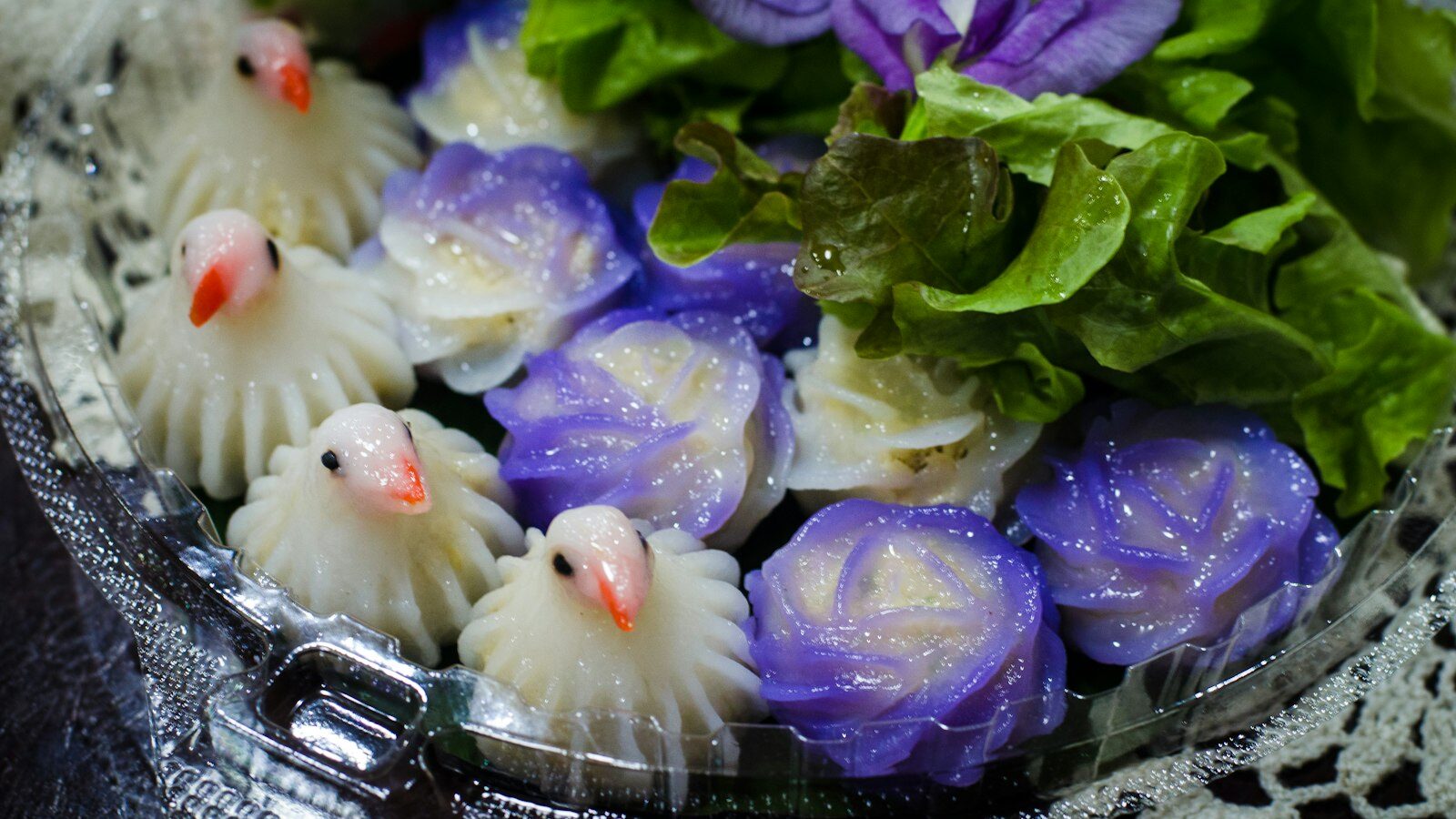
Few sounds say old school snack time quite like the soft hiss of a steamer and the little pop of a wooden mould being knocked out onto a square of pandan leaf. That is the ritual behind kueh tutu singapore hawkers have kept alive for generations. Kueh tutu is the small, flower shaped steamed rice cake filled with either crushed peanut or sweet grated coconut, served warm on a fragrant leaf that perfumes every bite. It is delicate, lightly sweet and best eaten fresh, which is exactly why watching it being made is half the pleasure.
This guide covers kueh tutu in detail and then widens out to its family of steamed snacks, both sweet and savoury, so you can navigate a steamer counter with confidence.
What Makes Kueh Tutu Special
Kueh tutu starts with finely ground rice flour that is dampened and sieved until it has the texture of soft, clumpy sand. The hawker packs this flour into a small carved wooden mould, adds a spoon of filling in the centre, tops it with more flour and levels it off. The filled mould is then flipped over a steamer hole and covered, and in about a minute the steam sets the flour into a tender little cake.
When it is knocked out, you get a pale, patterned dome sitting on a small piece of pandan leaf. The rice cake itself is only faintly sweet, so the filling does most of the talking. The pandan leaf is not just for looks either. It stops the cake from sticking and lends a gentle grassy fragrance that is a big part of the experience.
There are two classic fillings, and choosing between them is a small but serious decision for regulars.
- Peanut: ground roasted peanuts with sugar, warm and nutty, a little denser.
- Coconut: freshly grated coconut cooked with sugar, fragrant and slightly moist, lighter on the palate.
Some stalls let you get a mixed set so you can enjoy both, and a few modern stalls experiment with flavours like corn, chocolate, red bean or yam. Purists will always steer you back to peanut and coconut, and for good reason: they are the flavours the snack was built around.
Eating Kueh Tutu the Right Way
Kueh tutu waits for no one. It is at its best within minutes of being made, while the cake is still warm and just holding together and the filling is soft. Left too long, the rice flour firms up and turns dry, losing the pillowy quality that makes it special. So when you buy, eat it there or nearby rather than saving it for hours later.
A few local habits worth copying:
- Eat it warm and soon. Freshness is everything with this snack.
- Smell the leaf. Lift the cake to your nose first; the pandan aroma is part of the taste.
- Order a mixed set. Getting some peanut and some coconut in one buy gives you the full picture.
- Pair it with tea. A cup of teh or Chinese tea balances the mild sweetness nicely.
Because it is made to order, you will often wait a few minutes for a fresh batch. That wait is normal and a good sign. It means the cakes are not sitting around going stale.
The Wider World of Steamed Snacks
Kueh tutu belongs to a much bigger family of steamed kueh, and once you know the neighbours you can order a whole spread. Steamed snacks split roughly into sweet and savoury, and many stalls sell a mix of both. Here is a quick comparison to help you tell them apart.
| Snack | Sweet or savoury | What is inside | Texture |
|---|---|---|---|
| Kueh tutu | Sweet | Peanut or coconut | Soft, powdery rice cake |
| Putu piring | Sweet | Palm sugar (gula melaka) | Soft steamed rice flour, molten centre |
| Soon kueh | Savoury | Turnip, bamboo shoot, sometimes mushroom | Chewy, translucent skin |
| Png kueh | Savoury | Glutinous rice, often with mushroom and peanut | Firm pink skin, filling rice inside |
| Chwee kueh | Savoury | Topped with preserved radish | Soft, wobbly rice cake |
Putu piring is the closest cousin to kueh tutu and the two are often confused. Both are steamed rice flour snacks, but putu piring is filled with molten gula melaka, giving it a dark, caramel sweet centre, and it comes from Malay and Indian Muslim food traditions. Kueh tutu, by contrast, sits more in the Chinese kopitiam snack world with its peanut and coconut fillings. They are lovely to try side by side if you find them near each other.
On the savoury side, soon kueh and png kueh are the ones to know. Soon kueh has a soft, slippery skin around a savoury turnip filling and is usually served with a dab of sweet dark sauce and sometimes chilli. Png kueh has a pink, chewy skin wrapped around seasoned glutinous rice. Both are steamed, filling, and popular as a light meal rather than just a snack.
Where to Find These Snacks and What to Expect
Steamed snacks like these turn up in a few reliable places:
- Hawker centres, at dedicated kueh or steamed cake stalls
- Older neighbourhood kopitiams and coffee shops in the heartland
- Pasar malam night markets and weekend food fairs
- Stalls near wet markets, especially in the mornings
Kueh tutu in particular is often sold from stalls with a visible steamer and rows of wooden moulds, sometimes as a modern update on the old pushcart style. Availability moves around, though. Stalls open and close, relocate and change their hours, so it is always wise to check current details before travelling specially for one shop. Prices are modest and usually sold by the piece or in small sets, but figures shift over time, so treat anything you read as a rough guide.
One gentle reminder on tradition and variety: recipes, fillings and even the shape of the moulds differ from stall to stall, and family and community practices vary. What one hawker calls the classic version, another may make a little differently, and both can be delicious. Part of enjoying these snacks is discovering the small differences yourself.
Explore more
To go deeper into this steamed and griddled world, start with our traditional kueh guide and our broader local snacks and kueh roundup. For a sweeter finish, browse local desserts in Singapore, and if you want to eat your way around the classic stalls, see our guide to heritage hawker stalls.