
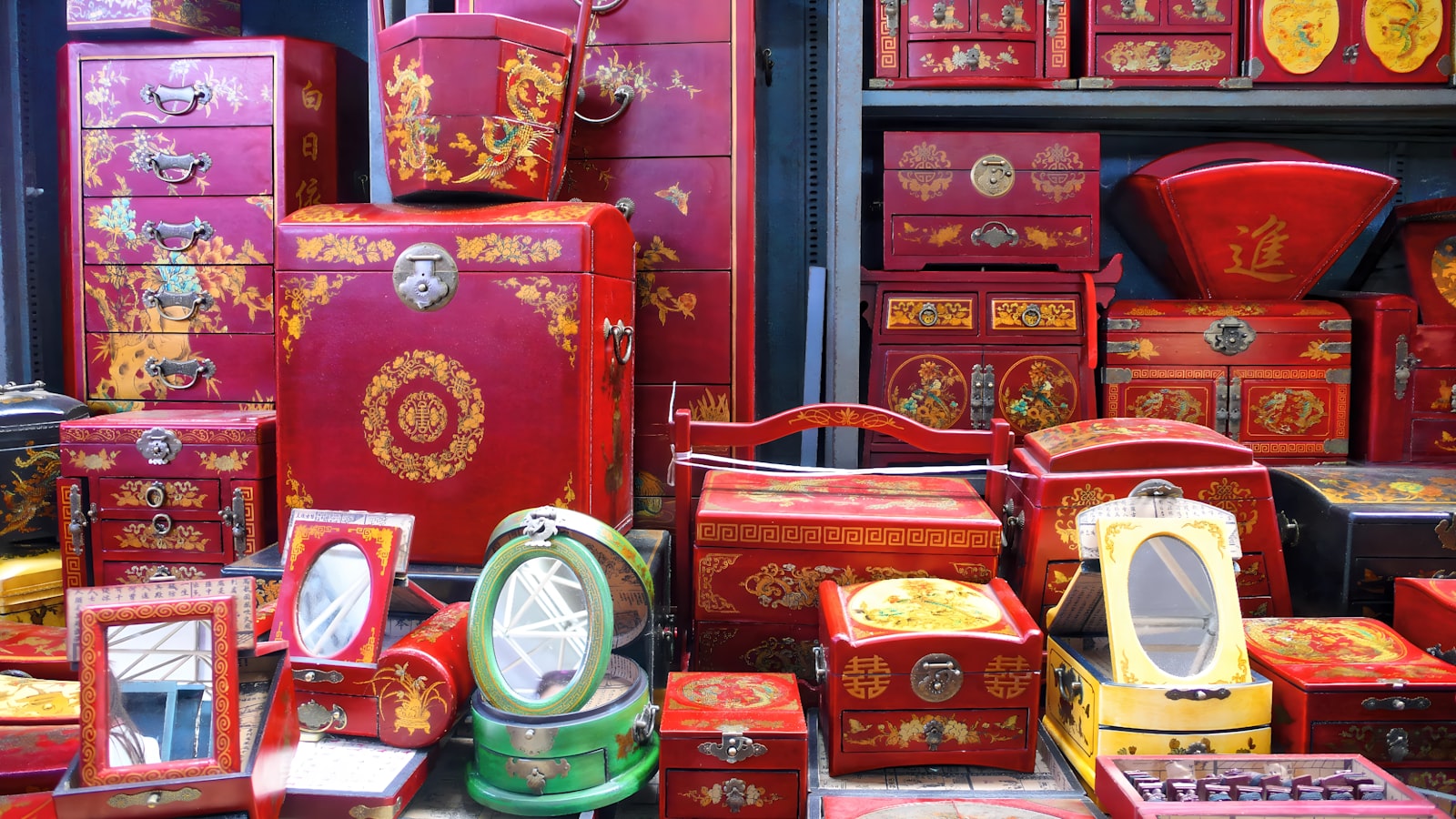
There is a special glow to a piece of fine lacquerware. The surface is deep and glossy, often black or red, and it catches the light like still water. Look closer and you may see shimmering flowers, birds or landscapes made from thin slivers of iridescent shell set flush into the surface. This is the marriage of two ancient decorative crafts, lacquer work and mother-of-pearl inlay. Together they have adorned trays, boxes, screens, cabinets and altar pieces across Asia for centuries, and examples grace many a Straits Chinese and traditional home in Singapore.
For readers curious about lacquerware singapore families have long treasured, it helps to understand what these crafts are, where they come from, how they are made, and where to admire them today.
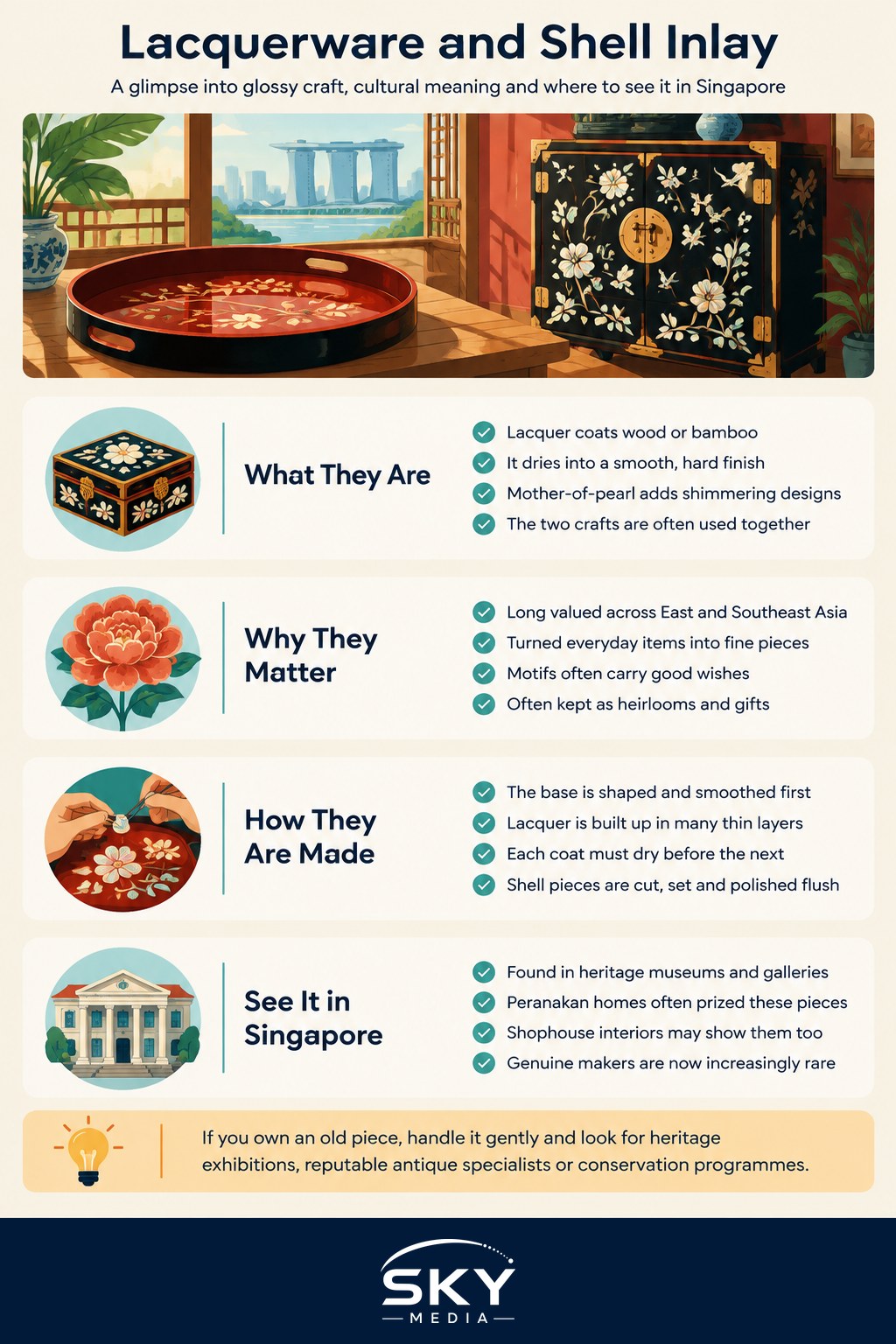
What Lacquerware and Mother-of-Pearl Inlay Are
Lacquerware is any object coated with lacquer, a natural resin traditionally tapped from the sap of the lacquer tree. When applied in thin layers and left to harden, lacquer forms a smooth, durable, water resistant skin over a wooden or bamboo base. It protects the object and gives it that characteristic mirror like sheen. Classic colours are a rich cinnabar red and a deep, lustrous black, achieved by adding natural pigments to the resin.
Mother-of-pearl inlay is the decorative partner to lacquer. Mother-of-pearl is the shimmering inner lining of certain shells, such as those of oysters and sea snails. Craftsmen cut this shell into wafer thin pieces and set them into the surface to form pictures and patterns. Against a dark lacquer background the pale, rainbow tinted shell seems to float and shift as you move. The two crafts are so often combined that many people think of them as one.
Origins and Cultural Meaning
Both lacquer work and shell inlay have very long histories in East and Southeast Asia. Lacquer was valued because it turned everyday wood into something strong, beautiful and long lasting, suitable for fine furniture, tableware and ceremonial objects. Mother-of-pearl inlay added luxury and meaning, since the designs usually carried good wishes.
The motifs were rarely chosen at random. Peonies suggested wealth and honour, cranes and pine trees stood for long life, and paired mandarin ducks or phoenixes hinted at marital harmony. Landscapes and figures from legend told stories and displayed refinement. Because these pieces took great skill and time to produce, they were treasured possessions, often passed down as heirlooms and given at weddings and important occasions. They belong to the same world of careful traditional trades and crafts that immigrant communities carried with them.
How the Craft Is Made
Making lacquerware is a slow, patient art. A wooden or bamboo form is first shaped and smoothed. Then lacquer is applied in many thin coats. Each coat must dry and be polished before the next is added, and building a fine, deep surface can take many layers and a great deal of time. Humidity and cleanliness matter enormously, since dust or the wrong conditions can spoil a coat.
For mother-of-pearl decoration, the artisan first cuts the design from thin sheets of shell, sometimes into tiny, intricate pieces. These are laid onto the surface and either set into shallow recesses or embedded between lacquer layers, then covered and polished back so that the shell sits perfectly flush and gleaming. The final polishing brings up both the mirror sheen of the lacquer and the rainbow shimmer of the shell. Every stage rewards patience, and there is little room for error once the shell is placed.
Its Place in Singapore’s Heritage
Lacquered and inlaid pieces came to Singapore through trade and migration, and they found a natural home among the Straits Chinese. Peranakan households in particular prized elaborate furniture, altar tables, trays and betel nut sets finished in red and black lacquer with gilding and shell inlay. These objects appeared at weddings, ancestral rites and festive gatherings, and their fine workmanship signalled both prosperity and good taste. To explore this setting further, see our guide to Peranakan culture and the ornate world of the Singapore shophouse interior.
Such heirlooms are an important thread in the story of preserving Singapore heritage, because each surviving piece carries the taste and craftsmanship of an earlier age.
How to See and Learn About It Today
The best places to admire lacquerware and mother-of-pearl inlay are heritage museums and galleries devoted to Peranakan and Asian decorative arts, where fine antique furniture, trays and boxes are displayed and explained. Some conserved shophouse homes open to visitors also show these pieces in their original setting, which brings them wonderfully to life.
Traditional lacquer and inlay work is highly specialised and increasingly rare, so genuine practitioners are few. If you would like to learn more or acquire a piece, look for current heritage exhibitions, reputable antique specialists and conservation programmes, and treat any old family piece with care. A well kept lacquer tray or inlaid cabinet is not merely furniture. It is a small, gleaming record of skill, patience and cultural memory worth passing on.
Frequently Asked Questions
How do I look after an old lacquer tray or inlaid cabinet? Treat any old family piece with care and seek advice from reputable antique specialists or conservation programmes before attempting repairs. Lacquer is durable and water resistant but can still be spoiled by poor handling, so avoid harsh cleaning and ask a specialist first.
Why does lacquerware take so long to make? Lacquer goes on in many thin coats, and each coat must dry and be polished before the next is added. Humidity and cleanliness matter, since dust or the wrong conditions can spoil a coat. Building a deep, fine surface therefore takes many layers and a great deal of time.
How is mother-of-pearl set into lacquer so smoothly? The artisan cuts the design from thin sheets of shell, lays the pieces on the surface, and sets them into shallow recesses or between lacquer layers. These are then covered and polished back so the shell sits perfectly flush. There is little room for error once the shell is placed.
What do the designs on lacquerware pieces symbolise? Motifs were rarely random. Peonies suggested wealth and honour, cranes and pine trees stood for long life, and paired mandarin ducks or phoenixes hinted at marital harmony. That is why such pieces were often given at weddings and important occasions.
Where can I see antique lacquerware and inlaid furniture in person? Heritage museums and galleries devoted to Peranakan and Asian decorative arts display fine antique furniture, trays and boxes with explanations. Some conserved shophouse homes open to visitors also show these pieces in their original setting. Check current exhibitions and opening arrangements before you go.