
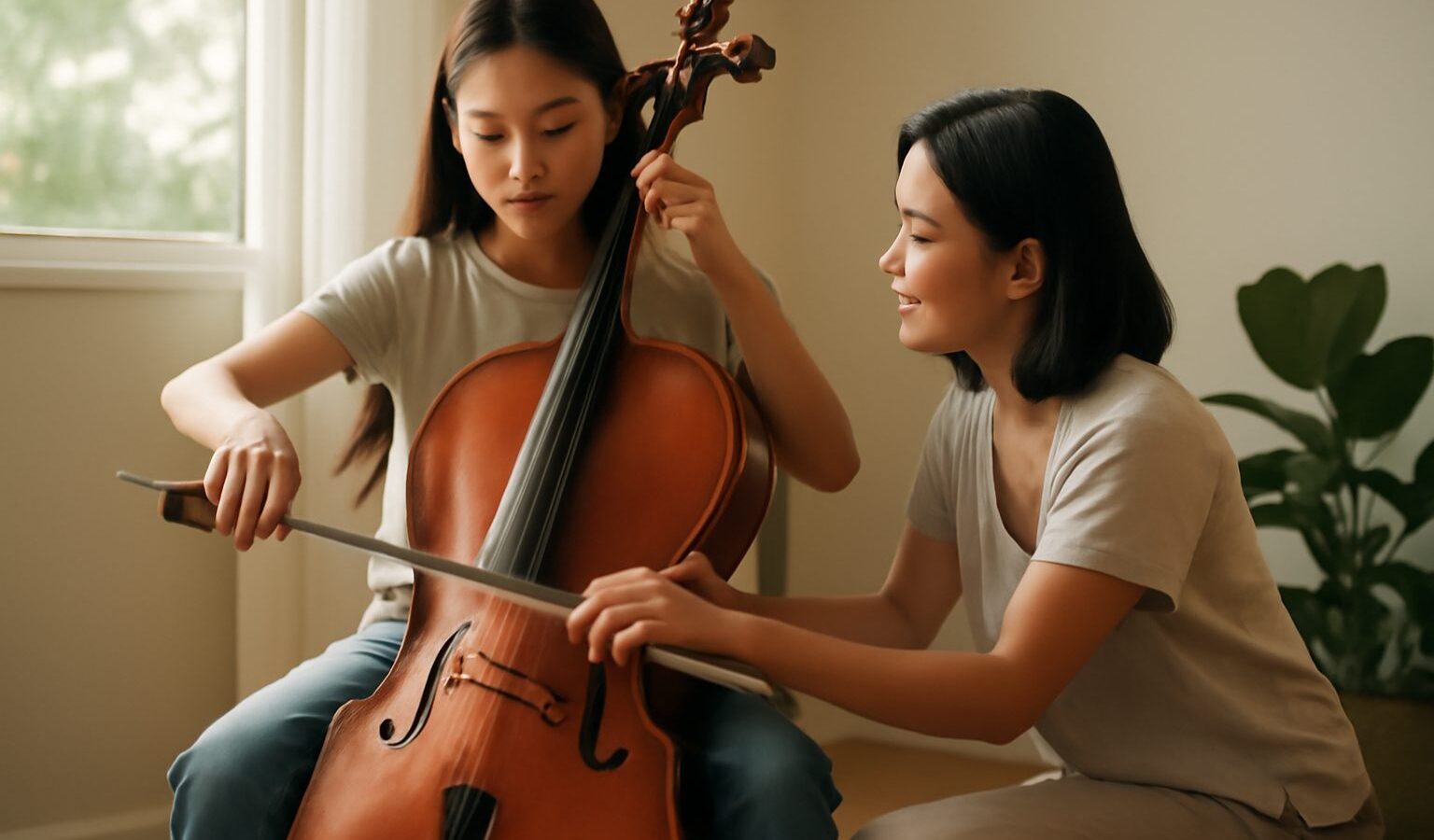
Few instruments sound as human as the cello. Its range sits close to the singing voice, warm and resonant, and that is a big part of why so many adults and children fall for it. Learning the cello asks for patience, because your ears will want a beautiful tone long before your hands can make one. Stay with it and the reward is enormous. This guide is a grounded, Singapore-friendly start covering the instrument, posture, bowing, quiet practice in a flat, humidity care and finding a teacher, with no invented brands or prices.
What Makes The Cello Special And Demanding
The cello has no frets. On a guitar, a metal strip tells you exactly where a note lives; on a cello, your ear and muscle memory decide. That is the central challenge and the central joy. You are building intonation, the skill of landing notes in tune, from scratch. It feels slow at first and then, one day, your hand simply knows where to go.
The other big skill is the bow. Drawing a bow across a string to make a clean, singing sound is harder than it looks. Too much pressure and it scratches; too little and it whispers. Coordinating a steady bow with an accurate left hand is the real work of the early months.
None of this is a reason to be discouraged. Adults learn the cello well, and Singapore’s strong graded-exam culture means there is a clear, supportive path if you want structure. Just come in expecting a craft, not a quick win.
Choosing And Sizing Your First Cello
Cellos come in fractional sizes so the instrument fits the player. Children and smaller adults may need a fraction rather than a full size. Getting the size right matters for comfort and technique, so this is one area where you should not guess.
- Get measured in person. Visit a reputable music shop or ask a teacher to check your size before buying or renting.
- Consider renting first. Many learners, especially children who will grow, start on a rental. It is a low-risk way to confirm the hobby suits you before committing.
- A beginner outfit is enough. An entry-level cello that comes with a bow and a soft case will serve you for years of learning. You do not need a fine instrument to start.
- Try before buying. Tone and feel vary between instruments. Play a few, and bring someone experienced if you can.
Budget also for rosin (the block you rub on the bow hair so it grips the string), spare strings, a tuner, and a stand or wall hook. These small extras are part of the real cost.
Humidity, Storage And Caring For A Wooden Instrument
A cello is a wooden box under constant string tension, and Singapore’s climate is hard on wood. Swings between a damp corridor and a cold, air-conditioned room can shift tuning and, over time, stress the instrument. A little care goes a long way.
- Store it in its case when not playing, away from direct sun, open windows and aircon draughts.
- Loosen the bow hair after each session so it does not stay under tension.
- Wipe off rosin dust from the strings and body with a soft cloth to keep the varnish clean.
- Watch for buzzes or open seams. Humidity changes can loosen glued joints. If something sounds off, see a repairer rather than forcing it.
- Retune often. Expect the pitch to drift with the weather. Frequent tuning is normal, not a fault.
Practising Politely In An HDB Or Condo Home
Here is the good news for flat dwellers: an acoustic cello is not especially loud, and it lives in a comfortable middle range rather than thumping bass or piercing highs. It is far kinder to neighbours than drums or an amplified instrument. Even so, be considerate.
Keep practice to reasonable hours and follow HDB and town council norms. Thin walls mean sound still travels, so a late-night session may carry. Practising with your door closed and choosing sensible times usually keeps everyone happy. There are practice mutes that clip to the bridge and cut the volume noticeably for very early or very late sessions, which are handy if your schedule is unusual.
Space matters too. You need room to draw the bow fully to the side without hitting furniture or a wall. A small corner with a stable chair and a music stand is enough. If you are weighing a quieter, more portable instrument against a louder one, it is worth comparing options such as learning the flute or the reed-driven saxophone before you decide the cello is your path.
Cello Versus A Fretted String Instrument
If you are choosing between the cello and, say, a bass or guitar, this comparison may help you set expectations honestly.
| Feature | Cello | Fretted string instrument |
|---|---|---|
| Finding notes | By ear, no frets, harder intonation | Frets guide you, faster early wins |
| Sound production | Bowing, a skill in itself | Plucking or strumming, quicker to a note |
| Portability | Bulky, needs care in transit | Generally easier to carry |
| Volume at home | Moderate, neighbour-friendly | Varies, amps can be loud |
| Climate sensitivity | High, wooden and delicate | Moderate, but still needs care |
Neither is better; they suit different temperaments. The cello rewards patient ears, while a fretted instrument gives quicker momentum.
Your First Months: A Sensible Path
Think in small, repeatable steps rather than big leaps.
- Posture first. Sit forward on a chair, cello resting against your chest, the endpin set so the instrument feels balanced. A comfortable, upright posture prevents strain and makes everything easier.
- Bowing alone. Before you worry about the left hand, practise drawing long, even bows on open strings. Aim for a smooth, unbroken tone.
- Left hand basics. Learn the first hand position and simple finger patterns. Use a tuner or a keyboard to check whether your notes are truly in tune.
- Simple tunes. Play slow, familiar melodies. Slow playing that is in tune beats fast playing that is not.
- Read a little theory. Understanding how chords and progressions work helps you hear where a melody is heading, even on a single-line instrument.
A word on your body: the cello should never hurt. If your neck, back or hands ache, your setup or posture likely needs adjusting. This is general hobby guidance, not medical advice, so if pain persists, rest and get proper help.
Above all, get a teacher early if you can. Bowing and intonation are far easier to build with someone watching your hands than from videos alone. Singapore has many private teachers and music schools, and even occasional lessons prevent bad habits from setting in. Progress on the cello is measured in months, not days, but the sound you are chasing is worth every patient hour.