
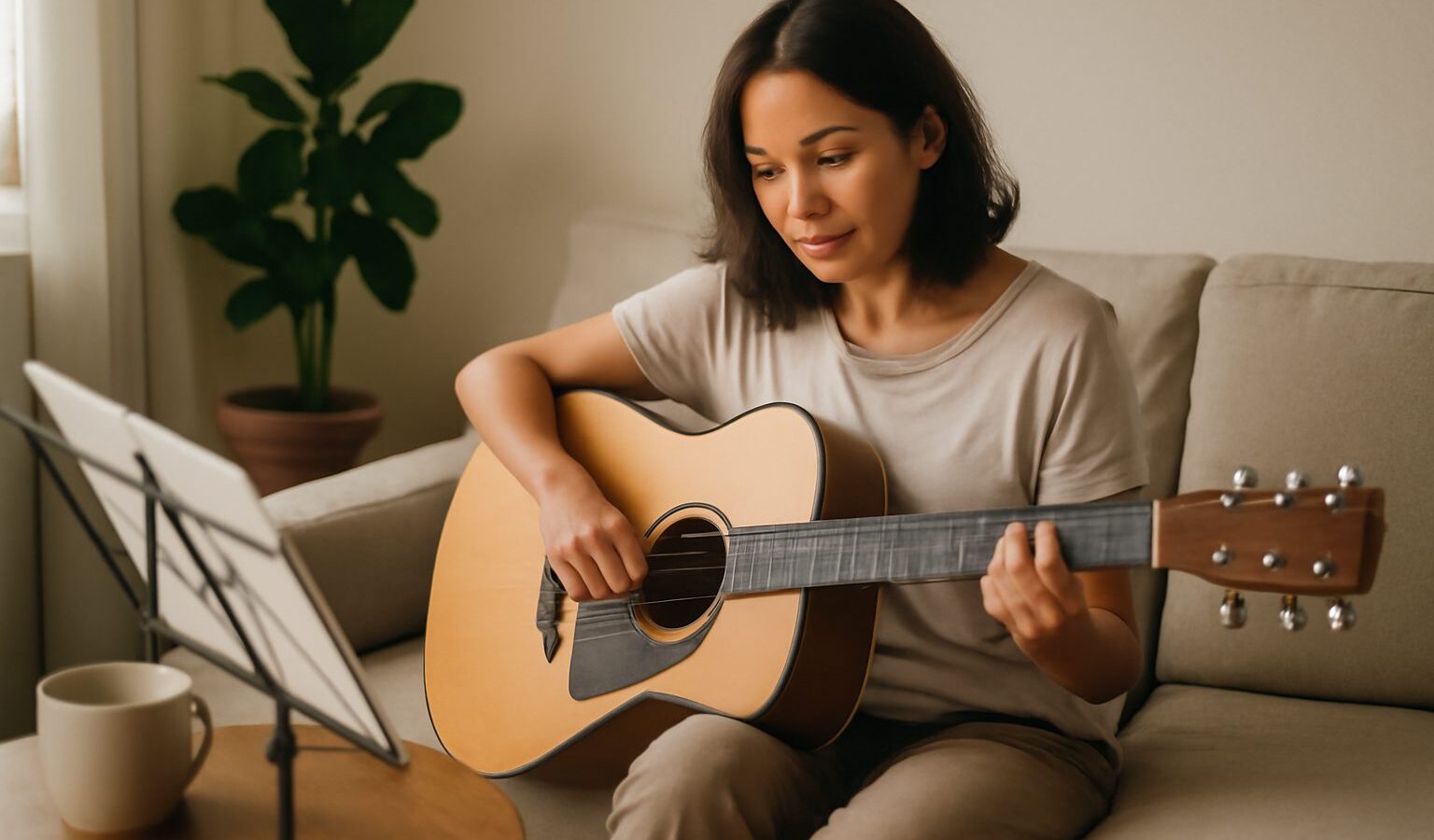
There is a stubborn myth that music is only for children, that if you did not start young you have somehow missed your chance. It simply is not true. Learning an instrument as an adult is not only possible, it comes with real advantages that children do not have. You chose this yourself, you understand why you want it, and you can plan your own practice. This guide is for the complete beginner in Singapore who has always fancied playing something but was not sure where to begin.
Adults often learn faster than they expect in the early stages, because they can follow instructions, count rhythms and stay patient with slow progress. What holds most people back is not talent or age. It is a busy schedule, a fear of looking silly, and not knowing how to structure the first few months. All of those are solvable, and this article walks through each one honestly.
Why It Is Never Too Late to Start
Your brain keeps forming new connections throughout life, so picking up a new skill in your thirties, fifties or seventies is entirely realistic. You may not become a concert soloist, but that was probably never the goal. Most adults want to play songs they love, join friends for a jam, or simply unwind after work. All of those are well within reach with steady practice.
There are genuine benefits beyond the music itself. Regular practice sharpens focus and coordination, gives you a screen-free hobby, and offers a satisfying sense of progress that many desk jobs lack. Playing can also be calming, a gentle way to decompress in the evening. Just treat this as general wellbeing, not a medical treatment, and see a qualified professional for any health concern.
Being an adult learner has quiet advantages worth naming:
- You have a reason. Clear motivation keeps you going when a beginner child might simply drift off.
- You can self-direct. You choose the songs, the pace and the teacher, so lessons feel like yours.
- You have patience. Years of learning other skills have taught you that awkward beginnings are normal.
- You have some money of your own. Even a modest budget lets you buy a decent starter instrument and a few lessons.
Setting Expectations That Keep You Going
The single biggest reason adults quit is a mismatch between expectations and reality. Music is a slow-burn skill. Your fingers, ears and sense of timing all need time to catch up with what your head wants to do. Early on you will sound rough, and that is completely normal. Everyone who plays well today once made exactly the same noises.
A useful mental picture is the plateau. Progress rarely feels smooth. You improve in small bursts, then feel stuck for a while, then suddenly a tricky passage clicks. Those flat stretches are not failure, they are your brain consolidating. Expecting them means you are far less likely to give up during one.
Set goals you can actually see. “Get good at guitar” is vague and discouraging. “Play one simple song all the way through by the end of the month” is concrete and achievable. Small, finished wins build the confidence that carries you to the next one. Track your practice in a simple note or app, because seeing a run of ticked days is oddly motivating.
Fitting Practice Into a Full Life
You do not need hours a day. Short, frequent practice beats long, rare sessions every time, because your brain learns best in regular small doses. Fifteen to twenty focused minutes on most days will take a beginner remarkably far in a few months. Consistency, not marathon sessions, is the real secret.
Here are practical ways to protect your practice time in a packed Singapore week:
- Anchor it to a habit. Practise right after dinner or before your evening shower, so it rides on something you already do daily.
- Leave the instrument out. A guitar on a stand or a keyboard already set up gets played far more than one zipped in a case in the cupboard.
- Use small windows. Ten minutes before work counts. You do not need a free evening.
- Be neighbourly at home. In an HDB flat, keep to reasonable hours and mind quiet times. Headphones on a digital keyboard or an electronic drum kit let you practise late without a single complaint next door.
- Protect your gear. Singapore’s humidity is hard on wooden instruments, so store them away from direct sun and consider a dehumidifier or silica gel for a guitar or violin.
Quality of practice matters as much as quantity. Slow, careful repetition of the hard bits beats mindlessly playing the easy parts you already know.
Lessons, Apps or Self-Teaching
You have more good options than ever, and many learners mix them. Free videos and apps are brilliant for getting started and cost almost nothing. A human teacher, in person or online, is unmatched for fixing bad habits early and keeping you accountable. There is no single right path, only the one that fits your budget and personality.
| Approach | Best for | Watch out for |
|---|---|---|
| Private teacher | Personal feedback and accountability | Costs more; you must find the right fit |
| Apps and online courses | Low cost and learning on your own schedule | No one corrects your technique in real time |
| Free videos | Trying an instrument before you commit | Quality varies; easy to jump around and lose focus |
| Group class | Motivation and meeting other beginners | Pace is set for the group, not just for you |
A common and sensible route is to start with free videos or an app to test whether you enjoy it, then add a teacher once you are sure you want to continue. Even a handful of lessons early on can save you months of practising a mistake. If you decide to look for one, take your time choosing someone who suits complete beginners and makes you feel comfortable.
Choosing Something You Will Actually Enjoy
The best instrument for you is the one you are excited to pick up. Motivation beats theory here. If you love a certain sound, that pull will get you through the awkward first weeks far better than choosing something “sensible” that leaves you cold. Think about the music you already listen to and what you can picture yourself playing.
Practicalities matter too, especially at home. Keyboards and digital pianos are forgiving for beginners, take headphones, and suit flat living. Ukuleles are small, affordable and gentle on the fingers. Guitars are hugely versatile. Drums need an electronic kit and headphones to be flat-friendly. Violins have a steeper start but are deeply rewarding. Do not overspend at first; a reliable entry-level instrument is plenty, and you can always upgrade once you know you are sticking with it. Check current models and prices at a local music shop, as these change often.
Whatever you choose, remember that starting imperfectly beats waiting for the perfect moment that never comes. Pick something, give it an honest few months of short daily practice, and let the small wins pull you forward. The only real mistake is talking yourself out of beginning at all.