

Opening up is one of the bravest things we do in love. Being vulnerable in a relationship in Singapore can feel especially tricky when many of us grew up being taught to keep our feelings private, to stay strong, and not to burden others. Yet real closeness is built on exactly the thing that scares us most, which is letting another person see the parts of us we usually hide. If you long to feel deeply connected to your partner but find it hard to lower your guard, you are not alone, and this is something you can learn gently over time.
Vulnerability is not weakness. It takes courage to say “I am scared”, “I need you”, or “that hurt me”. Far from pushing people away, honesty about your inner world is often what draws them closer.
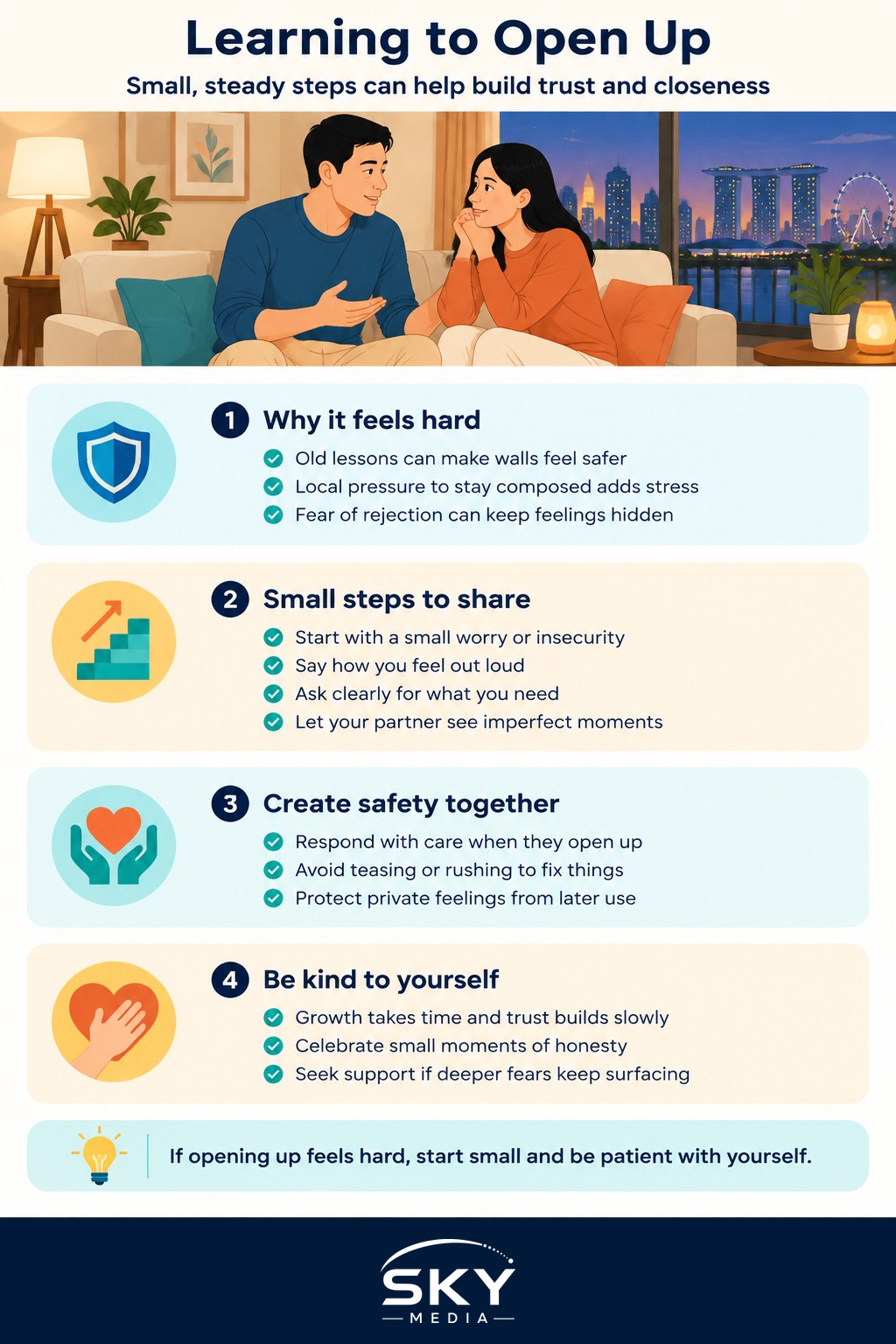
Why Vulnerability Feels So Hard
If opening up feels uncomfortable, there is usually a good reason. Many of us carry old lessons that made walls feel safer than windows. Perhaps you were praised for being independent and low-maintenance. Perhaps sharing feelings in the past was met with dismissal or was later used against you. Those experiences teach us to protect ourselves, and that instinct made sense at the time.
In our local context, there can also be a quiet pressure to appear composed, to not make a fuss, and to handle things on your own. Add the fear of looking needy or being rejected, and it is no wonder guarding your heart can feel like the sensible choice.
But those same walls that keep out pain also keep out closeness. When your partner never sees your fears, doubts, or softer feelings, they can only ever know a filtered version of you. Understanding your own patterns can help here, and our guide on understanding attachment styles explains why some of us find it harder than others to let people in.
Small Steps Towards Opening Up
You do not have to bare your soul all at once. Vulnerability grows best in small, safe steps, a little at a time, as trust builds.
- Start with low-stakes honesty. Share a small worry or a minor insecurity before moving to bigger things.
- Name your feelings out loud. Instead of going quiet, try, “I felt a bit left out today.” Simple statements are enough.
- Ask for what you need. Saying “could you just hug me right now” is a real act of openness.
- Let your partner see you when things are not perfect, whether that is a bad day, a mistake, or a fear about the future.
- Notice the urge to deflect with a joke or a change of subject, and gently stay with the feeling instead.
Each time you share something real and your partner responds with warmth, it becomes a little easier to do it again. Trust is built through these repeated small moments, not one grand confession. If you are still building that foundation, our piece on building trust in a relationship works hand in hand with learning to open up.
Creating Safety So Both of You Can Open Up
Vulnerability is a two-way street. It flows most easily when both partners feel safe, so how you respond when your partner opens up matters just as much as your own courage to share.
When your partner shares something tender, meet it with care. Avoid brushing it off, teasing, or leaping straight into fixing. A warm “thank you for telling me” or “that makes sense, I am glad you shared that” tells them their honesty is welcome here. Being a steady, non-judgmental presence is a gift, and our guide on how to be a better listener in a relationship can help you hold those moments well.
It also helps to protect what is shared. Nothing shuts down openness faster than having a private feeling mocked later or brought up in an argument. When both of you know your soft spots will be treated gently, the whole relationship becomes a place you can finally exhale.
Be Patient and Kind With Yourself
Learning to be vulnerable is a slow, tender process, and there is no rush. Some days you will manage to open up, and other days the walls will go back up, and that is completely human. Celebrate the small moments of honesty rather than judging yourself for the times you hold back.
If you find that a deeper fear of closeness keeps getting in the way, or old wounds surface strongly, there is no shame in seeking support. Talking to a trusted friend, or working with a counsellor either on your own or as a couple, can help you understand and gently loosen those patterns. Reaching out is itself an act of courage.
Every time you let your partner see the real you, you give your relationship room to deepen. It can feel frightening, but on the other side of that fear is the very closeness you have been hoping for. Be gentle with yourself, take it one honest moment at a time, and trust that opening up is worth it.
Frequently Asked Questions
What if I opened up and my partner reacted badly? Tell them calmly how their reaction felt, and give them a chance to respond. People sometimes react clumsily out of surprise. If dismissal or mocking happens repeatedly, take that seriously, and consider sharing with a friend or counsellor instead.
How do I open up if I tend to hide feelings behind jokes? Notice the urge to deflect, then try staying with the feeling for one more sentence. Start with a small honest statement, like saying you felt left out. It gets easier with repetition and a warm response.
Is it okay to keep some things private from my partner? Yes. Being vulnerable does not mean sharing everything at once. Share at a pace where you feel safe, and keep what you are not ready to say. Closeness grows from trust, not from forced disclosure.
How do I encourage my partner to be more open with me? Respond warmly when they share, without teasing or rushing to fix. Say thank you for telling you, and never use their confidences against them later. Safety is what makes people open up.
Could past hurts be why I find intimacy hard? They often play a part. Earlier experiences of dismissal can make walls feel safer than windows. Understanding your own patterns, including your attachment style, helps. A counsellor can support you if the fear of closeness is strong.
Further reading: How to Stop Keeping Score in a Relationship · What Really Makes a Relationship Last