

Every Mid-Autumn Festival, Singapore homes fill up with beautiful packaging. Mooncakes arrive in lacquered boxes, embroidered cases, drawer-style cartons, metal tins and multi-layered gift sets. Once the last slice of lotus paste is gone, many families are left with a pile of boxes that feel too nice to throw away but too bulky to keep. Mooncake box recycling is not as simple as dropping everything into the blue bin, because much of this packaging mixes materials.
This guide walks through how to sort, take apart, reuse and responsibly dispose of mooncake packaging, so less of it ends up in the incinerator.
Why Mooncake Packaging Is Tricky to Recycle
Singapore’s recycling system relies on the blue recycling bins found at HDB blocks and in many condominiums. These take paper, plastic, metal and glass together in one bin, which is then sorted later. The catch is that items need to be clean and made of recyclable material to be useful.
Premium mooncake packaging often combines:
- Rigid cardboard wrapped in printed paper, fabric, faux leather or foil.
- Plastic trays or inserts that hold each mooncake.
- Metal tins, sometimes with plastic windows or rubber seals.
- Magnets, ribbons, tassels, mirrors or LED lights in luxury editions.
- Small sachets inside each mooncake wrapper that keep the pastry fresh.
Mixed materials and food grease are the main problems. A cardboard box laminated with fabric cannot be pulped easily, and an oily tray can contaminate other recyclables. The National Environment Agency (NEA) runs public education on recycling right, and its guidance is the best place to check if you are unsure about a specific item.
How to Sort Each Part
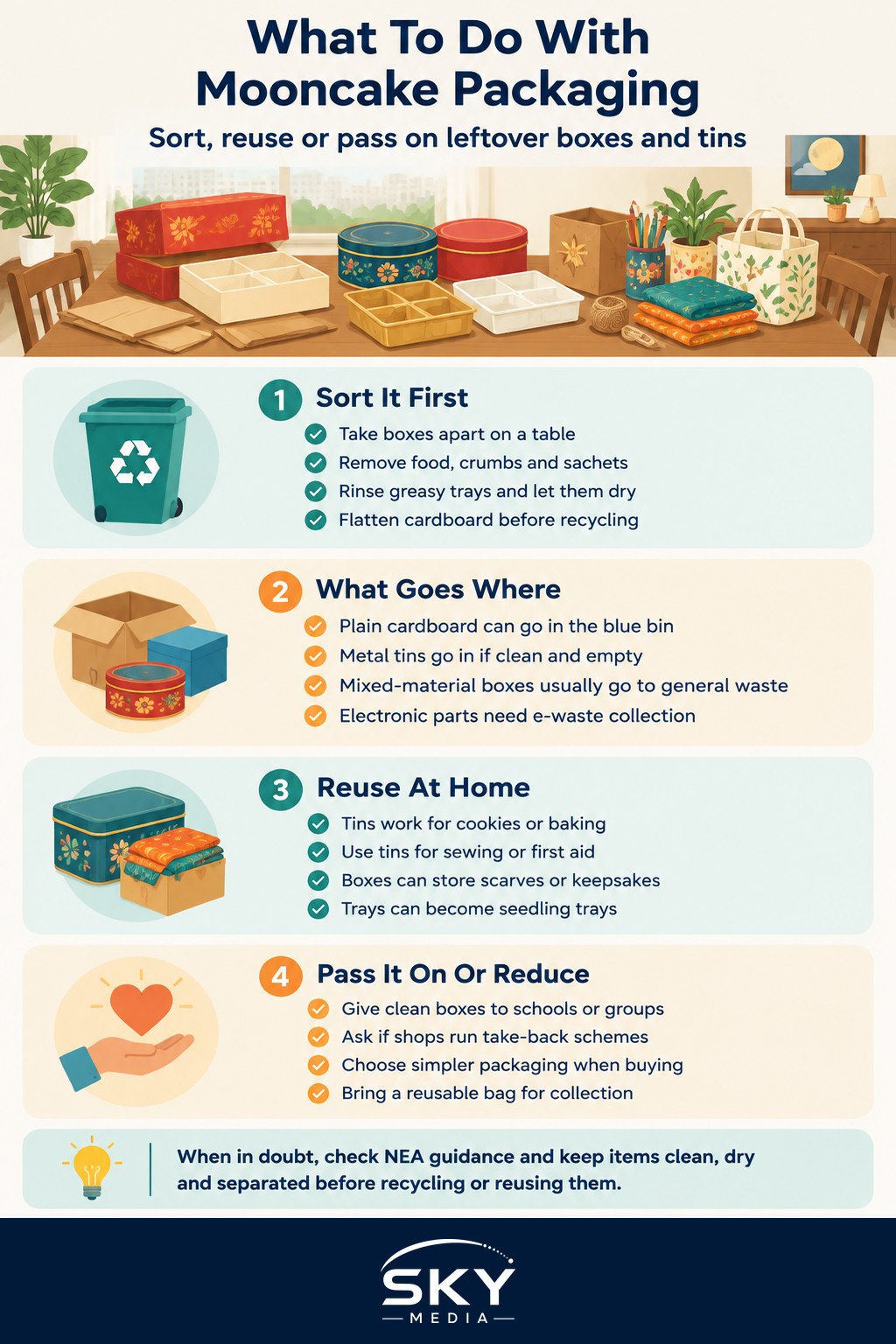
Start by taking the packaging apart on a table. Most boxes come apart in a few minutes.
- Remove all food and crumbs. Throw leftovers into general waste.
- Pull out the freshness sachets. These small packets go into general waste, not the blue bin. Keep them away from children and pets.
- Separate trays and inserts. Rinse plastic trays if greasy, and let them dry.
- Strip decorations. Remove ribbons, tassels, magnets and fabric where possible.
- Flatten cardboard to save space in the bin.
- Check tins for leftover crumbs and wipe them clean.
The table below shows where each common component usually goes.
| Component | Reuse idea | Disposal if not reused |
|---|---|---|
| Plain cardboard outer sleeve | Gift wrap backing, kids’ craft | Blue bin, flattened and clean |
| Fabric or leather covered box | Storage box, jewellery or document box | General waste, as mixed materials are hard to recycle |
| Metal tin | Biscuit tin, sewing kit, cable organiser | Blue bin, clean and empty |
| Plastic tray or insert | Drawer divider, seedling tray, bead sorter | Blue bin only if clean and recyclable, otherwise general waste |
| Freshness sachet | Not reusable | General waste |
| Electronic parts (lights, music) | Not reusable in most cases | Separate e-waste collection, not the blue bin |
A few common mistakes are worth avoiding:
- Bagging recyclables in a tied plastic bag of food waste. Keep recyclables separate from rubbish.
- Leaving oily trays unrinsed. Grease from mooncake skins can spoil a whole bag of paper.
- Stuffing whole boxes into the chute. Bulky boxes can jam the bin opening, so flatten them first.
- Assuming shiny means recyclable. Metallic laminated paper and foil-lined card often are not. When in doubt, check NEA’s guidance rather than guessing.
If an electronic gift box has batteries or small circuits, remove them and use an e-waste collection point. NEA lists approved e-waste channels on its website.
Smart Ways to Reuse Mooncake Tins
Metal tins are sturdy, airtight and often beautifully printed. They are the easiest part to give a second life.
- Festive biscuit tin. Reuse it for Chinese New Year cookies a few months later. Wash and dry thoroughly first.
- Sewing or first aid kit. Tins keep small items together and are easy to stack.
- Cable and charger organiser. Label the lid so you remember what is inside.
- Stationery holder for a child’s desk.
- Tea or coffee storage, as long as the tin seals well and has no lingering odour.
- Gift tin for home-baked treats when visiting friends.
Avoid using old tins for anything that needs to stay moisture-free if the lid no longer closes tightly, since Singapore’s humidity finds every gap.
Reusing Boxes and Inserts at Home
Rigid boxes made for luxury mooncakes are often strong enough for years of use.
- Drawer-style boxes make tidy organisers for scarves, socks or accessories.
- Hinged boxes with magnets suit letters, certificates or small keepsakes.
- Compartment inserts sort beads, screws, earrings or Lego pieces.
- Plastic trays work as seedling trays on a balcony or windowsill. Poke small drainage holes first.
- Decorative boxes can be used for red packets, festive decorations or lanterns between seasons.
- Craft projects: children can turn boxes into dioramas, lantern bases or toy shops.
Before storing any box, air it out for a day or two so the sweet, oily smell fades, and wipe the inside with a dry cloth. Boxes kept in a damp cupboard can grow mould in Singapore’s climate, so a dry, ventilated shelf works best. If a box already smells musty or shows spots, it is time to let it go.
If you are after something more substantial for long-term storage, see our guide to durable storage boxes, and reuse mooncake boxes for lighter, smaller items.
Giving Packaging Away Instead
If you have more boxes than you can use, someone else may want them.
- Neighbours and community groups. Local sharing groups online often have people looking for tins for crafts or baking.
- Schools and kindergartens. Some art teachers welcome clean boxes and tins. Ask before dropping anything off.
- Home bakers. Small home businesses sometimes reuse attractive tins for their own festive orders.
- Take-back schemes. Some brands and shops have, in certain years, collected used packaging. Ask the shop where you bought your mooncakes if they run anything similar.
Only give away items that are clean, dry and in good condition.
Reducing Packaging Next Mid-Autumn
The most effective step is to cut packaging at the source.
- Choose simpler packaging where available. Many bakeries offer plain boxes alongside premium sets.
- Buy loose or in smaller sets if you only need a few pieces.
- Make your own. Our guide to making mooncakes at home lets you control both the filling and the packaging.
- Let friends and colleagues know you prefer a simple gift, or suggest a shared box for the office.
- Bring your own reusable bag when collecting orders.
Mid-Autumn is about reunion and sharing, and the mooncakes themselves remain the centrepiece. Learn more about the tradition in mooncakes: types and traditions, and with a little sorting, the packaging can be part of a greener festival too.
Official sources: National Environment Agency (NEA)
Further reading: What to Do With Empty Formula Milk Tins in Singapore