
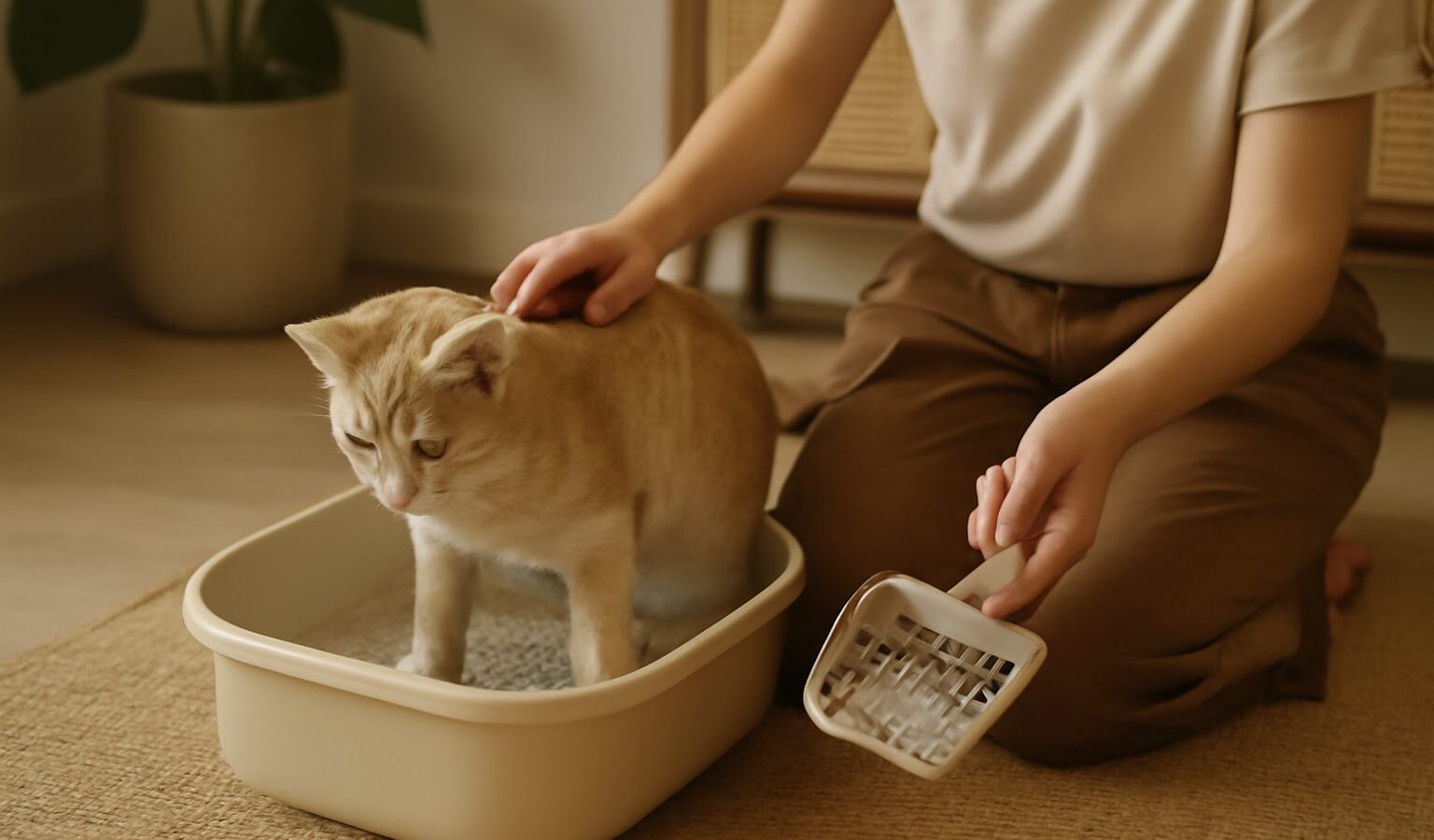
Here is the good news that surprises many first-time owners: most cats take to a litter box naturally. The instinct to bury waste in a loose, digable material is already wired in, so litter training in Singapore is usually less about teaching and more about setting up a box your cat wants to use and keeping it clean. Get the box, the litter and the placement right, and the cat generally does the rest. This guide covers how to choose and place a box in a small HDB flat, how many boxes you need, how to keep things hygienic in our heat, and what to do when something goes wrong. One note throughout: a sudden change in toilet habits can signal a health problem, so treat that as a reason to see a vet, not just a training issue. This is general information, not veterinary advice.
Why Most Cats Learn Quickly
Kittens usually start using litter within days of coming home, often copying their mother or simply following instinct. Adult cats from a shelter are frequently already reliable. Because the behaviour is natural, your job is mostly to remove obstacles: an inviting box, litter that feels right under the paws, a quiet spot, and cleanliness. If a cat is not using the box, it is nearly always telling you that something about the setup, or its health, is off, rather than being stubborn. That mindset makes problems much easier to solve, because you look for a cause instead of a punishment.
Never rub a cat’s nose in a mess or scold it after an accident. Cats do not connect delayed punishment with the act, and fear only makes toileting problems worse. Calm, consistent hygiene beats correction every time.
Choosing a Box and Litter
A good starting box is simple: large enough for the cat to turn around fully, with low sides for kittens or older cats and higher sides for enthusiastic diggers. Many cats prefer an open tray because it never traps smells or feels cramped, though some appreciate the privacy of a hooded box. If you use a hood, watch that it does not turn into a stuffy, odour-holding chamber in our humidity.
Litter comes in several types, and the “best” one is the one your individual cat likes and you can maintain. Clumping clay is popular because it is easy to scoop; other cats prefer finer or softer textures. When you find a litter your cat accepts, avoid changing brands suddenly, since a new texture or scent can put a fussy cat off. Heavily perfumed litters smell pleasant to humans but can be off-putting to cats, whose noses are far more sensitive than ours.
| Box or litter option | Best suited to | Points to watch |
|---|---|---|
| Open tray | Most cats, easy daily scooping | Offers no odour containment, needs frequent cleaning |
| Hooded box | Cats wanting privacy, reducing scatter | Can trap heat and smell in humidity, some cats dislike it |
| Clumping clay litter | Owners wanting easy scooping | Dusty types may bother sensitive cats, scoop daily |
| Fine or soft litter | Kittens and texture-fussy cats | May track around the flat, sweep often |
| Scented litter | Owners focused on smell | Strong perfume can deter cats from the box |
Placement in a Small HDB Flat
In a compact flat, where you put the box matters as much as the box itself. Cats want to toilet somewhere quiet, accessible and away from where they eat and drink. Nobody likes a toilet next to the dining table, and cats feel the same. A service yard, a bathroom corner or a low-traffic nook often works well. Avoid tucking the box beside a noisy washing machine or in a spot the cat has to cross busy foot traffic to reach, as that can make a nervous cat “hold it” or find somewhere else.
Keep the box away from the food and water bowls, give the cat a clear line of sight so it cannot be ambushed, and make sure it is always reachable, even at night or when doors are usually shut. For kittens and senior cats, a box with a low entry point matters, since high sides can be a genuine barrier.
How Many Boxes You Need
A widely used rule of thumb is one box per cat plus one spare. So one cat is happiest with two boxes, two cats with three, and so on. In a small HDB flat this can feel like a lot, but even squeezing in a second tray reduces accidents, gives a choice if one box is soiled, and eases tension in multi-cat homes where one cat may guard a single box. Place the boxes in different spots rather than side by side, so a cat blocked from one still has a real alternative.
Scooping and Hygiene in the Heat
Singapore’s warmth and humidity make smells develop faster than in temperate climates, so a box left too long becomes unpleasant quickly, and a cat may simply refuse a dirty tray. A reliable routine solves most of this:
- Scoop out waste and clumps at least once a day, twice if you can.
- Top up the litter so the layer stays deep enough for the cat to dig and bury.
- Do a full empty and wash of the box regularly, using mild soap and drying it well.
- Wash your hands after scooping, and take extra care if you are pregnant.
- Keep a lidded bin nearby so soiled litter is sealed away rather than left airing.
Consistency here is not just about smell; a clean box is the single biggest factor in keeping a cat using it. If your household finds daily scooping hard to keep up, that is worth planning around before problems start.
Solving Common Problems
When a previously reliable cat starts going outside the box, resist the urge to see it as bad behaviour. First, consider health. A sudden change in toilet habits, straining, going more often, blood, or crying at the box can point to urinary or other medical issues, some of which are urgent. A male cat straining and unable to pass urine is an emergency. Because this is general information and not veterinary advice, the safe move is to have a vet check your cat when habits change suddenly.
If health has been ruled out, work through the usual setup causes:
- The box is not clean enough. Scoop more often and wash the tray.
- The litter changed. Go back to the texture and scent your cat accepted.
- The location feels unsafe or busy. Move the box somewhere quieter.
- There are too few boxes. Add one, especially in multi-cat homes.
- Stress or change at home. New pets, renovations or a move can unsettle toileting; add calm and routine.
Clean any accident spot thoroughly with an enzyme-based cleaner so no scent marker is left to draw the cat back. Ordinary household cleaners may mask the smell to you while leaving a trace the cat still detects.
Keeping Odour Under Control
Odour control in a small tropical flat comes down to removal, not masking. The most effective steps are frequent scooping, enough clean litter, good ventilation and sealing soiled litter in a covered bin. An open, airy spot helps smells disperse rather than settle. Reach for heavy air fresheners or scented litters last, since strong perfumes can bother the cat more than the underlying smell bothers you. A box that is scooped daily and washed regularly rarely smells, which is the real goal.
Explore More
If you are just starting out, our guide to kitten care basics in Singapore covers the wider routine a new cat needs. And before you settle the litter box, it is worth reading cat-proofing your home in Singapore so the rest of your flat is as safe and settled as the toilet corner.