
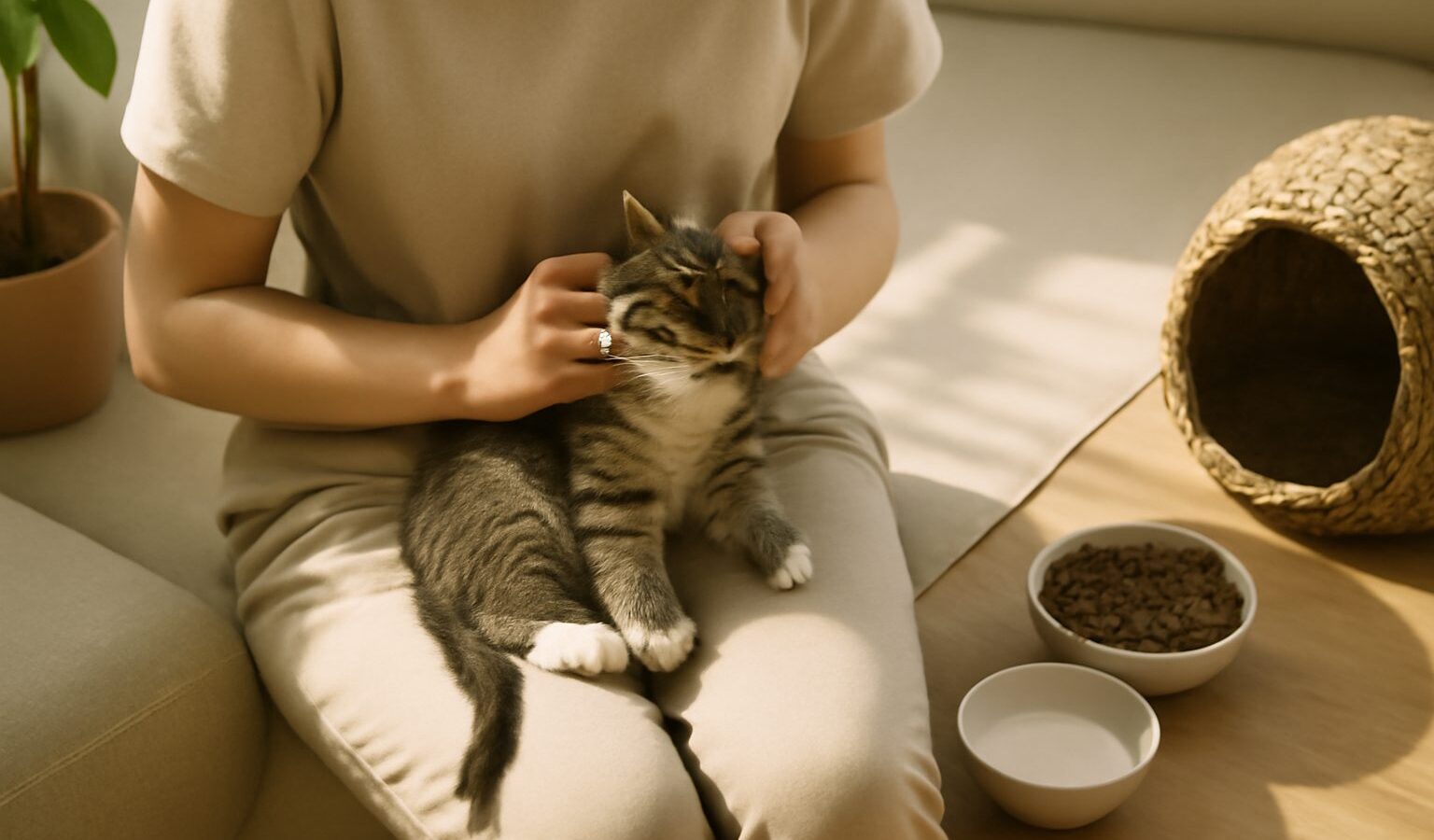
Few things are as delightful, or as chaotic, as a new kitten exploring your flat for the first time. Good kitten care in Singapore starts before the kitten arrives, with a safe home, a simple routine and realistic expectations. A kitten is a baby animal learning everything for the first time, so gentle consistency and patience matter far more than getting every detail perfect. This guide walks through the practical basics, from kitten-proofing and the first vet visit to feeding, litter training, play, sleep and coping with our heat.
One important note runs through everything here: this is general information, not veterinary advice. Vaccination, deworming, feeding amounts and health decisions vary from kitten to kitten, so let a licensed vet guide the specifics for your cat. We have deliberately avoided listing schedules or doses, because the plan your vet sets is the one to follow.
Kitten-Proofing and Bringing a Kitten Home
Before your kitten comes home, get down to their level and look at your flat the way a curious, climbing, chewing baby animal would. Kittens squeeze into gaps, bat at anything that moves and taste-test the world, so hazards need to go up, away or behind a closed door.
- Tuck away electrical cords, chargers and blind cords that invite chewing or tangling.
- Store cleaning products, medicines and rubbish out of reach.
- Move plants that may be toxic to cats, and check before buying new ones.
- Pick up small objects, hair ties, rubber bands and anything swallowable.
- Set up a calm starter space with food, water, a litter tray, a bed and a few toys.
High-rise safety deserves special mention. Open windows and unmeshed balconies are a real danger for cats, who can slip, misjudge a leap or chase a bird. Fitting proper mesh or netting before your kitten arrives is one of the most protective things you can do. Keep arrival day low-key: let the kitten explore one quiet room first, introduce family members calmly, and expand their territory gradually as confidence grows.
The First Vet Visit and Preventive Care
Booking an early check-up with a licensed vet is one of the most important steps in kitten care. The first visit is a chance for a full health check and for the vet to set out a preventive care plan tailored to your kitten, covering vaccinations, deworming and parasite prevention on a schedule they recommend. These timelines differ between kittens and can change over time, so follow your vet’s guidance rather than any fixed template you read online.
Your vet can also advise on microchipping and, when the time is right, sterilisation. Sterilising your cat is a responsible, welfare-positive choice that prevents unwanted litters and brings health and behaviour benefits, and your vet is the right person to recommend the timing for your individual kitten. If you plan to keep your cat in an HDB flat, ask about the requirements under the current framework too.
Learn the red-flag signs that need prompt veterinary attention, including persistent vomiting or diarrhoea, refusing food or water, lethargy, laboured breathing, straining in the litter tray, or any sudden change in behaviour. Kittens are small and can go downhill quickly, so when in doubt, call your vet. It is always better to check early.
Feeding a Kitten and Litter Training
Feeding a kitten is not the same as feeding an adult cat. Kittens need appropriate nutrition for rapid growth, usually spread across several small meals a day, with the food type and amount best confirmed by your vet based on your kitten’s age and size. Keep fresh water available at all times, especially in our climate, and introduce any diet changes gradually to avoid upsetting a small stomach.
Litter training is usually one of the easier parts of kitten care, because the instinct to dig and cover is strong. Place a low-sided tray in a quiet, accessible spot, away from food and water, and gently pop your kitten in after meals and naps. Praise calmly when they use it, scoop daily to keep it clean, and avoid sudden changes of litter or location. Accidents happen while a kitten learns, so clean them without scolding, since punishment creates fear rather than understanding. If a litter-trained kitten suddenly stops using the tray, mention it to your vet, as it can signal a health issue.
Play, Socialising, Sleep and the Heat
Play is how kittens learn, exercise and burn off their considerable energy. Offer wand toys, balls and safe things to chase and pounce on, and always redirect biting onto toys rather than hands, so your kitten does not learn that fingers are prey. Short, frequent play sessions suit a kitten’s attention span better than one long burst.
Early, gentle socialisation shapes a confident adult cat. During the sensitive early weeks, calmly introduce your kitten to different people, gentle handling, everyday sounds and household routines, always at their own pace and paired with good experiences. A scratching post from the start gives claws a healthy outlet and protects your furniture.
Sleep is when growing kittens recharge, and they need a great deal of it, so let a sleeping kitten rest undisturbed. Our heat and humidity matter too: keep your kitten cool and well shaded, ensure constant access to water, and never leave any cat in a hot, unventilated space or a parked car. A cool tiled floor is often a kitten’s favourite spot on a warm afternoon.
A General Guide to Kitten Stages
The table below is a broad overview to help you anticipate what each stage tends to focus on. Ages overlap and every kitten develops differently, so treat this as orientation, not a rulebook, and let your vet guide anything health-related, including sterilisation timing.
| Stage (general) | Typical care focus | Keep in mind |
|---|---|---|
| Settling-in weeks | Kitten-proofing, routine, first vet visit | Fit window and balcony mesh early |
| Young kitten | Frequent small meals, gentle handling | Confirm food and amounts with your vet |
| Playful months | Play, scratching post, litter habits | Redirect biting onto toys, not hands |
| Socialising period | Positive exposure to people and routines | Go at the kitten’s own pace |
| Approaching adulthood | Sterilisation and ongoing preventive care talks | Ask your vet about the right timing |
Growing Together With Patience
The habits you build now, calm routines, gentle handling, plenty of play and regular vet care, set your cat up for a steady, contented adulthood. There will be zoomies at midnight and a shredded roll of toilet paper or two, but the payoff is a well-adjusted companion who trusts you. Go at your kitten’s pace, celebrate small wins, keep those windows meshed, and lean on your vet for anything health-related. Responsible, committed ownership from day one is the greatest kindness you can offer a new kitten.
Explore More
Making your home safe is the first job, so start with our guide to cat-proofing your home in Singapore, which covers high-rise window safety in detail. For a smooth start with the litter tray, see litter training your cat in Singapore, and for mealtime guidance as your kitten grows, read feeding your cat in Singapore.