
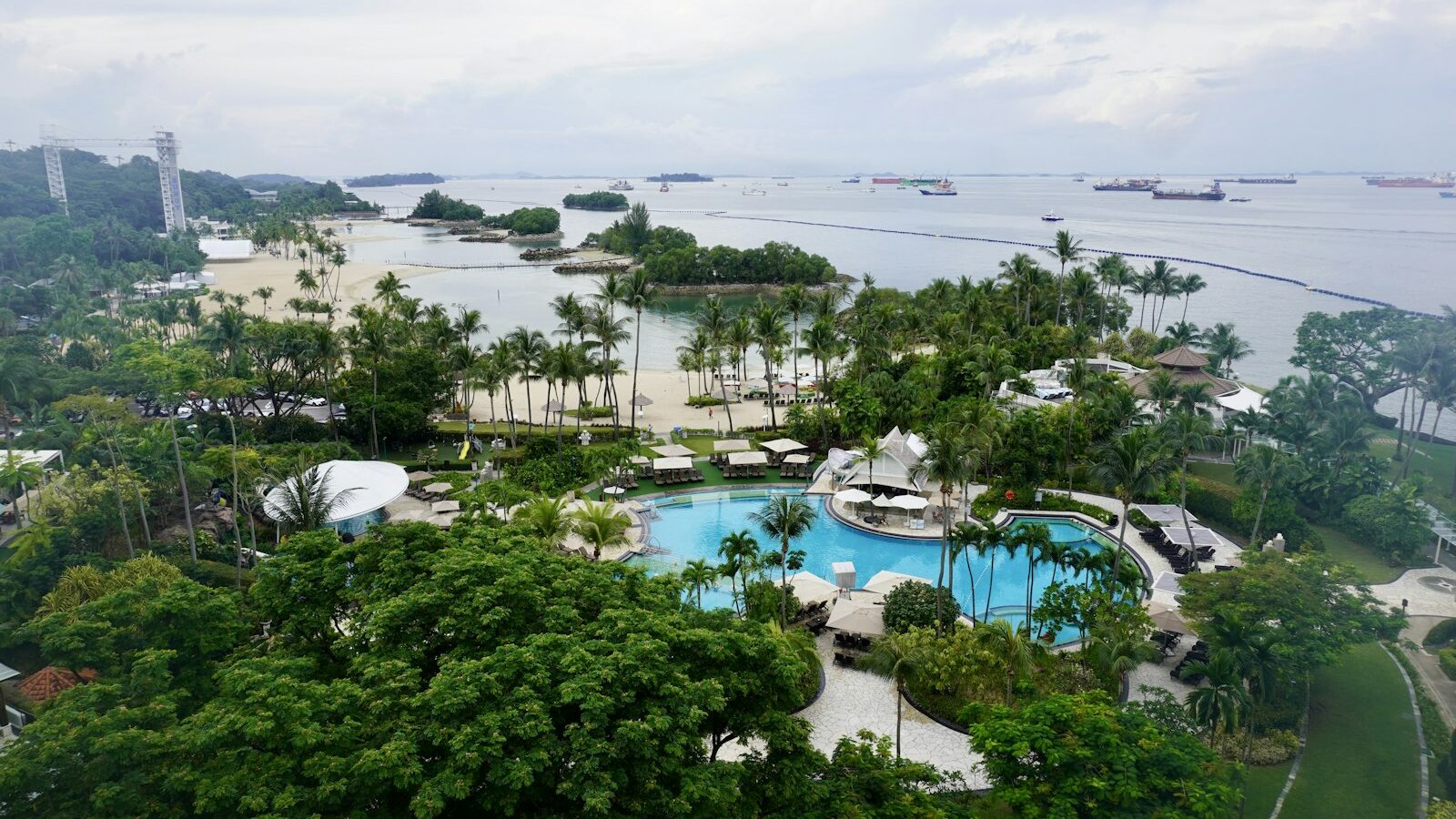
Most people know Sentosa as a place for beaches and theme parks. At its eastern end sits Sentosa Cove, a waterfront residential enclave of condominiums and landed homes built around marinas and canals. Living in Sentosa Cove offers a resort-like setting just minutes from the city, but it comes with trade-offs on cost, convenience and daily logistics that newcomers should understand before signing a lease or making an offer.
This guide covers the housing types, the special rules for foreigners buying landed property here, transport, and what everyday life is actually like. For the attractions side of the island, see our guide to Sentosa Island.
What Kind of Place Sentosa Cove Is
Sentosa Cove was planned as a residential waterfront community, quite separate in feel from the busy attraction zones in the island’s west and centre. Expect:
- Quiet, low-density streets, with many homes facing water or canals.
- Marina living, with berths for boats and a marina village area with restaurants and cafés.
- A holiday atmosphere on weekends, as visitors come for waterfront dining.
- Limited everyday shops on the island itself compared with a typical mainland neighbourhood.
It suits people who value space, water views and a calmer pace, and who do not mind driving or planning trips to the mainland for most errands.
Housing Options: Condos vs Landed Homes
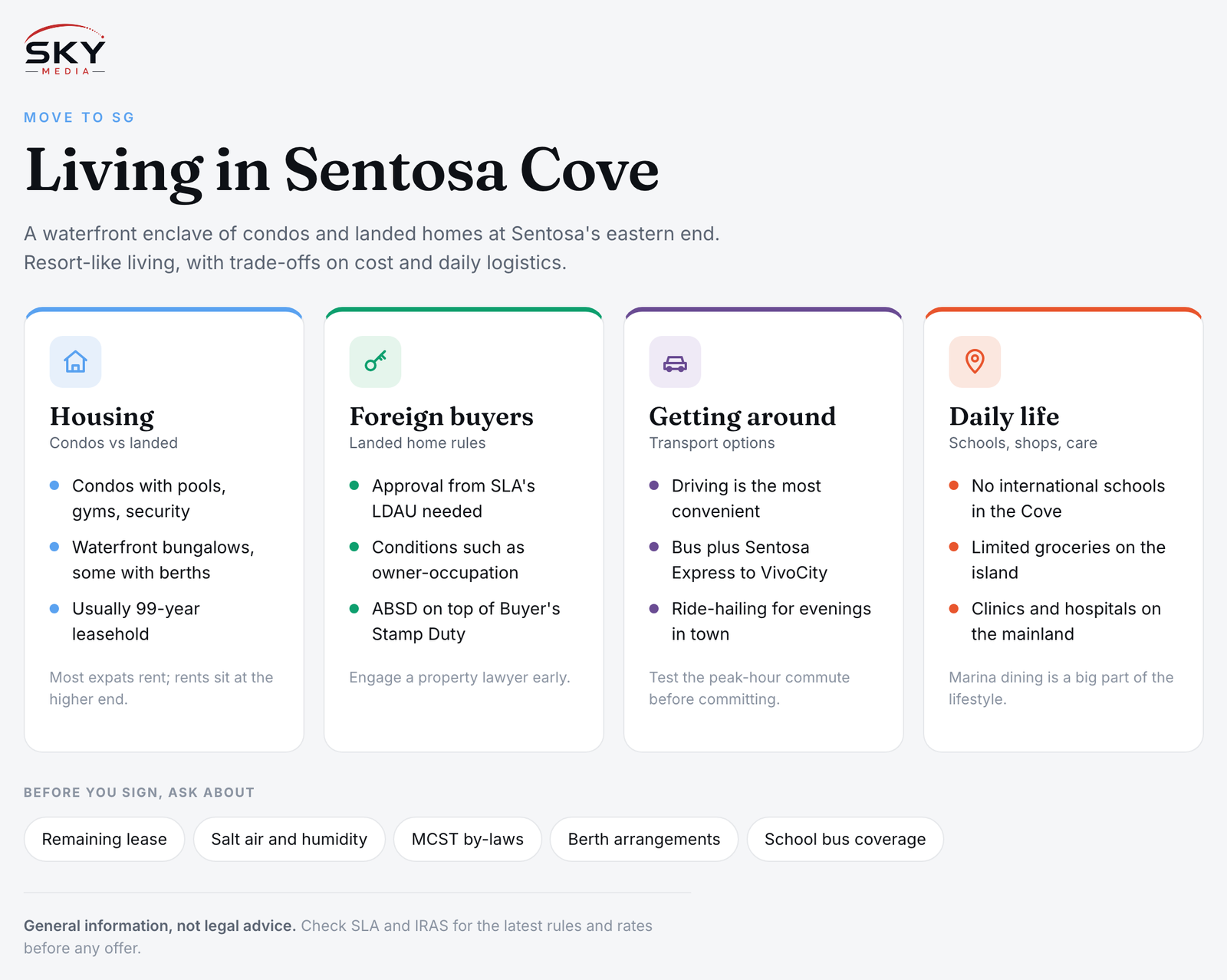
Housing in Sentosa Cove falls into two broad groups. Both are generally on leasehold land, typically 99-year leases, so check the remaining lease of any property.
| Housing type | What to expect | Who it tends to suit |
|---|---|---|
| Condominium apartments | Shared facilities such as pools and gyms, security, many with water or marina views | Singles, couples and families who want amenities without upkeep |
| Condo penthouses and large units | More space, private terraces, premium views | Families wanting landed-style space with condo services |
| Waterfront bungalows | Private homes on canals, some with their own berths, more maintenance | Families wanting privacy, boat owners, long-term residents |
| Non-waterfront landed homes | Landed living without direct water frontage, often lower price than waterfront | Buyers who want landed space at a comparatively lower entry point |
Most expats in Sentosa Cove rent rather than buy. Rents here generally sit at the higher end of the Singapore market, reflecting the location and unit sizes. Before committing, ask about:
- Maintenance and humidity. Waterfront homes face salt air and humidity, which affect fittings, metalwork and air-conditioning. Ask the landlord who handles repairs and how often servicing is done.
- Condo rules. Check the management corporation (MCST) by-laws on pets, renovations and guest access.
- Berth arrangements. If a berth comes with a home, confirm whether it is included in the rent or managed separately.
Our guide for new expats covers practical settling-in basics, including renting.
Rules for Foreigners Buying Landed Property
This is what makes Sentosa Cove unusual. Under the Residential Property Act, foreigners generally cannot buy landed homes in Singapore without approval. Sentosa Cove is a notable exception where foreigners can apply to buy landed property more easily than elsewhere.
The key points, in general terms:
- Approval is still required. Foreign buyers need approval from the Land Dealings Approval Unit (LDAU), part of the Singapore Land Authority (SLA), before buying a Sentosa Cove landed home.
- Conditions apply. Approval typically comes with conditions, such as the property being used for owner-occupation, and limits on how many such properties a buyer may hold. Check the current conditions with SLA.
- Condos are different. Foreigners can generally buy condominium units without this landed-property approval, though other rules still apply.
- Stamp duties are significant. Foreign buyers pay Additional Buyer’s Stamp Duty (ABSD) on top of the usual Buyer’s Stamp Duty, and the ABSD rate for foreigners is high. Rates change, so check IRAS for the current figures before making any offer.
Treat this as general information, not legal advice. Engage a property lawyer early, and confirm eligibility and conditions directly with SLA.
Getting Around
Transport is where Sentosa Cove differs most from mainland living.
- Driving is the most convenient option for many residents. The Cove is linked to the mainland by road via the Sentosa Gateway. Vehicles entering Sentosa are normally subject to an entry charge, and residents generally have arrangements for access. Ask your landlord or condo management how this works for you and your visitors.
- Public transport is possible but slower. Sentosa’s internal bus services connect different parts of the island, and the Sentosa Express monorail links the island with VivoCity at HarbourFront, where you can connect to the MRT. From the Cove, expect to combine a bus with the monorail or a walk, which adds time.
- Ride-hailing and taxis serve the island and are what many residents use for evening trips into town.
- Cycling is pleasant within the island but less practical for commuting to the mainland.
If you or your children need to reach a mainland office or school every day, test the commute at peak hours before you commit.
Schools, Shops and Healthcare
Sentosa Cove is primarily residential and leisure-focused, so most everyday services are on the mainland.
- Schools. There are no international schools in the Cove itself. Families typically drive or use school buses to mainland schools, so check whether your chosen school’s bus service covers Sentosa.
- Groceries. Options on the island are limited, so many residents shop at the HarbourFront area or use online grocery delivery.
- Dining. The marina village area has restaurants, bars and cafés, which are a big part of the lifestyle.
- Healthcare. Clinics and hospitals are on the mainland. Make sure your expat insurance covers outpatient and hospital care, and note the nearest emergency department.
- Leisure. Beaches, golf, water sports and Sentosa’s attractions are close, which is a major draw for families.
Is Sentosa Cove Right for You?
Sentosa Cove can be a wonderful place to live if your priorities line up with what it offers.
It tends to work well if you:
- Value space, water views and quiet over convenience.
- Drive, or are happy to rely on ride-hailing.
- Enjoy boating, water sports or outdoor living.
- Are a foreigner wanting to own a landed home and can meet the approval conditions.
It may be harder if you:
- Rely on public transport for daily commutes.
- Want to walk to supermarkets, hawker centres and clinics.
- Have tight housing budgets, as costs are generally on the higher side.
- Prefer a busy neighbourhood feel with plenty of local food options nearby.
If you are weighing city-fringe options instead, our guide to the River Valley neighbourhood shows a very different, more central lifestyle. Whatever you choose, visit at different times of the day and week, talk to current residents if you can, and check official sources for any rules that affect your housing plans.