
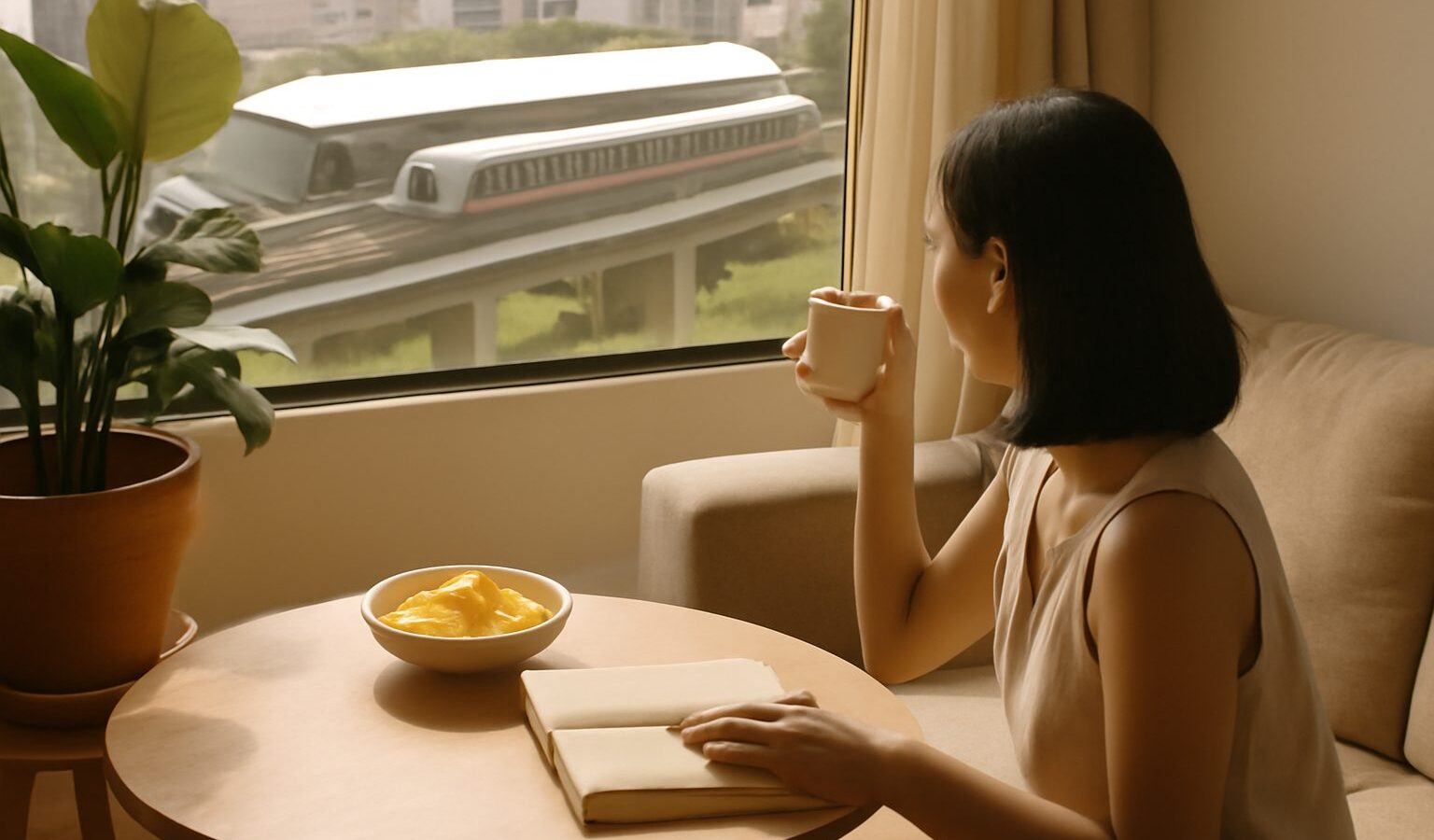
Ask almost any newcomer what they want in a Singapore rental and “near MRT” comes near the top of the list. Living near MRT in Singapore can genuinely change your daily life: shorter commutes, less reliance on taxis and easy weekend trips across the island. But “near MRT” is also one of the phrases rental listings use most loosely, and it comes with trade-offs that are easy to overlook during a quick viewing.
This guide looks at the practical side for people new to Singapore: what “near” really means, the noise and crowd issues, how rent is affected, and how to decide whether paying for MRT proximity makes sense for your situation.

What “Near MRT” Actually Means in a Listing
Listings commonly describe distances in minutes of walking, and those minutes are often optimistic. A “5 minute walk” may be measured to the nearest station exit, not the platform, and may assume a brisk pace in dry weather.
When you shortlist a place, check:
- Which exit you would use. Large stations have many exits, and the closest one may involve crossing a busy road.
- The real walking route. Use a map app’s walking directions and then walk it yourself, ideally at the time you would commute.
- Shelter. Covered linkways make a big difference in Singapore’s afternoon storms and midday heat. A 7 minute sheltered walk can feel easier than a 4 minute exposed one.
- Which line it is. A station on a line that goes directly to your office is worth more than an interchange that adds transfers. Our explainer on the MRT system in Singapore covers how the lines connect.
Elevated Track or Underground: The Noise Question
Not all MRT proximity is equal. Some lines run underground through most of their length, while others run on elevated viaducts through residential estates. This matters a lot for noise.
If a block faces an elevated track, you may hear trains regularly from early morning until around midnight, plus the sound of maintenance work on some nights after service ends. Some residents stop noticing within weeks; light sleepers and people who work from home often find it harder. Check the current first and last train timings with the operators, SMRT and SBS Transit, if you want to know the quiet hours.
Underground stations avoid track noise, but the area around a station entrance can still be busy with foot traffic, buses and taxi queues. Stations also often sit next to bus interchanges, which bring engine noise and announcements.
Tips for assessing noise during a viewing:
- Ask to view at a time when trains run frequently, not late morning on a Sunday.
- Stand in the bedroom with the windows open for a few minutes and listen.
- Check whether the bedrooms face the track or the opposite side of the block.
- Ask whether the windows are double glazed or whether the unit is air conditioned in all bedrooms, since closed windows cut noise considerably.
How MRT Proximity Affects Rent
Units within easy walking distance of a station usually command higher rents than similar units further away, because demand is consistently strong. How large that premium is depends on the area, the line and the type of housing, and it changes with the rental market. Rather than relying on rules of thumb, compare a few listings of similar size and age at different distances from the same station.
Some things that tend to push rent up further:
- Stations with an integrated mall or a direct link to shops
- Interchange stations serving two or more lines
- Newer condos marketed around their MRT connection
On the other hand, a unit a little further away but on a frequent bus route to the station can offer much better value. A feeder bus ride of a few stops is often quick, and the savings each month can be substantial. If you are buying rather than renting, our guide on buying property near an MRT line looks at the longer-term cost and value picture.
Comparing Distances From the Station
| Distance from station | Typical benefits | Typical drawbacks |
|---|---|---|
| Directly beside or above the station | Fastest commute, shops on the doorstep | Higher rent, crowds, possible track and bus noise |
| 5 to 10 minute walk | Still convenient, usually quieter | Walk may be partly unsheltered |
| 10 to 15 minute walk | Often better value, calmer streets | Tiring in heat or rain, may need a bus some days |
| Feeder bus ride away | Lower rent, more space for the money | Depends on bus frequency, longer door-to-door time |
Crowds, Malls and Daily Life Around a Station
Stations attract people. Expect queues at nearby food courts at lunch, busy supermarkets after work and crowds at weekends, especially if the station has a mall. For many newcomers this is a plus: groceries, clinics, banks and food are a short walk away, and there is always something open.
For others, the constant activity gets tiring. Families with young children may prefer a quieter estate where children can play downstairs without heavy foot traffic. Older relatives may appreciate the convenience but find crowded exits and escalators stressful.
Think also about how disruptions would affect you. If your only way to work is a single MRT line, a breakdown can make you late. It helps to know a backup bus route, and our guide on what to do during an MRT or bus disruption explains the usual arrangements.
Future Lines and Construction Nearby
Singapore keeps expanding its rail network, and a quiet street today may sit beside a station construction site for several years. Construction brings daytime noise, dust and road diversions, but the finished station can make the area far more convenient.
Before signing a lease, check the Land Transport Authority (LTA) website for planned lines and stations near the address. If construction is underway, ask the landlord how it has affected the unit and consider a shorter lease if you are unsure.
Deciding What Matters Most for You
Living right next to an MRT station is not automatically the best choice. Work through these questions before you start viewing:
- How often will you commute? If you work from home most days, paying a premium for station proximity may not make sense.
- Who lives with you? Children, elderly relatives and light sleepers change the balance between convenience and quiet.
- Do you drive or cycle? If so, distance to an expressway or park connector may matter more than the station.
- What is your budget ceiling? A slightly longer walk can free up money for a bigger unit or a better location for school.
- How long will you stay? On a short assignment, convenience often wins. For a longer stay, a calmer home may be worth the extra minutes.
A good approach is to pick two or three MRT lines that serve your workplace well, then look at estates along those lines at different distances from stations. Visit at commuting hours, walk the route, listen for noise, and compare rents for similar units. That way you will know exactly what you are paying for when a listing says “near MRT”.
Further reading: Balestier Neighbourhood Guide: Renting and Living Near the City · How to Pick a Commute-Friendly Home in Singapore