

A family day out Singapore style can be wonderful or exhausting, and the difference usually has less to do with where you go than how you plan it. Tired children, a long queue, a missed nap and a hot walk from the MRT can undo the best attraction. This guide does not recommend specific places. Instead, it covers the logistics, pacing and age-based planning that make almost any outing smoother, whether you are heading to a park, a museum, a mall playground or a relative’s home across the island.
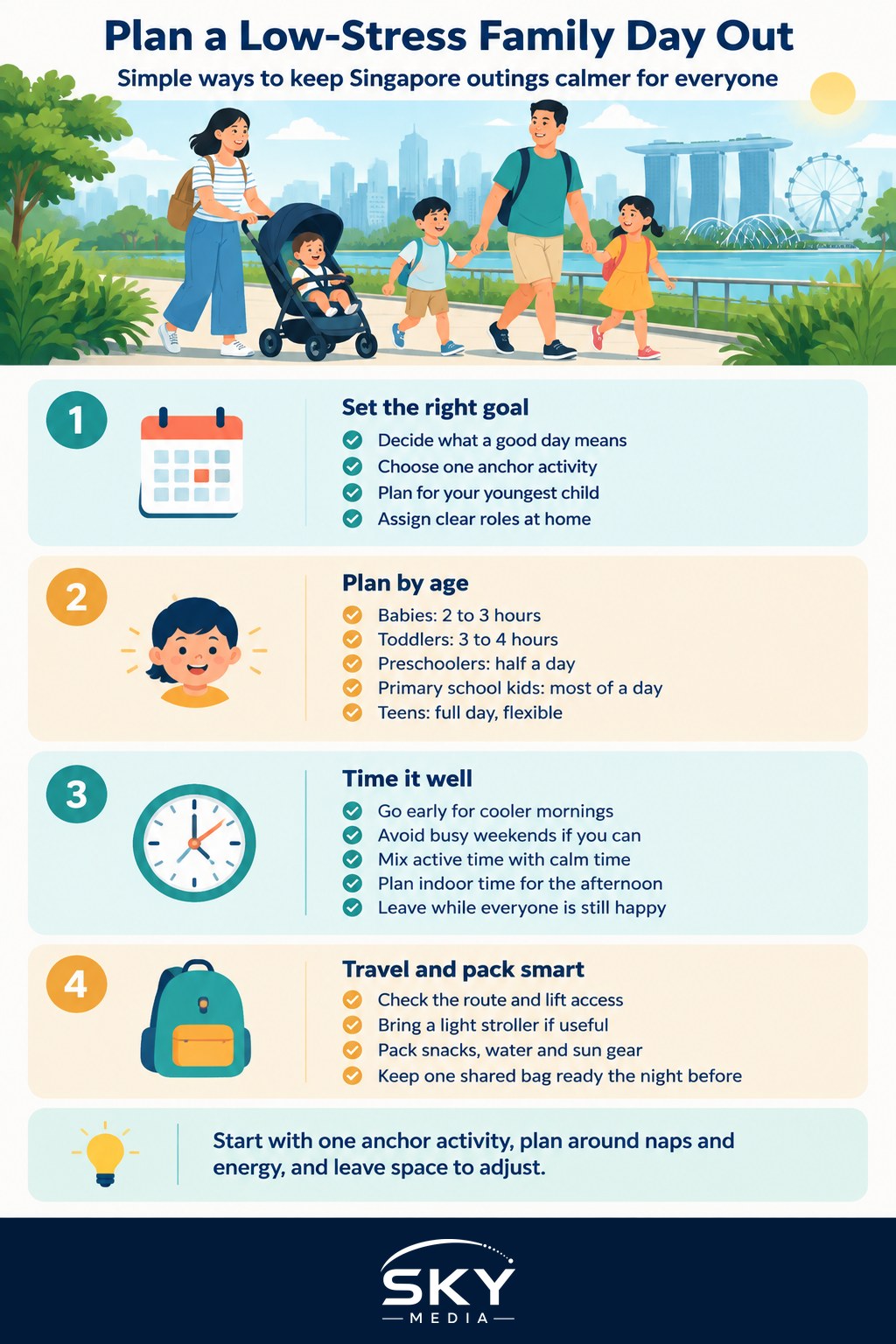
Start With the Right Expectations
Before choosing a destination, agree on what a “good day” means for your family. For many parents it is simply that everyone gets home in a reasonable mood. That shifts the goal from seeing everything to enjoying a few things well.
Useful questions to ask together:
- What is the one thing we most want to do? Make that the anchor and treat everything else as optional.
- How long can our youngest realistically last? Plan around the shortest attention span and nap schedule, not the oldest child’s.
- What will we skip if we are running late? Decide this at home, not in the middle of a meltdown.
- Who is in charge of what? One adult on tickets and directions, another on snacks and toilet trips, saves a lot of friction.
If planning in general feels overwhelming, the approach in our guide on how to plan your day without overthinking it works well for family outings too: pick a few priorities and leave space around them.
Plan by Your Child’s Age
Different ages need very different pacing. Use this as a starting point and adjust for your own children.
| Age group | Realistic outing length | Key planning focus | Common stress trigger |
|---|---|---|---|
| Babies (under 1) | 2 to 3 hours | Feeding, nappy changes, nap timing | Missed nap or no nursing room nearby |
| Toddlers (1 to 3) | 3 to 4 hours | Shade, safe space to run, frequent snacks | Waiting in queues, overstimulation |
| Preschoolers (4 to 6) | Half a day | Hands-on activities, toilet access | Tiredness after lunch, sibling squabbles |
| Primary school (7 to 12) | Most of a day | Giving them choices, a little independence | Boredom, screen negotiations |
| Teens | Full day, flexible | Their input on plans, time with friends | Feeling dragged along |
Mixed-age families are the trickiest. A practical trick is to split the day: one adult takes the older child to a longer activity while the other handles a nap or a quieter activity with the younger one, then you meet for a meal.
Timing and Pacing Make the Biggest Difference
Singapore’s climate and crowds shape how a day out feels more than most parents expect.
Go early. Mornings are cooler and many attractions are quieter just after opening. Outdoor activities in particular are far more pleasant before late morning.
Avoid peak crowd periods where you can. Weekends, public holidays and school holidays are busiest. If you have flexibility, a weekday during term time can feel like a different place. If you must go on a weekend, arriving early still helps.
Follow a rhythm of active then calm. Alternate a high-energy activity with a quieter one: a playground followed by a snack in the shade, a gallery followed by a sit-down lunch.
Plan for the afternoon dip. Many children flag after lunch. Schedule the indoor, air-conditioned part of the day for early afternoon, when heat and tiredness peak, and keep the late afternoon light.
Leave before they are done. Ending on a high, while children still want to stay, means a calmer journey home and happier memories.
Getting There and Back Without Drama
Travel is often where the stress starts. A little preparation helps:
- Check the route in advance, including which MRT exit is closest and whether there is lift access for a stroller. Lifts at stations and malls can have queues, so build in time.
- Pack a light stroller for under-fives even if they usually walk. It doubles as a carrier for bags and a nap spot.
- If you are driving, check parking options beforehand and avoid circling for a lot with tired children in the back.
- For taxis or private hire, remember the rules on child restraints and plan accordingly. Check the Land Transport Authority (LTA) website for current requirements.
- Plan the journey home first. Knowing exactly how you will leave removes a lot of end-of-day friction.
What to Pack for a Smoother Day
Keep one shared bag, packed the night before. A typical list:
- Water bottles for everyone and a few easy snacks that do not melt
- Hats, sunscreen and a small umbrella for sun or rain
- A light jacket, because air-conditioned spaces can be cold
- Wet wipes, tissues, hand sanitiser and a small plastic bag for rubbish
- A change of clothes for younger children
- Nappies, wipes and a changing mat for babies
- Any regular medication your child needs, and plasters
- A small comfort item or quiet activity, such as a book or crayons
Resist packing for every possible scenario. Most malls and attractions have convenience stores nearby if you forget something.
Handling Heat, Hunger and Meltdowns
Even with good planning, things go wrong. A calm response matters more than a perfect plan.
Heat. Watch for flushed faces, irritability and unusual tiredness. Move to shade or air-conditioning, offer water and rest. If a child seems unwell, seek medical help.
Hunger. Many meltdowns are really hunger. Offer a snack before children say they are hungry, roughly every two hours for younger ones.
Overwhelm. Noise and crowds can be a lot for some children. Find a quieter corner, step outside for a few minutes, or let them sit in the stroller with a familiar item.
Getting separated. Agree on a simple plan before you set off. Dress younger children in a bright colour, take a photo of them that morning, and teach them to approach a staff member or a parent with children if they are lost. Writing your phone number on a wristband or sticker helps too. Our guide to building a family emergency plan covers how to teach children what to do calmly, without frightening them.
A Simple Day-Out Planning Routine
Once you have done this a few times, a short routine keeps outings easy:
- Two or three days before: choose the anchor activity, check opening hours, ticketing and the weather forecast.
- The night before: pack the bag, lay out clothes and charge phones.
- On the morning: eat a proper breakfast, leave on time and keep plans flexible.
- During the day: follow the active then calm rhythm and watch for early signs of tiredness.
- Afterwards: note what worked and what did not, so the next family day out is even smoother.
The aim is not a picture-perfect day. It is a day where everyone feels looked after, including the parents.
Further reading: Celebrating Your Baby’s 100 Days: Customs and Ideas in Singapore · How to Handle Tantrums at Family Gatherings