
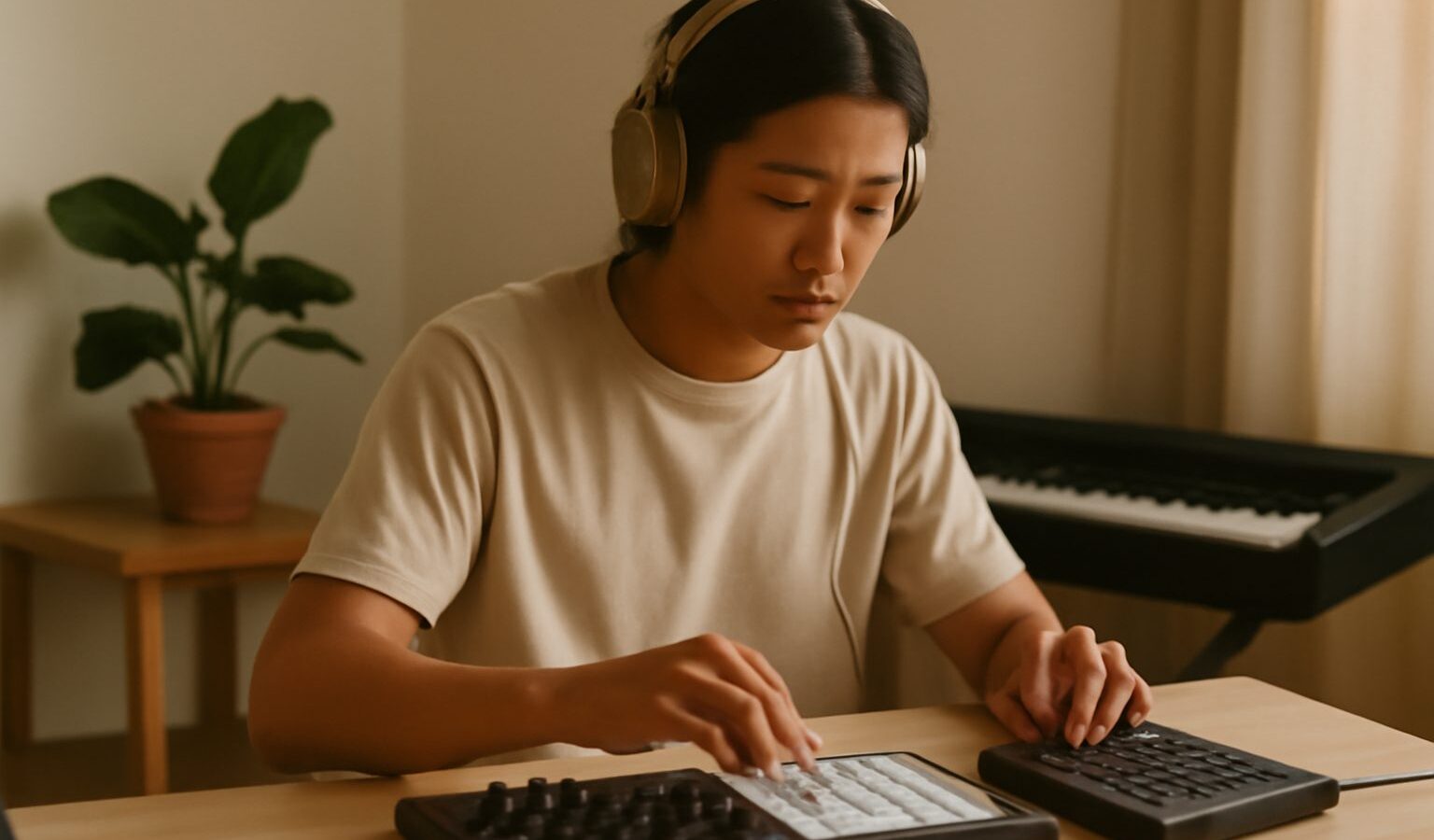
There has never been a friendlier time to start making beats. The same laptop or even the phone in your pocket can now do what once took a room full of expensive machines. Whether you dream of lo fi study tracks, dance floor fillers or a backing beat for your own singing, the basics are the same and they are easier to learn than most people fear. This guide is written for a complete beginner in Singapore, working quietly at home, who just wants to turn an idea into something they can play back and be proud of.
What You Need to Get Started
The good news is that you need far less than the advertisements suggest. At its simplest, making beats requires only a computer or phone and some software to arrange sounds on a timeline. That software is called a DAW, short for Digital Audio Workstation, and it is the digital studio where everything happens.
Many devices already come with something usable, such as GarageBand on Apple products. Popular paid options built for beat making include FL Studio and Ableton Live, and there are affordable and free choices too. Some offer free trials or limited free editions, so try a few before spending anything. Prices and features change, so check the maker’s own website rather than an old article.
A small MIDI keyboard or pad controller is a lovely addition, because tapping out a rhythm with your fingers feels more musical than clicking a mouse, but it is entirely optional at the start. A pair of headphones matters more, since they let you work late into the night in an HDB flat without troubling the neighbours through the wall. You can begin with nothing but the free software on the device you own, and only add gear once you know what you are missing.
The Parts of a Beat
A beat can sound complicated, but almost every one is built from a few simple layers stacked together. Understanding these layers turns a mysterious wall of sound into something you can build piece by piece.
- The kick drum is the low, round thump that anchors the beat, usually landing on the main pulses.
- The snare or clap is the sharper sound that answers the kick, often on the second and fourth beats, giving that familiar back and forth feel.
- The hi hats are the fast, ticking sounds that fill the gaps and drive the rhythm forward.
- The bassline is the low melodic part that locks in with the kick and gives the track its weight.
- The melody and chords carry the tune and the mood, whether that is a warm piano, a bright synth or a sampled phrase.
Not every track uses all of these, and part of the fun is deciding what to leave out. Space and silence are instruments too. A sparse beat with room to breathe often hits harder than one crammed with sound.
Building Your First Track Step by Step
The quickest way to learn is to finish one short beat rather than fiddling forever. Here is a gentle order to follow inside any DAW.
- Open a new project and set the tempo, which is the speed measured in beats per minute, or BPM. Many hip hop and lo fi beats sit around 80 to 95 BPM, while a lot of dance music lives near 120 to 128, but these are only starting points, not rules.
- Lay down a kick pattern on the main pulses, then add a snare or clap to answer it.
- Add hi hats to fill the spaces, and try varying their volume so the rhythm feels human rather than robotic.
- Write a simple bassline that follows the kick, using just a few notes to begin with.
- Add a chord progression or a short melody on top, keeping it simple.
- Arrange the sections, repeating and varying your loop to build an intro, a main part and a break, so the track has a journey.
If you are unsure where to set the tempo, it helps to know roughly where different styles tend to sit. These are loose starting points, not rules, and bending them is often where a track finds its character.
| Style | Typical tempo (BPM) | Feel to aim for |
|---|---|---|
| Lo fi and boom bap hip hop | About 80 to 95 | Relaxed, head nodding, plenty of space |
| House and mainstream dance | About 120 to 128 | Steady four on the floor, driving |
| Drum and bass | About 165 to 175 | Fast, energetic breakbeats |
| Downtempo and chillout | About 90 to 110 | Smooth, unhurried, atmospheric |
Finish it, listen back the next day with fresh ears, and start the next one. You will improve far faster by completing many small beats than by chasing one perfect masterpiece.
Working With Samples and Loops the Right Way
Many electronic tracks are built from samples, which are short snippets of recorded sound, and loops, which are repeating musical phrases you drag straight into your project. They are a brilliant way to learn, because you can hear professional quality sounds and study how they fit together.
Here is the part that really matters. Do not use samples, loops or any recording unless you have the right to. Lifting a slice of someone else’s song, a clip from a film or a sound you found online can breach copyright, and that can cause real trouble later if you release the track. Stick to the royalty free content that comes bundled with your DAW, sounds from reputable sample libraries whose licences allow your use, or material you record and make yourself. Always read the licence terms, because “free to download” does not always mean “free to release commercially”. This is general guidance, not legal advice, so when in doubt check the licence or seek proper advice before you publish. Making your own sounds, from tapping a table to recording rain outside your window, is not only safe but often the most original path.
Making Beats in a Small Singapore Home
Producing music in a flat is completely doable with a little consideration. Since so much of beat making happens silently through headphones or software instruments, you can create at any hour without a single sound escaping the room. That is one of the quiet joys of electronic music compared with a live drum kit.
When you do want to hear things out loud, keep the volume neighbourly and mind the usual quiet hours in the evenings and early mornings. A few soft furnishings, a rug, curtains and a cushioned corner tame the harsh echo of a bare room and make what you hear more accurate, without any expensive treatment. Keep your gear away from damp and direct sun, because Singapore humidity is no friend to electronics, and a simple dry cabinet or a few silica packs help if you leave equipment idle. Beyond your own four walls, there is a warm local community of bedroom producers, meetups and online groups swapping tips, so you never have to figure it all out alone. Start small, stay curious, and enjoy the fact that your first beat is only a few clicks away.
Explore more
Want to understand the tools first? Read our guide to understanding DAWs and music software, then get your space sorted with setting up a home studio in an HDB flat. When your beat is ready, learn mixing basics for beginners and how music copyright and royalties work before you share it.