

Eating out is woven into daily life in Singapore. From the kopitiam downstairs to the food court at lunch and the zi char dinner with family, many of us eat most of our meals away from our own kitchens. That is not a problem to be fixed. It is a way of life to be enjoyed. Making healthier choices eating out is simply about steering your favourite meals in a slightly better direction, most of the time, without giving up the flavours you love.
This article is general guidance for everyday eaters, not medical or dietitian advice. If you have a medical condition, food allergies or intolerances, or you are planning a significant change to your diet, please see a doctor or an accredited dietitian for advice tailored to you.
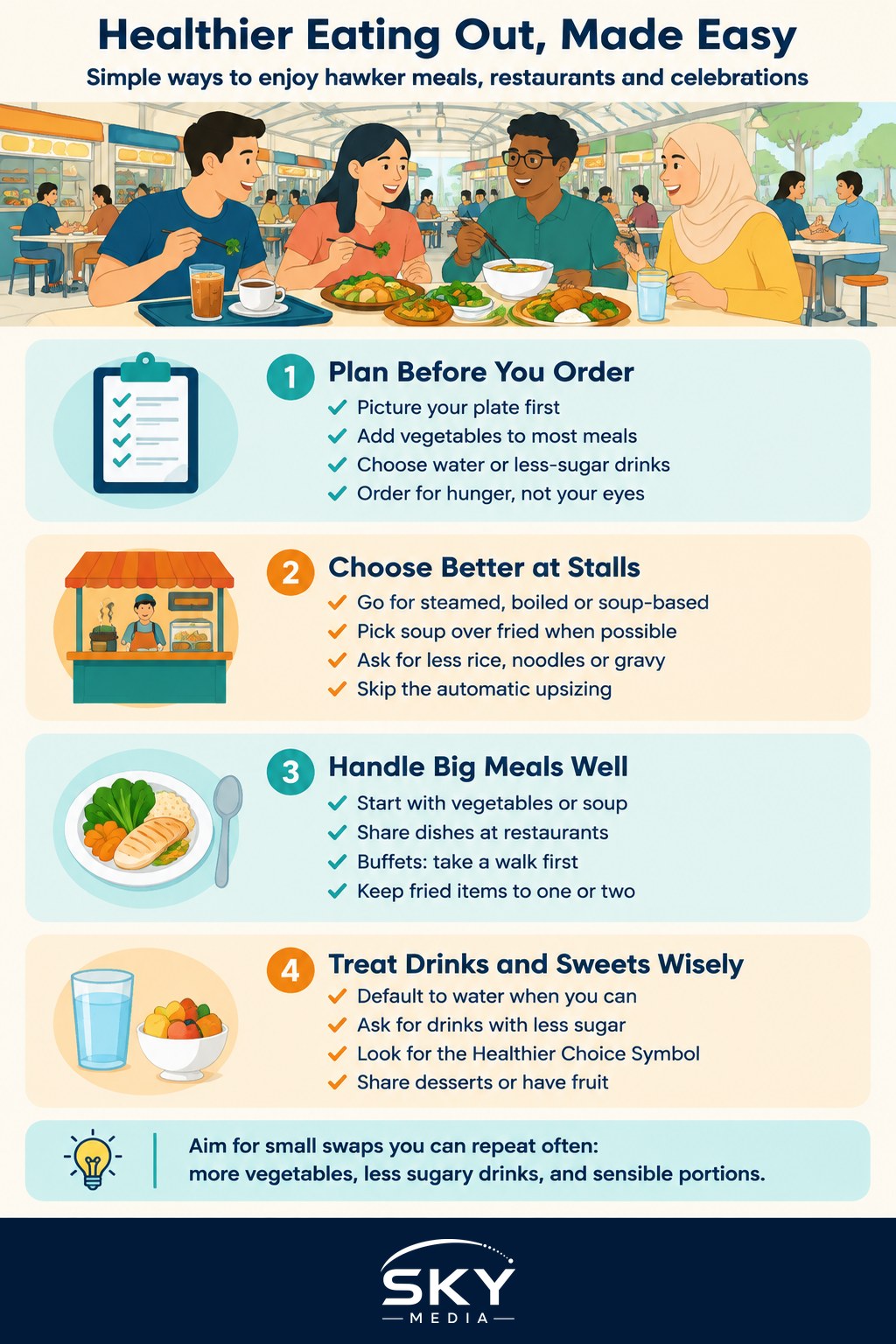
Eating Out Is Part of Singapore Life
Because we eat out so often, small habits add up quickly. A daily plate that leans heavily on white rice, rich gravies and a sugary drink looks harmless on any single day, yet it shapes how you feel over months. The flip side is just as true: a few sensible defaults, repeated across your usual meals, quietly do a lot of good.
The aim is not to eat “clean” or to treat some dishes as forbidden. That mindset rarely lasts and it takes the joy out of food. A far kinder and more workable approach is to make the healthier option your everyday choice and let the richer favourites be occasional pleasures you fully enjoy.
A Simple Plan Before You Order
A little forethought does most of the heavy lifting. You do not need to count anything or carry rules in your head.
- Picture your plate. Singapore’s Health Promotion Board suggests My Healthy Plate as a guide: about half vegetables and fruit, a quarter wholegrains or quality carbohydrates, and a quarter protein. Even at a hawker stall you can nudge towards that shape.
- Add a vegetable to almost anything. A side of vegetables, a portion of greens or a serving of soup rounds out most meals and helps you feel satisfied.
- Watch the drink. Sugary drinks are one of the biggest hidden sources of sugar when eating out. Ordering kopi or teh with less sugar, or plain water, is an easy win.
- Order for your hunger, not your eyes. If you know a portion is huge, plan to share it or set some aside from the start.
If you want to understand why vegetables and wholegrains matter so much for feeling full, wholegrains and why they matter and understanding portion sizes are useful companions to this guide.
Navigating Hawker Centres and Food Courts
Hawker centres and food courts are where most of us make our daily choices, and they offer plenty of genuinely good options. The cooking method is the biggest clue: steamed, boiled, grilled, braised and soup-based dishes tend to be lighter than deep-fried or heavily fried ones.
| Heavier hawker pick | Lighter pick at the same stall | What changes |
|---|---|---|
| Fried carrot cake or char kway teow | Yong tau foo in soup with less noodles | Less oil, more vegetables and protein |
| Chicken rice with skin and extra rice | Steamed chicken, skin removed, less rice | Cuts added fat and right-sizes the carbs |
| Laksa or curry with all the gravy | Sliced fish soup or a clear-broth noodle | Lighter broth, plenty of protein and veg |
| Roti prata with sweet condensed milk drink | Thosai with dhal and water or teh kosong | Less fried dough and far less added sugar |
A few extra habits help at the stall:
- Ask for less rice or noodles and more vegetables; most stalls will oblige.
- Request less gravy or sauce on the side to keep salt and richness in check.
- Choose soup-based over fried when both are on offer.
- Skip the automatic upsize; a regular portion is usually plenty.
These small tweaks pair well with a couple of go-to orders you can reach for without overthinking lunch on a busy day.
Restaurants, Buffets and Big Group Meals
Sit-down meals and celebrations follow the same principles, with a couple of extra situations to manage.
- Restaurants. Start with a vegetable or soup, choose a grilled, steamed or roasted main where you can, and ask for dressings and sauces on the side. Sharing a couple of dishes across the table often means more variety and less overeating.
- Buffets. The all-you-can-eat setup encourages us to eat past comfortable fullness. Take a walk around first, fill half your plate with vegetables and seafood, and pace yourself rather than treating it as a race.
- Zi char and family dinners. Order one more vegetable dish than feels necessary, keep the fried items to one or two, and let everyone share rather than each person having a full portion of the richest dishes.
- Alcohol. Drinks add up quickly at social meals. If you drink, alternate with water and keep it moderate.
Eating out is also deeply social, and food is part of how we connect. There is no need to be the person policing everyone’s plate. For more on balancing this, healthy eating when dining out and socialising goes further into handling meals with friends and colleagues.
Drinks and Desserts Without the Guilt
Two areas quietly carry a lot of the sugar when we eat out: drinks and desserts.
- Drinks. Default to water, or ask for your local drink with less sugar. Choosing beverages that carry the Healthier Choice Symbol is another simple step. See healthy drinks instead of soft drinks for satisfying alternatives.
- Desserts. You do not need to skip them. Enjoy the ones you truly love, share where it makes sense, and let dessert be a sometimes pleasure rather than an every-meal reflex. A bowl of fruit or a warm tau suan can hit the spot just as well as something richer.
The point is balance, not deprivation. Denying yourself every treat usually backfires and leads to bigger indulgences later.
When to Seek Professional Advice
Everything above is general information to help you enjoy eating out while feeling good. It is not medical or dietitian advice, and it is not treatment for any condition. If you are living with diabetes, high cholesterol, high blood pressure or another health concern, follow the guidance of your own doctor and dietitian, since your needs may differ from these general principles. The same is true if you have food allergies or intolerances, are pregnant or breastfeeding, or want to make a major change to how you eat. An accredited dietitian can give you a plan that fits your health, your budget and your favourite haunts. For reliable general information, HealthHub and the Health Promotion Board are good local starting points.
Small, repeatable choices are what make the difference. Eat out often, enjoy it fully, and let the healthier option be your comfortable everyday default.
Official sources: Health Promotion Board
Further reading: Portion Control and Mindful Eating Out