
White rice, white bread and springy egg noodles are woven into daily life in Singapore, so the word wholegrains can sound like something extra, or even a sacrifice. In truth, wholegrains are simply the more complete version of grains you already eat every day, and swapping some of your refined choices for them is one of the easiest, least fussy upgrades you can make to your meals. You do not have to give up your favourite dishes; you just choose a better-built grain more often.
This is general information, not medical or dietitian advice. If you have diabetes, digestive issues, an allergy or another condition, or you are planning a big change to how you eat, please speak to your doctor or an accredited dietitian for guidance suited to you.
What A Wholegrain Actually Is
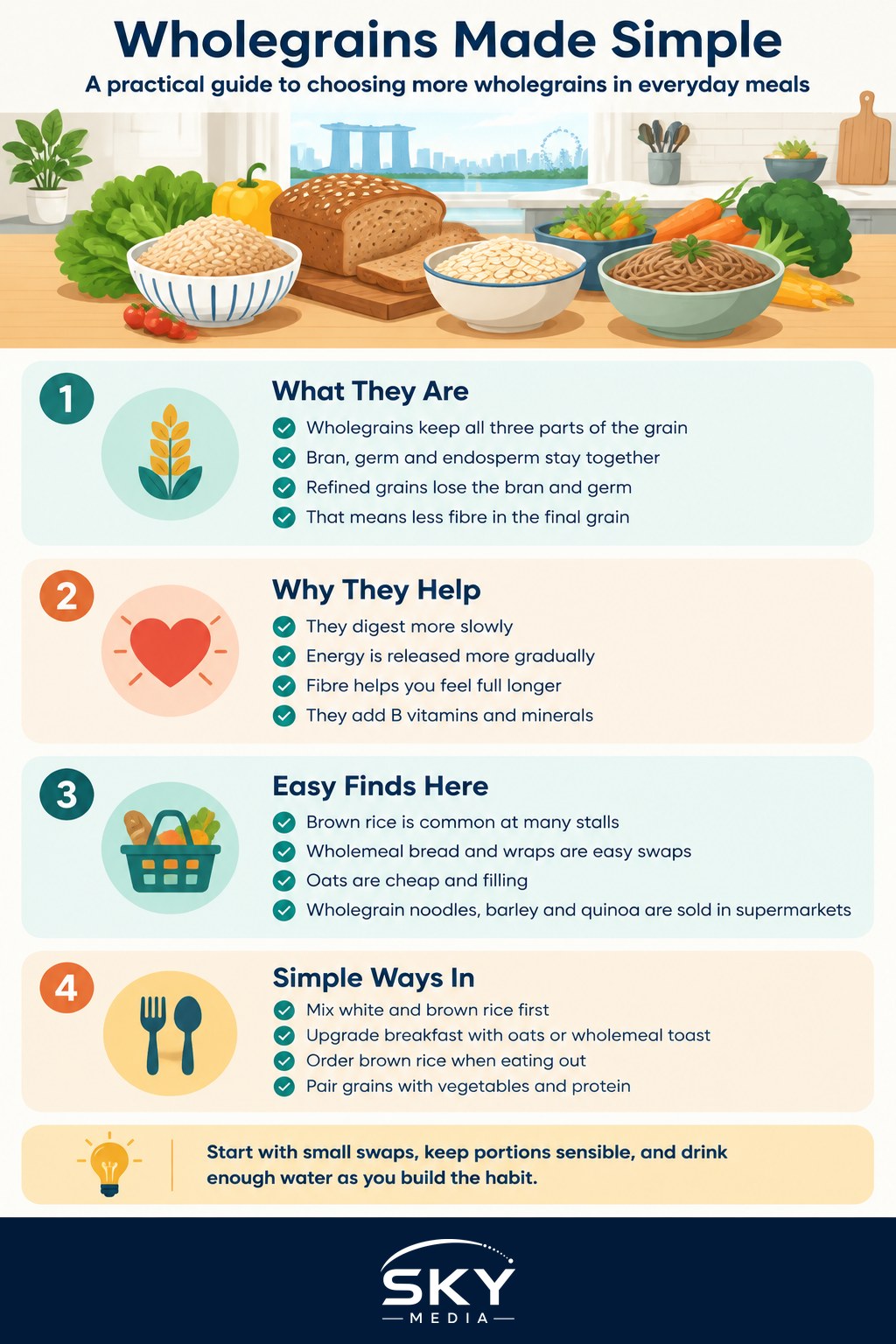
A grain is the seed of a cereal plant such as rice, wheat, oats or barley. Each seed has three parts: the bran (the fibre-rich outer layer), the germ (the nutrient-packed core) and the endosperm (the starchy middle). A wholegrain keeps all three parts, which is why it holds on to its fibre, B vitamins, minerals and healthy plant compounds.
Refining strips away the bran and germ, leaving mostly the starchy endosperm. That is how brown rice becomes white rice and how wholemeal flour becomes white flour. The result is softer and longer-lasting, but a lot of the goodness, especially the fibre, is lost along the way. Fibre is the part of plant food your body cannot fully digest, and it is one of the main reasons wholegrains are worth choosing.
Why Wholegrains Matter For Your Body
The extra fibre and nutrients in wholegrains do real work day to day:
- Steadier energy. Because wholegrains are digested more slowly, they release their energy more gradually rather than in a quick spike and crash. This gentler effect on your blood sugar is explained further in understanding carbohydrates and blood sugar, and it is a big help if you want to avoid that mid-afternoon slump.
- Feeling full for longer. Fibre adds bulk and slows digestion, so a wholegrain meal tends to keep hunger away longer than a refined one. That can make it easier to manage how much you eat without feeling deprived.
- Digestive health. Fibre keeps things moving and feeds the helpful bacteria in your gut.
- Everyday nutrition. Wholegrains carry B vitamins and minerals that refined grains lose, adding quietly to your daily intake.
None of this means white rice is forbidden. It simply means that making some of your grains wholegrain most of the time tilts the balance in your favour.
Wholegrains Versus Refined Grains At A Glance
If you are choosing between the two at the supermarket or a food court, here is how they stack up.
| Feature | Wholegrains | Refined grains |
|---|---|---|
| Parts of the grain kept | Bran, germ and endosperm | Mostly endosperm |
| Fibre content | Higher | Lower |
| Effect on blood sugar | Slower, steadier release | Faster spike |
| How full you feel | Fuller for longer | Hungry again sooner |
| Everyday examples | Brown rice, wholemeal bread, oats, wholegrain noodles | White rice, white bread, plain noodles |
Use this as a nudge rather than a rulebook. Even shifting half your usual portion to a wholegrain is real progress.
Easy Wholegrains To Find In Singapore
You do not need a specialty shop. Most of these are on ordinary supermarket shelves and increasingly at hawker stalls too.
- Brown rice or mixed grain rice: many hawker and cai fan stalls now offer brown rice; just ask. At home, try cooking half white and half brown rice while you get used to the texture.
- Wholemeal bread and wraps: look for wholemeal or wholegrain on the label rather than just brown-coloured bread.
- Oats: plain rolled oats make a cheap, filling breakfast and are easy to keep in an HDB kitchen.
- Wholegrain noodles and pasta: available in many supermarkets for a simple swap in your usual stir-fry or soup.
- Barley, red rice and quinoa: barley is already familiar as a local drink and works well in soups and porridge.
When you are reading packaging, the Healthier Choice Symbol and words like wholegrain or wholemeal high on the ingredient list are useful signposts. A darker colour alone does not guarantee a wholegrain, so it pays to check the label; our healthy grocery shopping tips go into more detail on reading them.
Simple Ways To Eat More Wholegrains
The trick is to make small swaps that fit your real life rather than overhauling everything at once.
- Start with a blend. Mixing white and brown rice softens the change so your family barely notices, then adjust the ratio over time.
- Upgrade one meal first. If breakfast is your easiest win, switch to oats or wholemeal toast and leave the rest for later.
- Order brown rice when eating out. At cai fan or economy rice stalls, simply ask for brown rice if it is on offer.
- Keep portions sensible. Wholegrains are still a carbohydrate, so a palm-friendly, plate-appropriate portion still matters. See understanding portion sizes for a plain-language guide.
- Pair them well. Combine wholegrains with vegetables and a protein for a balanced plate that keeps you going. If you want a few ready ideas, healthy food swaps that work has practical examples.
Go gradually, especially if your current diet is low in fibre. Adding a lot very quickly can leave you bloated, so increase your wholegrains steadily and drink enough water to help the fibre do its job. In Singapore’s heat, staying hydrated matters anyway.
Making It Stick
Wholegrains are not a trend or a miracle food, and no single grain will transform your health on its own. What they offer is a steady, everyday advantage: more fibre, gentler energy, better fullness and a little more nutrition in meals you were going to eat regardless. Because they slot straight into familiar dishes, they are one of the most sustainable changes you can make, with no crash diet or expensive product required.
Choose wholegrains most of the time, keep your portions reasonable, and let white rice or a slice of soft white bread be an occasional pleasure rather than the default. If you have a medical condition, a digestive concern or specific dietary needs, check with your doctor or an accredited dietitian so your grain choices fit your personal situation. For most people, though, the simple habit of reaching for the more complete grain is a quiet win you can keep up for life.
Official sources: Health Promotion Board