

If you drive a Malaysian-registered car across the Causeway or the Second Link, you need two things sorted before you reach the checkpoint: a Vehicle Entry Permit (VEP) and an Autopass card. The Autopass card Singapore uses for foreign vehicles is how you pay the VEP fee, road tolls and other charges while you are in the country. Get it right and crossing is routine. Get it wrong and you may face fines or be turned back.
This guide is the reverse of our article on the Vehicle Entry Permit (VEP) for Malaysia, which covers Singapore cars heading north. Here we look at Malaysian cars coming into Singapore. It is general information only. The Land Transport Authority (LTA) sets the rules and fees, and they can change, so always check LTA’s official VEP pages before you travel.
What the VEP and Autopass Card Are
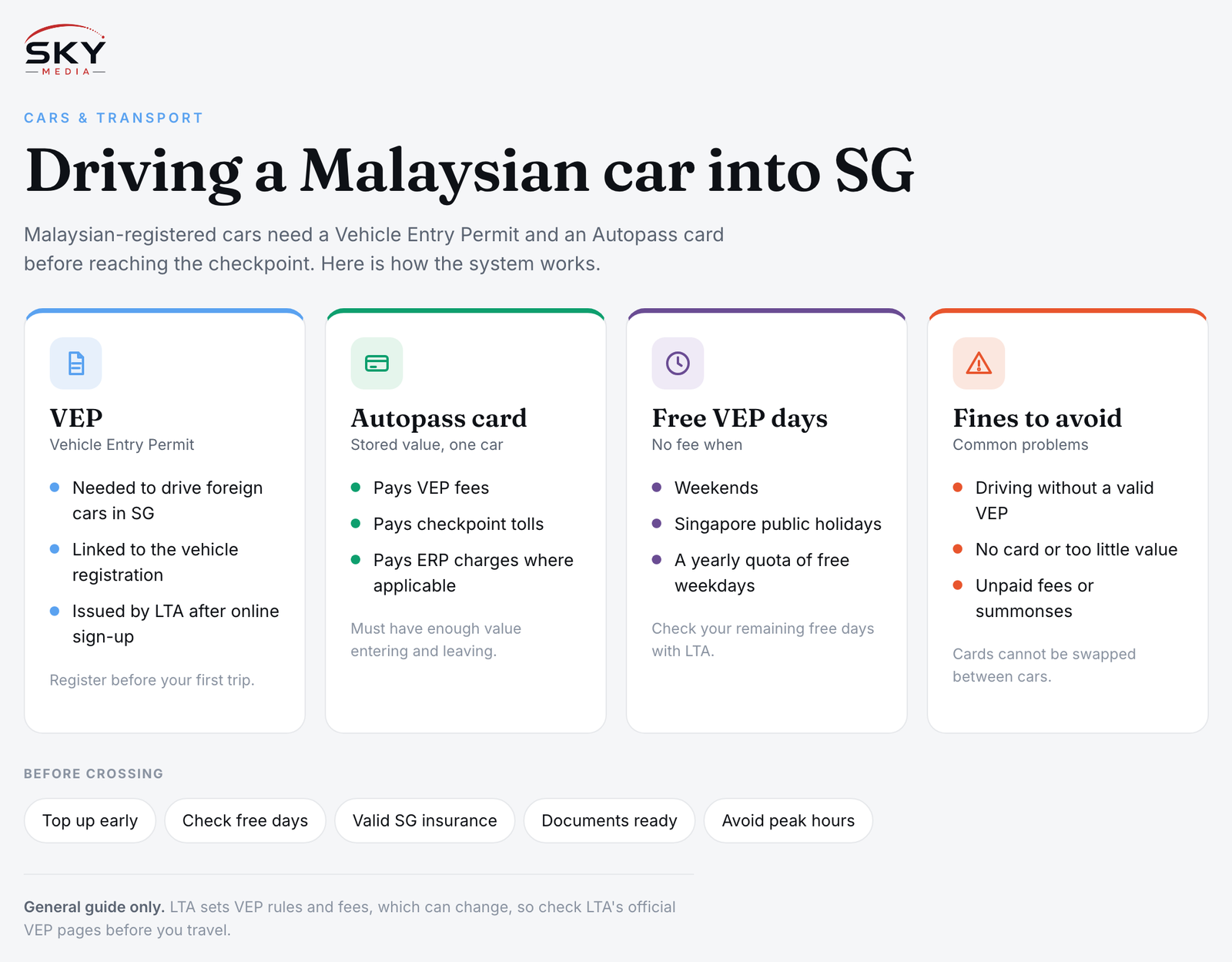
Vehicle Entry Permit (VEP). Foreign-registered vehicles need a VEP to be driven in Singapore. The VEP is linked to your vehicle’s registration and is issued by LTA after you register the vehicle online.
Autopass card. This is a stored-value card tied to your specific vehicle. It is used to:
- Pay VEP fees on days when they apply.
- Pay road tolls at the checkpoints.
- Pay Electronic Road Pricing (ERP) charges, Singapore’s road congestion charges, where applicable.
You must have a valid Autopass card with sufficient value each time you enter and leave Singapore. The card is checked at the checkpoint, and outstanding charges are deducted or recorded against the vehicle.
Singapore is moving to a satellite-based ERP system, often called ERP 2.0. Check LTA’s website for the latest arrangements on how foreign vehicles pay ERP charges under the new system.
How to Register and Get Your Autopass Card
The process generally follows these steps:
- Register your vehicle online through LTA’s VEP registration portal. You will need details of the vehicle, the registered owner and your travel documents.
- Wait for approval. LTA reviews the application and notifies you of the outcome.
- Collect your Autopass card at the location LTA specifies, typically at the checkpoints. Bring the documents LTA lists, such as your vehicle registration documents and identity papers.
- Top up the card with enough value for your planned trips.
- Check your insurance. Your motor insurance must be valid for use in Singapore. Confirm this with your insurer before crossing.
LTA publishes the current documents, fees and collection points on its website, so follow those exact instructions rather than relying on older advice.
Free VEP Days, Fees and Charges at a Glance
VEP fees are not charged every day. Singapore has long allowed VEP-free entry on weekends and Singapore public holidays, plus a set number of VEP-free weekdays per vehicle each calendar year. Outside these, a daily VEP fee applies. The exact rules, fee amounts and number of free days are set by LTA and can change.
| Charge or rule | When it applies | How it is paid | What to check with LTA |
|---|---|---|---|
| VEP fee | On chargeable weekdays you are in Singapore | Deducted from your Autopass card | Current daily rate and chargeable hours |
| VEP-free days | Weekends, Singapore public holidays and a yearly quota of free weekdays | No fee if conditions are met | How many free days remain for your vehicle |
| Checkpoint tolls | Each crossing at Woodlands or Tuas | Deducted from your Autopass card | Current toll rates |
| ERP charges | When passing through charging points | Autopass card or the system LTA currently uses for foreign vehicles | ERP 2.0 arrangements for foreign cars |
| Outstanding fees and fines | If unpaid from previous trips | Must be settled before entering or leaving | Your vehicle’s balance and any summonses |
You can usually check your VEP-free days balance, card balance and outstanding fees through LTA’s online services.
Fines and Penalties to Avoid
LTA takes VEP compliance seriously. Common problems include:
- Driving without a valid VEP. Entering Singapore in an unregistered foreign vehicle is an offence and can lead to fines.
- Not having an Autopass card or enough value. You may be stopped at the checkpoint, and unpaid amounts may be recorded against your vehicle.
- Unpaid VEP fees or fines. Vehicles with outstanding fees or summonses may be refused entry or exit until they are settled.
- Using someone else’s Autopass card. Each card is tied to one vehicle and cannot be swapped between cars.
- Overstaying the permitted period. Foreign vehicles may only remain in Singapore for a limited time. Check LTA’s rules if you plan a longer stay.
Fine amounts are set by LTA and other authorities and are not listed here, as they can change. If you receive a notice, follow the instructions on it and pay or appeal through the official channels.
Tips for a Smooth Checkpoint Crossing
- Top up before you travel. Running low on value at the checkpoint causes delays for you and the drivers behind you.
- Check your free days. If you cross often on weekdays, track how many VEP-free days you have used.
- Keep documents handy. Have your passport, vehicle documents and Autopass card ready at the immigration booth.
- Know Singapore’s road rules. Speed cameras, bus lanes and parking rules are strictly enforced. Read our guide on driving an unfamiliar or rental car for a refresher on adapting to different conditions.
- Pay for parking correctly. Many car parks use electronic or app-based payment. Check the signs at each car park.
- Plan around peak hours. The Causeway and Second Link get very congested during weekday commuter peaks, school holidays and festive periods such as Chinese New Year.
Singapore Drivers Heading the Other Way
If you are a Singapore driver making the opposite trip, the rules are different. Malaysia has its own VEP system and payment methods such as Touch ‘n Go. See our guide on using a Touch ‘n Go card when driving in Malaysia and check the Malaysian authorities’ official websites for the latest requirements.
Rules, fees and the number of free VEP days can change. Always confirm current details with LTA before you drive into Singapore.
Explore more: How to Check and Pay Malaysian Traffic Summonses as a Singapore Driver
Official sources: OneMotoring
Further reading: Driving a Left-Hand-Drive Car Overseas: A Singapore Guide