
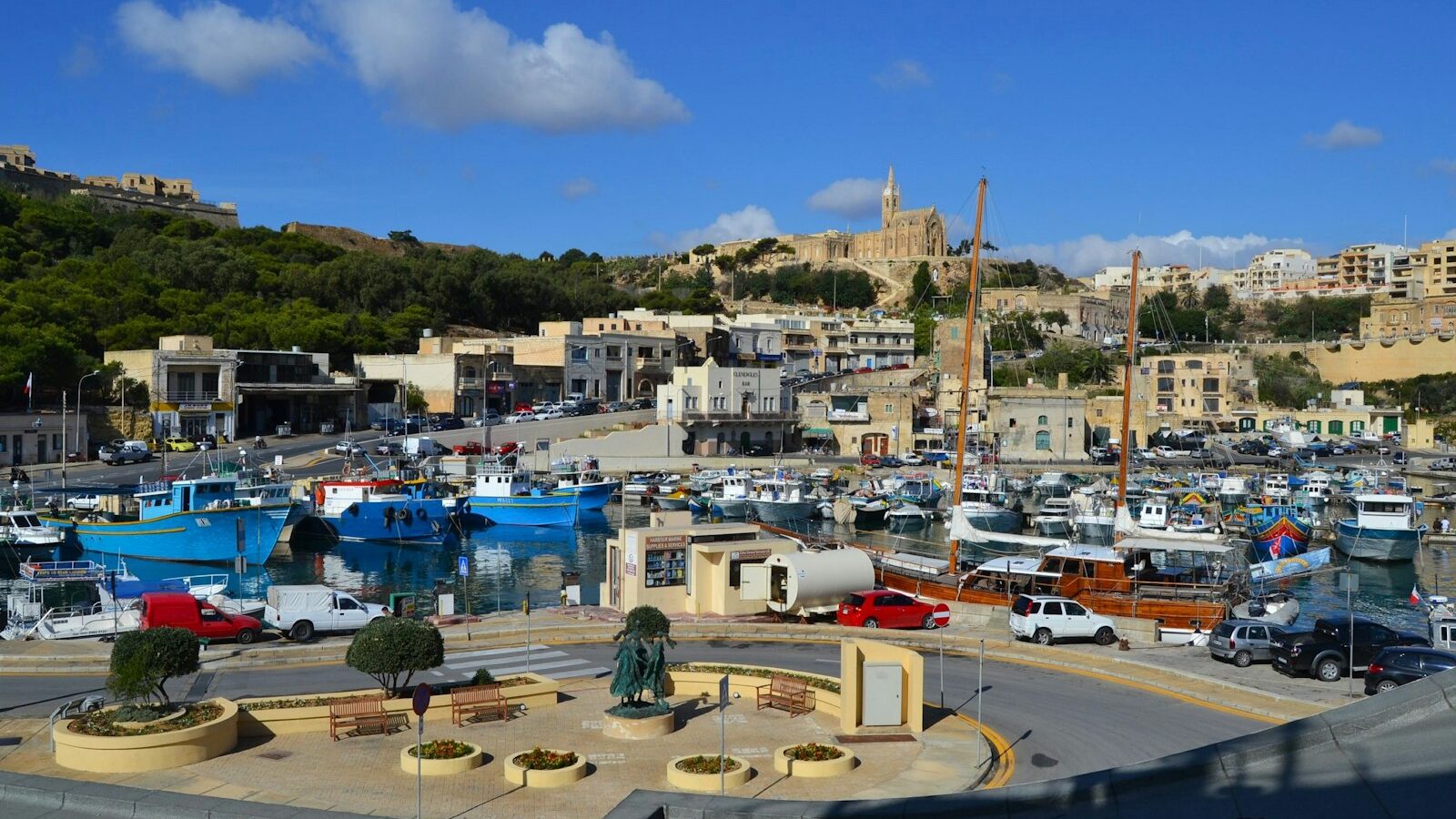
Honey coloured limestone, deep blue harbours and seven thousand years of history packed onto a handful of small islands make Malta a rewarding stop in the central Mediterranean. Sitting between Sicily and North Africa, this tiny nation blends European, Arab and British influences into something all its own, and English is one of the official languages, which makes life easy for a Singapore traveller. Planning a trip to Malta from Singapore takes a little thought on the connection and the seasons, and this guide walks through the practical decisions so the rest of the trip is pure pleasure.
Getting There From Singapore
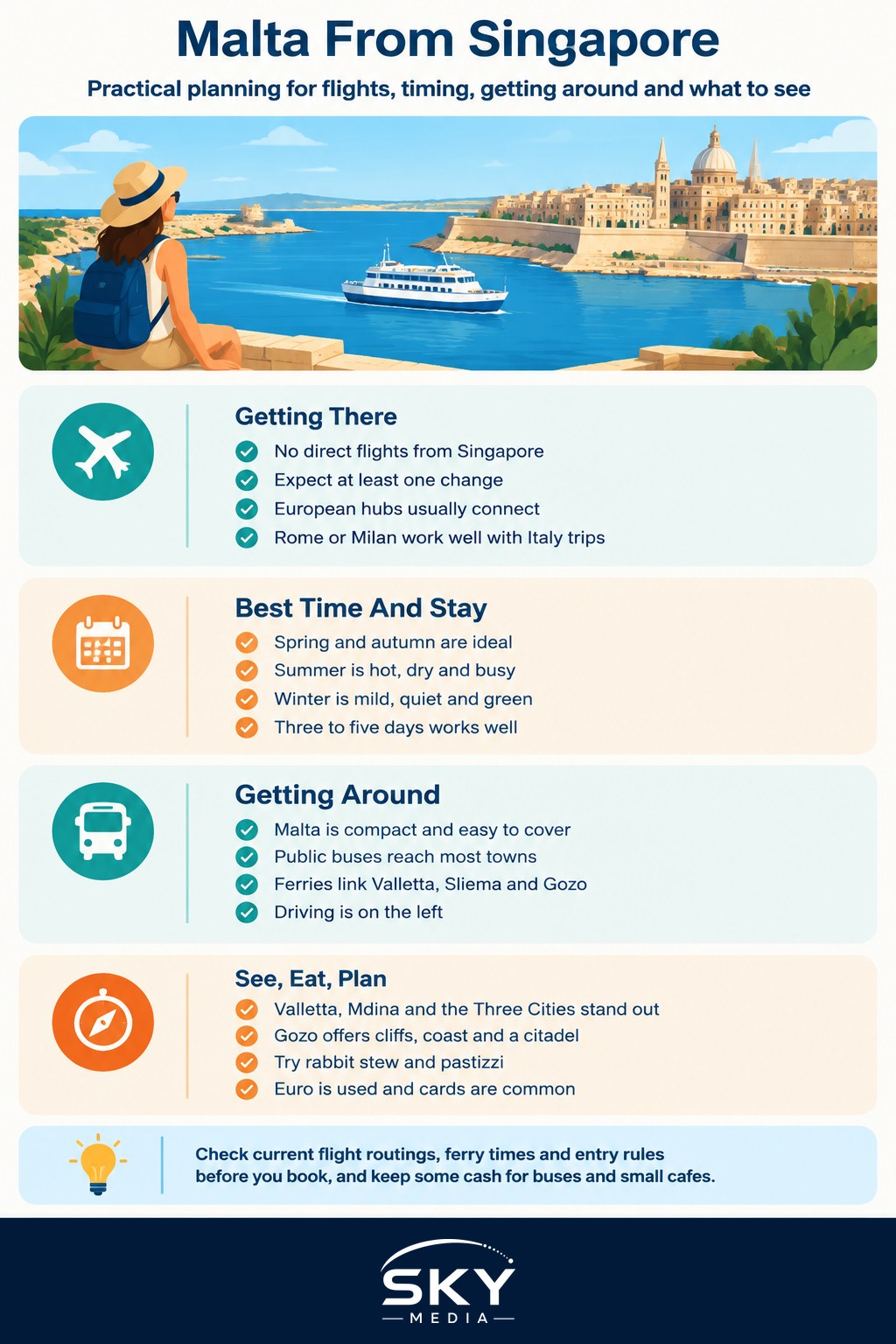
There are no direct flights from Singapore to Malta, so from Changi expect a long journey with at least one change. The usual approach is to fly to a major European hub such as Rome, Milan or London, then take a short onward flight into Malta International Airport. Compare current routings and weigh the total fare against the layover length rather than assuming any fixed flight time. If you are pairing Malta with mainland Italy, a stop in Rome or Milan works neatly as a two centre trip.
For finding a sensible fare, our guide to finding cheap flights from Singapore covers the timing and comparison habits that help on long routes like this one.
When To Go And How Long To Stay
Spring and autumn are the standout seasons, with warm days, gentle sea breezes and thinner crowds than the peak of summer. Summer is hot, dry and busy, with the beaches and the coast drawing everyone at once. Winter is mild by European standards, quiet and green, ideal if you prefer empty streets and lower prices and do not mind the odd rainy day and cooler sea.
Three full days lets you cover Valletta, the Three Cities and a day on Gozo. Stretch it to four or five if you want to slow down, add more coast and diving, or explore the quieter corners. Malta pairs naturally with Sicily or a wider Mediterranean loop if you have more time.
Getting Around The Islands
Malta is compact, so you can see a lot without renting a car. Public buses fan out across the main island from Valletta and reach most towns and beaches, though they can be slow and busy in high season. Ferries link Valletta with the Three Cities and Sliema, and a larger ferry crosses to Gozo, the greener, sleepier sister island. Many visitors hire a car for a day or two to reach remote bays and temples, but remember that Malta drives on the left, which will feel familiar coming from Singapore. Check current fares and ferry timetables before you travel, as details change.
Top Things To See And Do
Start in Valletta, the fortified capital and a compact grid of grand streets, baroque churches and harbour viewpoints. The Saint John’s Co-Cathedral is a jaw dropping interior, and the Upper Barrakka Gardens give one of the finest harbour panoramas in the Mediterranean. Across the water, the Three Cities of Vittoriosa, Senglea and Cospicua offer a quieter, lived in slice of old Malta.
Beyond the capital, the ancient walled town of Mdina, known as the Silent City, is magical at dusk. History lovers should seek out the megalithic temples, some of the oldest free standing structures on earth. On Gozo, the countryside, sea cliffs and the pretty Victoria citadel reward a full day. Divers and snorkellers will find some of the clearest water in Europe.
What And Where To Eat
Maltese food leans hearty and rustic, shaped by Sicilian and North African neighbours. Look for rabbit stew, the unofficial national dish, along with pastizzi, the flaky pastries filled with ricotta or peas that make a perfect cheap snack. Fresh fish, crusty bread with tomato and capers, and local sheep cheese round out simple, generous meals.
Graze through village bakeries and harbourside restaurants, and wash it down with a local beer or a glass of Maltese wine. Prices are reasonable by Western European standards, so you can eat very well without overspending. Treat every price and exchange rate as a moving figure and check current details before you commit.
A Simple Itinerary And Practical Tips
A first trip might run like this. Day one, settle into Valletta and walk the ramparts at golden hour. Day two, cross to the Three Cities and visit Mdina and Rabat in the afternoon. Day three, take the ferry to Gozo for the citadel, the coast and a slow lunch. Add spare days for beaches, diving or a hop to Sicily.
A few closing notes. Malta uses the euro, and cards are widely accepted, though it helps to carry some cash for buses and small cafes. This is general travel information, not official advice. Malta is in the Schengen area, and entry and visa rules depend on your passport and change often, so check the latest for a Singapore passport through the official Maltese or Schengen sources and see our overview of applying for US and Schengen visas from Singapore. Confirm Singapore re-entry details with ICA, and arrange suitable travel insurance before you fly.
Frequently Asked Questions
Is three days enough for Malta, including Gozo? Three full days covers Valletta, the Three Cities and a day on Gozo, which is enough for a first taste. Stretch to four or five if you want to slow down, add coast and diving, or explore the quieter corners.
Do I need to rent a car in Malta? Not necessarily, since the islands are compact. Buses fan out from Valletta to most towns and beaches, though they can be slow and busy in high season, and ferries link the Three Cities, Sliema and Gozo. A car for a day or two reaches remote bays.
Which side of the road do they drive on in Malta? Malta drives on the left, which will feel familiar if you are used to Singapore roads. If you hire a car, still take care on narrow roads and unfamiliar junctions. Check current licence and rental conditions with the rental company.
What is Mdina known for, and when should I go? Mdina is an ancient walled town known as the Silent City, and the article calls it magical at dusk. Pair it with Rabat in the afternoon. It suits a half day of slow wandering rather than a long visit.
Does Malta need a Schengen visa for a Singapore passport holder? Malta is in the Schengen area, and entry and visa rules depend on your passport and change often. Check the latest requirements through official Maltese or Schengen sources, and confirm Singapore re-entry details with ICA before you fly.