
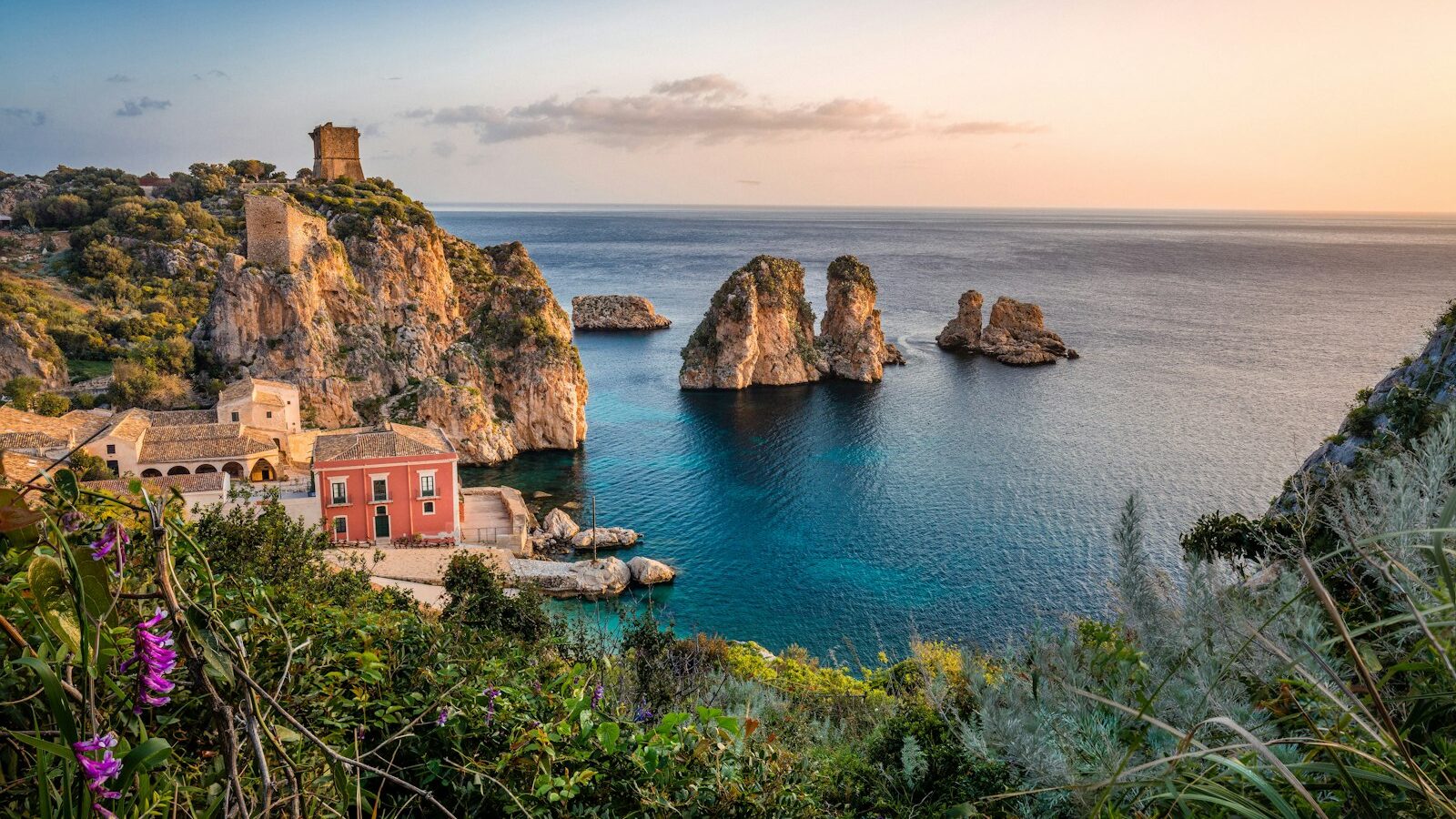
The largest island in the Mediterranean, Sicily is a world of its own, where Greek temples, Norman cathedrals, smoking volcanoes and some of Italy’s best food crowd into one sun baked corner. Layered by Greeks, Romans, Arabs, Normans and Spaniards, it feels both intensely Italian and utterly distinct. Planning a trip to Sicily from Singapore takes a little thought on the connection and the seasons, and this guide covers the practical decisions so the rest of the journey is pure pleasure.
Getting There From Singapore
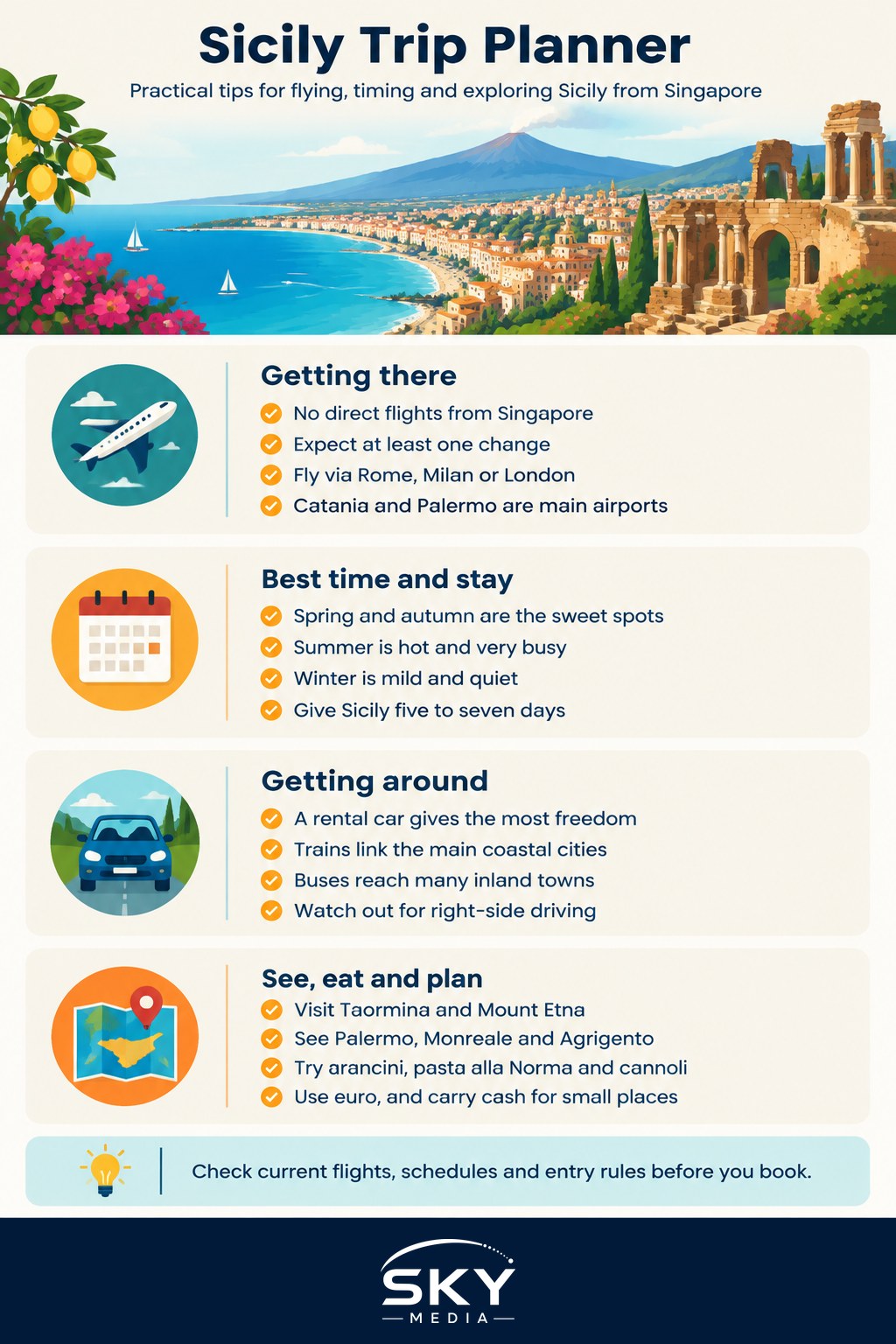
There are no direct flights from Singapore to Sicily, so from Changi expect a long journey with at least one change. The common approach is to fly to a European hub such as Rome, Milan or London, then take a short onward flight to one of Sicily’s main airports at Catania or Palermo. Alternatively you can fly into mainland Italy and continue by train and ferry, which is scenic but slower. Compare current routings and weigh the total fare against the layover length rather than assuming any fixed flight time. Pairing Sicily with Rome or Milan makes an easy two centre trip, and finding cheap flights from Singapore has tips for long routes.
When To Go And How Long To Stay
Spring and autumn are the sweet spots, with warm days, wildflowers or harvest colour and manageable crowds. Summer is hot and very busy, especially on the coast and beaches, and the heat inland can be fierce. Winter is mild and quiet, green rather than snowy at sea level, though Mount Etna can carry snow and some seasonal spots close.
Sicily is big, so give it time. Five to seven days lets you combine the east around Catania and Taormina with the Baroque south or the west around Palermo. A short three day taste is possible but leaves you rushing. If you have longer, the island rewards a slow, unhurried loop.
Getting Around The Island
A rental car gives the most freedom for reaching hill towns, temples and quiet beaches, and driving is straightforward once you accept assertive local traffic in the cities. Trains link the main coastal cities and are pleasant if slower, while buses reach many inland towns. Remember Italy drives on the right, the opposite of Singapore, so take extra care at first. Check current schedules and consider parking outside historic centres, which are often closed to cars. Details change, so confirm before you travel.
Top Things To See And Do
In the east, elegant Taormina perches above the sea with a Greek theatre framing Mount Etna, and the volcano itself can be visited with licensed guides for craters, lava fields and cable car rides. Catania is a lively Baroque city built from black lava stone. To the south lies the Val di Noto, a cluster of golden Baroque towns such as Noto, Modica and Ragusa, rebuilt in flamboyant style after a great earthquake.
Further afield, the Valley of the Temples at Agrigento holds some of the best preserved Greek temples anywhere, glowing at sunset. In the west, Palermo dazzles with markets, mosaics and street life, and nearby Monreale has a breathtaking golden cathedral. Beaches, offshore islands and nature reserves fill any spare days.
What And Where To Eat
Sicilian food is a highlight in its own right, shaped by centuries of trade. Try arancini, the stuffed and fried rice balls, pasta alla Norma with aubergine and ricotta, and fresh seafood along the coast. The island’s sweets are legendary, from cannoli filled with sweet ricotta to cassata and rich almond pastries, and a granita with a brioche is the perfect summer breakfast.
Eat where locals do, in busy trattorias and bustling street markets, and pair meals with a robust Sicilian red or a crisp white from Etna’s slopes. Prices are generally friendly by Western European standards. Treat every price and exchange rate as a moving figure and check current details before you commit.
A Simple Itinerary And Practical Tips
A first loop might run like this. Days one and two, base in Taormina or Catania for the coast and a guided Etna visit. Days three and four, drop south into the Baroque towns of the Val di Noto and reach Agrigento’s temples. Days five and six, cross the island to Palermo and Monreale. Add spare days for beaches or the offshore islands.
A few closing notes. Sicily uses the euro, and cards are widely accepted, though carry cash for small towns and markets. This is general travel information, not official advice. Sicily is part of Italy and the Schengen area, so entry and visa rules depend on your passport and change often. Check the latest for a Singapore passport through the official Italian or Schengen sources, see our note on applying for US and Schengen visas from Singapore, confirm Singapore re-entry with ICA, and arrange suitable travel insurance before you fly.
Frequently Asked Questions
Is it safe to climb Mount Etna, and do I need a guide? The article says Etna can be visited with licensed guides for craters, lava fields and cable car rides. A guide is the sensible route, as it is an active volcano. Conditions vary, so follow their advice and check current access rules.
How many days should I allow for a loop around Sicily? Five to seven days lets you combine the east around Catania and Taormina with the Baroque south or the west around Palermo. A three-day taste leaves you rushing. If you have longer, the island rewards a slow loop.
Is driving in Sicily difficult for someone used to Singapore roads? Driving is straightforward once you accept assertive local traffic in cities. Italy drives on the right, the opposite of Singapore, so take extra care at first. Historic centres are often closed to cars, so consider parking outside them.
What are the Val di Noto towns, and why visit? The Val di Noto is a cluster of golden Baroque towns, such as Noto, Modica and Ragusa, rebuilt in a flamboyant style after a great earthquake. They sit in the south and suit a day or two of unhurried wandering and good food.
What Sicilian sweets should I try? Look for cannoli filled with sweet ricotta, cassata and rich almond pastries. A granita with a brioche is the perfect summer breakfast. Many of these are best enjoyed in local cafes and street markets, where you can see what is fresh.
Further reading: Malta From Singapore: A Complete Travel Planning Guide