
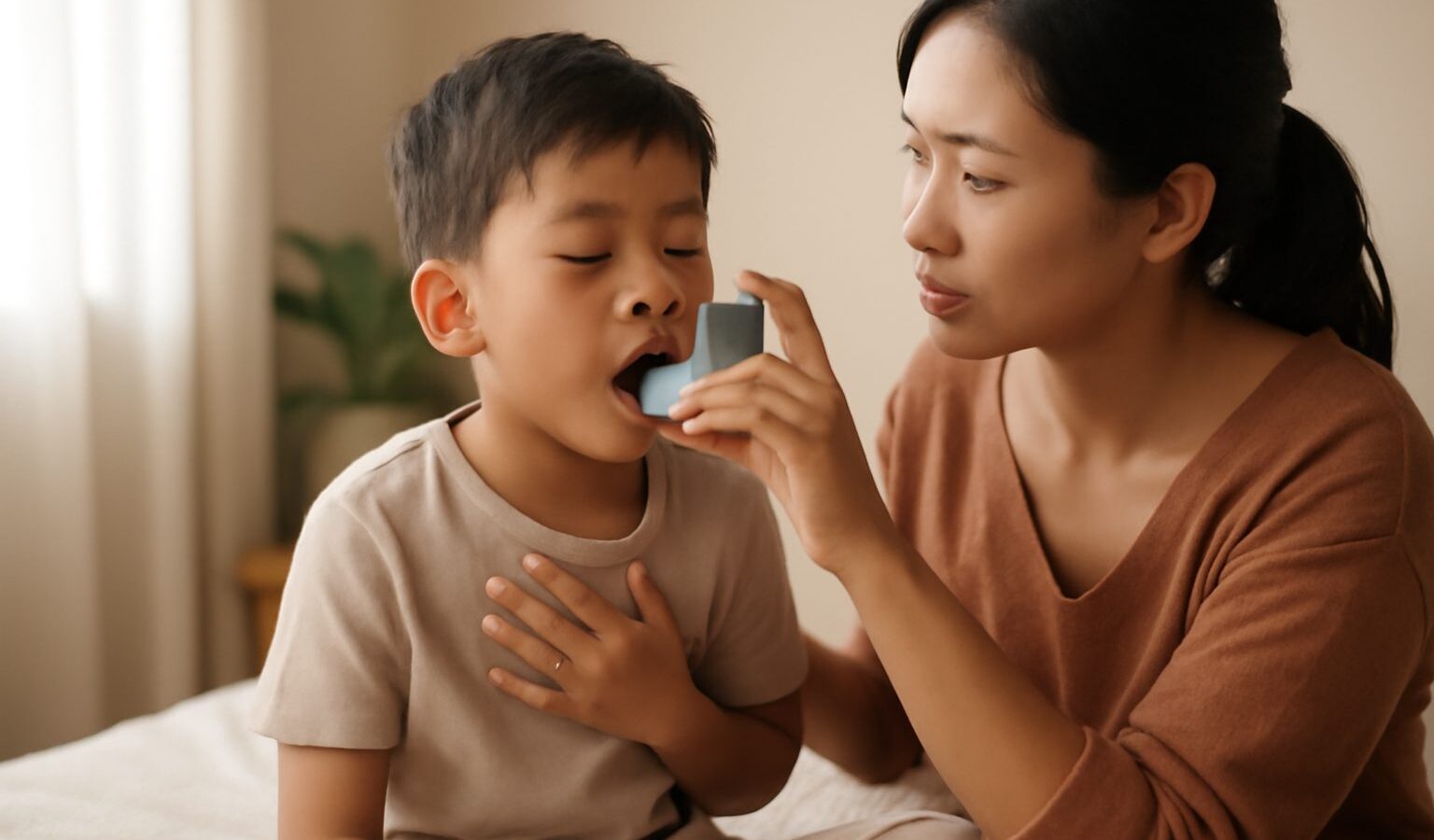
Hearing your child cough through the night or wheeze after a run can be worrying, but the good news is that asthma is a very manageable condition. With the right plan, most children with asthma in Singapore live full, active lives, playing sport, joining school activities and sleeping well. This guide offers reassuring, practical background on childhood asthma singapore families deal with day to day, so you feel more confident and less anxious.
Please remember that this article is general information only. It is not medical advice and it is not a tool for self-diagnosis. Asthma should always be diagnosed and managed together with a doctor or paediatrician, who can tailor care to your child.
What Asthma Looks Like in Children
Asthma affects the airways, the small tubes that carry air in and out of the lungs. In a child with asthma, these airways can become inflamed and narrow, especially when they meet a trigger. That is when you might notice coughing, wheezing (a whistling sound when breathing out), a tight chest, or breathlessness. Some children mainly have a persistent night time or early morning cough rather than obvious wheezing.
Symptoms often come and go. Your child may be completely well for weeks, then have a flare up during a haze episode or after a cold. This pattern is normal and does not mean the asthma is getting worse. What matters is having a clear plan for both the calm periods and the flare ups.
If you suspect your child has asthma, see a doctor for a proper assessment. Only a medical professional can confirm the diagnosis and decide on treatment. Never start, stop or adjust medicines on your own, and this article deliberately does not name any specific inhalers or doses, as those decisions belong with your child’s doctor.
Common Triggers in Singapore
Every child is different, but some triggers are especially relevant here in our tropical, urban setting. Knowing your child’s personal triggers is one of the most powerful things you can do.
- Haze. During periods of transboundary haze, air quality drops and fine particles can irritate sensitive airways. On poor air quality days, keep windows closed, limit strenuous outdoor play, and check the NEA air quality readings before heading out.
- Dust mites. Our warm, humid climate is ideal for dust mites, a very common indoor trigger. Washing bedding regularly in hot water and reducing soft toys and heavy fabrics in the bedroom can help.
- Respiratory infections. The common cold and other viruses circulating in childcare and school settings often set off asthma symptoms.
- Exercise. Vigorous activity, particularly in hot or hazy conditions, can trigger coughing or wheezing in some children. This does not mean your child should avoid exercise. With good control, most children can and should stay active.
- Other irritants. Cigarette smoke, strong fumes, and pet dander can also play a role.
You do not need to remove every possible trigger from your child’s life. The aim is to reduce the ones that clearly affect your child while keeping their world open and active. For related support, see our guide on managing childhood allergies and eczema in Singapore, since allergies and asthma often travel together.
The Value of an Asthma Action Plan
The cornerstone of good control is a written asthma action plan, prepared with your child’s doctor. A typical plan explains what medicines to use every day to keep the airways calm, what to do when symptoms appear, and exactly when to seek urgent help. Because it is written down, anyone caring for your child, including grandparents, helpers and teachers, can follow the same steps.
Regular reviews matter too. As your child grows, their needs change, so keep up with follow up appointments at your paediatric clinic or polyclinic even during good spells. Bring the action plan to each visit so it stays current. Good daily control is what allows a child to run, swim and play without constant symptoms.
Recognising an Emergency
Most asthma symptoms can be handled calmly at home by following the action plan. However, every parent should know the signs that need urgent care. Call 995 or go straight to A&E if your child shows any of the following:
- Severe breathlessness, or struggling so hard to breathe that they cannot speak in full sentences
- Lips, face or fingertips turning blue or grey
- Symptoms that do not improve after following the action plan, or that are getting worse quickly
- Sucking in of the skin around the ribs or neck with each breath, or looking exhausted and drowsy
Trust your instincts. If your child looks seriously unwell or you are frightened by their breathing, seek emergency help immediately rather than waiting. It is always better to be checked and reassured. If you are ever unsure whether a symptom needs the clinic or the hospital, our guide on when to take your child to A&E vs the GP in Singapore may help you decide.
Everyday Confidence
Living well with asthma is about routine and preparation, not fear. Keep the action plan somewhere easy to find, make sure your child’s school knows about their condition, and stay on top of reviews with the doctor. Encourage a healthy, active lifestyle, as staying fit generally supports better breathing. Ideas for gentle and vigorous activity can be found in our piece on keeping your kids active in Singapore.
For persistent or worrying symptoms, or if you feel the asthma is not well controlled, always consult your doctor or paediatrician. With a good plan and a calm approach, childhood asthma becomes just one small, manageable part of family life.