
Few things worry a parent more than a child with an upset tummy. Stomach bugs and diarrhoea are among the most common illnesses of childhood, and most children will experience them more than once as they grow. The good news is that in the majority of cases, these bugs are mild and pass on their own within a few days. Knowing how to care for your child at home, and just as importantly, knowing when to seek help, can make a stressful situation feel much more manageable.
Please note that this article offers general information only. It is not medical advice and is not intended for diagnosing your child. Every child is different, so if you are worried, or if your child has ongoing or unusual symptoms, please see a doctor or paediatrician. For anything that feels like an emergency, go straight to A&E or call 995.
Keeping Your Child Hydrated
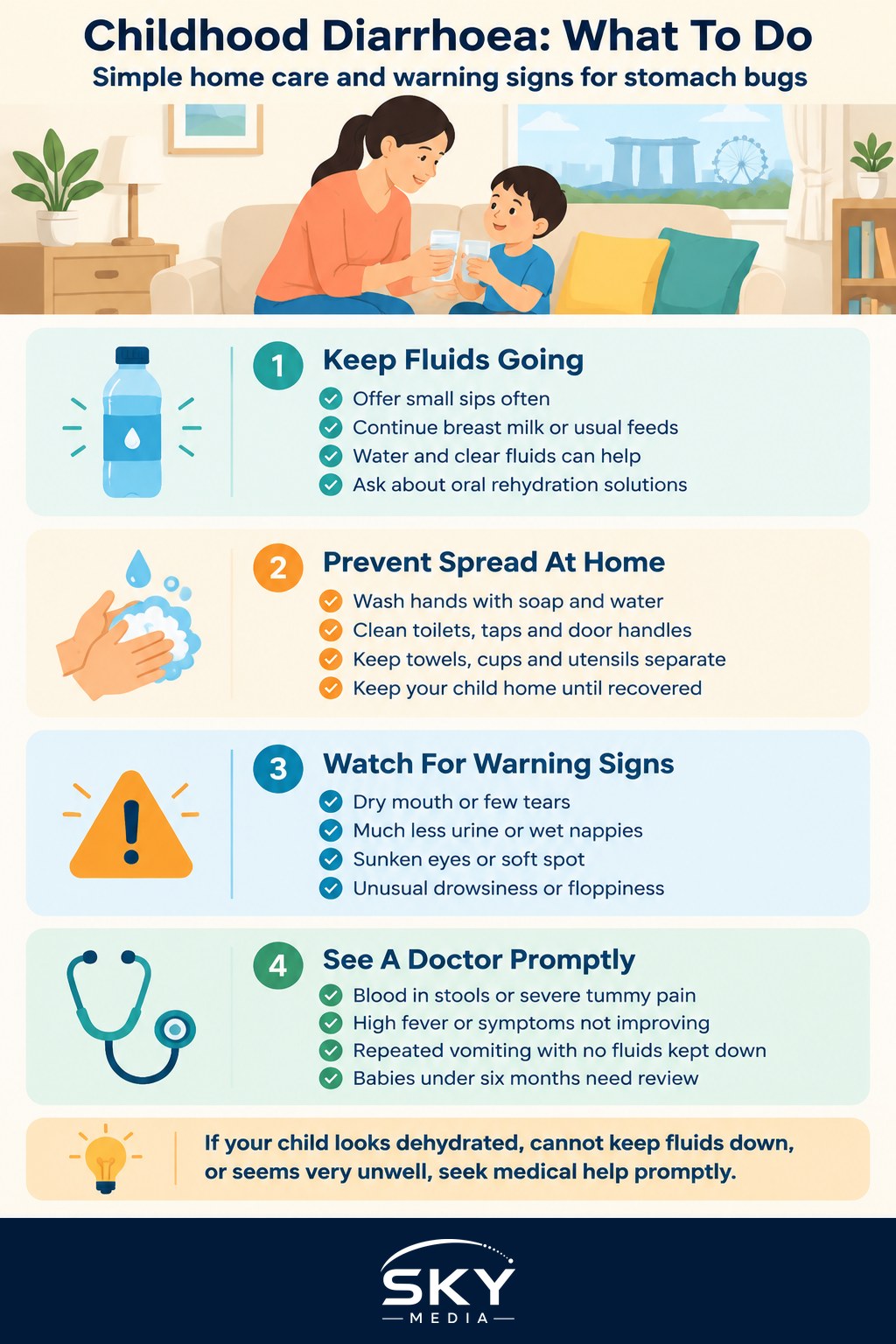
When it comes to childhood diarrhoea in Singapore, the single most important thing you can do at home is help your child stay hydrated. Diarrhoea, and any accompanying vomiting, causes the body to lose fluids and salts quickly, and this loss is what makes a child feel unwell. Young children and babies can become dehydrated faster than adults, so keeping fluids going is the priority.
Offer small amounts of fluid often rather than large drinks all at once, which can be easier on a queasy stomach. For infants, continue with breast milk or the usual milk feeds, offering them more frequently. For older children, water and clear fluids are helpful, and a doctor or pharmacist can advise on oral rehydration solutions, which are specially formulated to replace lost fluids and salts. It is best to check with a healthcare professional on the right approach for your child’s age rather than guessing.
Try to avoid very sugary drinks, as these can sometimes make diarrhoea worse. Do not give any medicines to stop diarrhoea in a child without a doctor’s guidance, as these are generally not recommended for young children. If your child is eating, offer plain, easy foods when they feel ready, and do not force food if they have no appetite. For more detail on keeping fluids up during an illness, our guide on hydration and fluids for a sick child is a useful companion.
Watch closely for signs of dehydration, which is the main risk with a stomach bug. These can include:
- A noticeably dry mouth and tongue, or crying with few or no tears.
- Passing much less urine than usual, or far fewer wet nappies in a baby.
- Sunken eyes, or a sunken soft spot on a baby’s head.
- Unusual drowsiness, floppiness, or a lack of energy.
If you notice these signs, your child needs to be seen by a doctor promptly.
Preventing the Spread at Home
Stomach bugs spread easily, and in our warm climate, good hygiene is your best defence for the rest of the family. The germs that cause diarrhoea pass from hands, surfaces, and shared items, so a few simple habits can stop a single case from turning into a household outbreak.
Wash hands thoroughly with soap and water, especially after using the toilet, after changing nappies, and before preparing food or eating. Encourage your children to do the same and supervise the little ones to make sure they do it properly. Clean and disinfect surfaces such as the toilet, taps, and door handles regularly while someone is unwell.
Keep an unwell child’s towels, cups, and utensils separate from everyone else’s, and wash soiled clothing and bedding promptly. It is generally best to keep a child with diarrhoea at home and away from school, childcare, or the pool until they have fully recovered, usually until a couple of days after symptoms have stopped. This protects other children and gives your own child time to rest. Our guide on caring for a sick child at home has more comforting, practical ideas for the recovery days.
When to See a Doctor
Most stomach bugs settle by themselves, but some situations need a doctor’s attention without delay. Please seek medical care if your child shows any of the warning signs below, and remember to trust your instincts as a parent. You know your child best, and if something feels wrong, it is always right to get them checked.
See a doctor promptly if your child has:
- Any signs of dehydration, as described above.
- Blood in their stools, or persistent, severe tummy pain.
- A high fever, or diarrhoea and vomiting that do not improve after a couple of days.
- Repeated vomiting that means they cannot keep any fluids down.
- Unusual drowsiness, floppiness, or difficulty waking.
A baby under six months of age with diarrhoea or vomiting should be seen by a doctor, as young infants can become dehydrated very quickly. For serious symptoms, or if your child seems very unwell, go to A&E or call 995. If you are ever unsure whether to head to the clinic or the hospital, our guide on when to take your child to A&E vs the GP can help you decide.
With plenty of fluids, good hygiene, and lots of rest and cuddles, most children bounce back from a stomach bug within a few days. Stay calm, keep a close eye on the warning signs, and never hesitate to reach out to a healthcare professional if you are worried. Your care and attention are exactly what your little one needs to recover.
Frequently Asked Questions
Can I give my child anti-diarrhoea medicine to stop it? Not without a doctor’s guidance, as these medicines are generally not recommended for young children. Focus on keeping fluids going and watch for dehydration. A doctor or pharmacist can advise what is suitable for your child’s age.
What should my baby drink during a stomach bug? For infants, continue breast milk or the usual milk feeds, offering them more often in smaller amounts. Ask a doctor or pharmacist about oral rehydration solutions. A baby under six months with diarrhoea or vomiting should be seen by a doctor.
When can my child go back to school or childcare after diarrhoea? It is generally best to keep a child home, and away from the pool, until fully recovered, usually until a couple of days after symptoms have stopped. This protects other children and gives your child time to rest.
How do I stop a stomach bug spreading to the rest of the family? Wash hands with soap and water after the toilet, after nappy changes and before eating or preparing food. Disinfect toilets, taps and door handles, keep the child’s towels and cups separate, and wash soiled clothing and bedding promptly.
Which foods and drinks should I avoid when my child has diarrhoea? Avoid very sugary drinks, which can sometimes make diarrhoea worse, and do not force food if there is no appetite. When your child feels ready, offer plain, easy foods in small amounts.
Official sources: HealthHub
Further reading: Childhood Vomiting and When to Worry: A Singapore Guide