
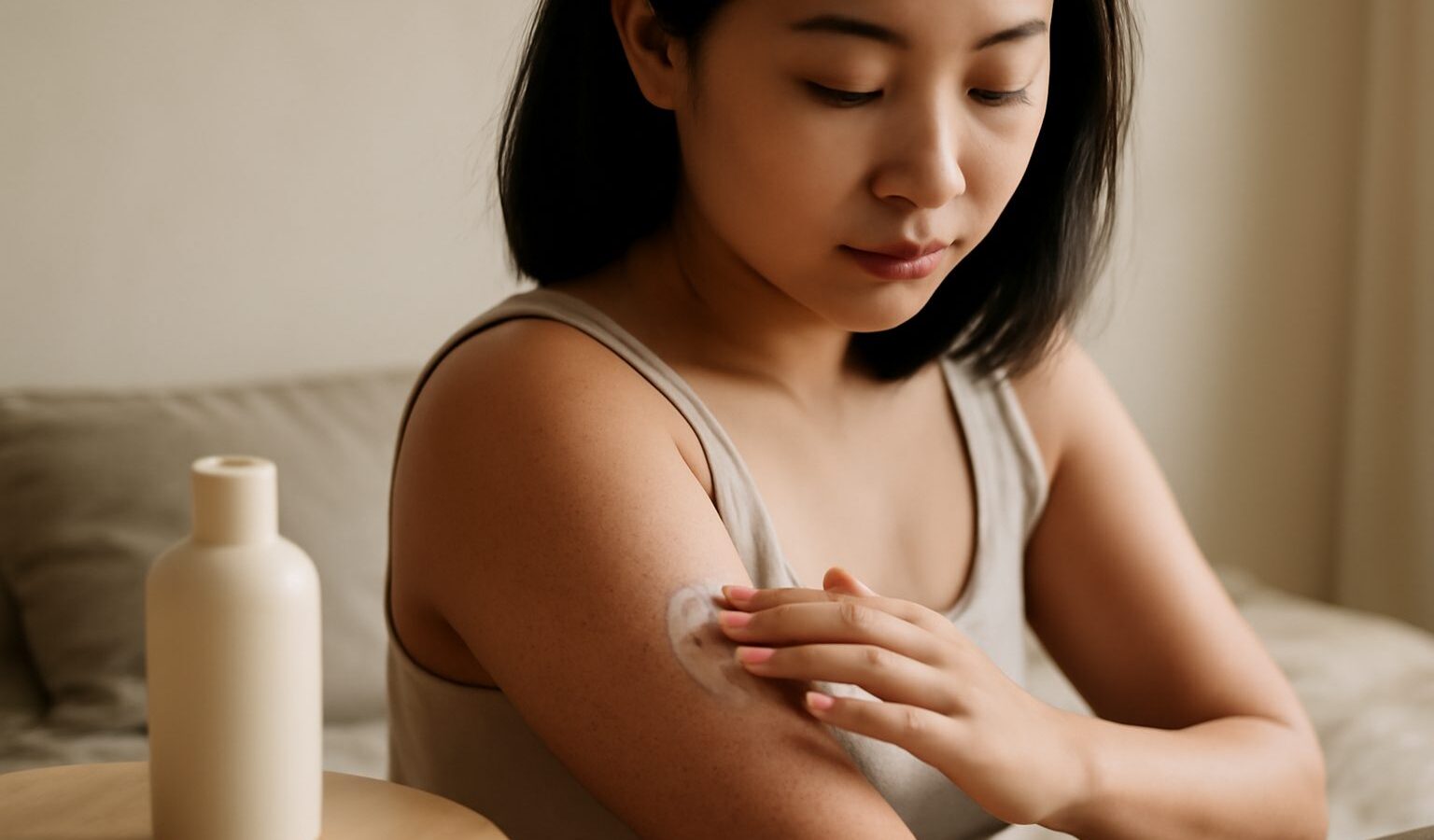
If the backs of your arms feel like fine sandpaper, or your thighs are dotted with tiny rough bumps, you may be dealing with keratosis pilaris. It is one of the most common skin conditions around, so common that many people never realise it has a name. Often nicknamed “chicken skin”, keratosis pilaris is harmless, not contagious, and nothing to be embarrassed about. It cannot be cured, but it can usually be softened and managed with a little patience. This guide explains what it is and how to care for it gently in Singapore’s hot, humid climate. It is general information, not medical or dermatological advice, so see a doctor or dermatologist to confirm what you have and rule anything else out.
What Keratosis Pilaris Actually Is
Keratosis pilaris happens when keratin, a protein your skin makes naturally, builds up and plugs the tiny openings of your hair follicles. Each plug forms a small, firm bump, and because the hair underneath can get trapped, the skin takes on a rough, slightly bumpy texture.
You will most often notice it on the backs of the upper arms, the front of the thighs, the buttocks and sometimes the cheeks. The bumps can be skin-coloured, or they may look pink, red or brown depending on your natural skin tone. On deeper tones the marks often read as darker spots rather than redness, which is completely normal.
A few things are worth saying plainly. Keratosis pilaris is very common, especially in children, teenagers and younger adults, and it often eases with age. It is not caused by poor hygiene, and you cannot scrub it away. It tends to run in families, and it is frequently seen alongside dry skin or eczema. It is a cosmetic, harmless condition, not an infection or a disease.
Why It Flares and How the Climate Plays In
Keratosis pilaris usually gets worse when skin is dry, which is why many people notice it more in air-conditioned environments. Singapore is humid outdoors, but offices, malls, cars and bedrooms are often heavily air-conditioned, and that cool, dry air can pull moisture from the skin over the course of a day.
Other common triggers and aggravators include the following.
- Long, hot showers. Very hot water strips the skin’s natural oils and can leave it tighter and rougher.
- Harsh soaps and heavy scrubbing. Stripping cleansers and aggressive scrubbing irritate the follicles and can make bumps look angrier.
- Friction. Tight sleeves, gym straps and rough fabrics rubbing the same spots can play a part.
- Seasonal dryness. Even in the tropics, a stretch of cooler, drier weather or constant aircon can trigger a flare.
The pattern to remember is simple. Dry, irritated skin looks and feels worse, while soft, well-hydrated skin looks calmer. Most of managing keratosis pilaris comes down to protecting your skin barrier rather than attacking the bumps.
A Gentle Daily Routine That Helps
There is no overnight fix, and anyone promising to clear keratosis pilaris completely is overselling. What genuinely helps is consistent, gentle care built around two ideas: mild exfoliation to loosen the plugs, and steady moisturising to soften the skin. Follow the instructions on any product you buy, and introduce one new thing at a time.
- Cleanse kindly. Use a mild, non-stripping body wash and lukewarm rather than hot water. Keep showers reasonably short.
- Exfoliate gently, not aggressively. A soft washcloth or a gentle chemical exfoliant is kinder than a harsh scrub or a stiff brush. Products with ingredients such as lactic acid, urea, salicylic acid or glycolic acid can help loosen the keratin over time. Start slowly, a couple of times a week, and follow the label.
- Moisturise while skin is damp. Pat dry and apply a moisturiser within a few minutes of showering to lock in water. Look for hydrating and softening ingredients like urea, glycerin, ceramides or lactic acid.
- Choose a texture that suits the heat. In humid weather a heavy balm can feel suffocating, so a lighter lotion or cream that absorbs well is often more realistic to use every day. Consistency matters more than richness.
- Do not pick or squeeze. Scratching or digging at the bumps can cause irritation, dark marks or scarring, and it does not help the underlying plug.
- Protect exposed skin from the sun. Daily sunscreen on uncovered areas helps prevent bumps and marks from looking more pronounced, and Singapore’s UV is strong all year.
Give any routine time. Expect gradual improvement over weeks, not days, and know that some smoothing, not perfectly clear skin, is the honest goal. Always patch-test a new product on a small area first.
Ways to Manage Keratosis Pilaris, Compared
People try many approaches, and it helps to see how the common ones stack up. This is a general comparison, not a ranking, since skin varies and what soothes one person can irritate another.
| Approach | What it does | Good to know |
|---|---|---|
| Gentle exfoliating acids | Loosen the keratin plugs over time | Start slowly, follow the label, can sting if overused |
| Regular moisturising | Softens skin and reduces roughness | The most reliable everyday habit, texture should suit the heat |
| Physical scrubs and brushes | Buff the surface | Easy to overdo, harsh scrubbing can worsen irritation |
| Squeezing or picking | Nothing helpful | Risks marks, scarring and infection, avoid it |
| Seeing a doctor or dermatologist | Confirms the diagnosis, tailored options | Best step for stubborn, itchy or uncertain cases |
If a couple of gentle habits keep the bumps soft and comfortable, that is a perfectly good outcome. There is no need to escalate to stronger treatments if you are happy with how your skin feels.
When to See a Doctor
Keratosis pilaris is harmless, but it is worth getting a professional opinion in a few situations. See a doctor or dermatologist if you are not sure what you are dealing with, if the bumps are very itchy, sore, spreading or inflamed, if home care over a few weeks makes no difference, or if the appearance genuinely bothers you and you want tailored options. A professional can confirm the diagnosis, rule out other conditions such as eczema or a fungal issue that can look similar, and suggest stronger treatments where appropriate. If you are pregnant or breastfeeding, check with your own doctor before starting any new active ingredient.
The Honest Bottom Line
Keratosis pilaris is common, harmless and, for most people, more of a texture quirk than a problem. You cannot cure it, and you cannot scrub it into submission, but you can usually manage it well. The winning combination is gentle: mild cleansing, light and regular exfoliation, and consistent moisturising while your skin is still damp, all kept realistic for Singapore’s warmth and aircon. Be patient, be kind to your skin, resist the urge to pick, and remember that some improvement rather than perfection is the sensible aim. If in doubt, or if the bumps are itchy or stubborn, a doctor or dermatologist can confirm what is going on and guide you from there.