

A positive pregnancy test brings a long list of decisions, and insurance is rarely at the top. Yet maternity insurance in Singapore has a narrow buying window, and once it closes you cannot go back. This guide explains what these plans typically cover, when you can buy one, the exclusions that catch parents out and how to decide whether it is worth it for your family.
It is general information, not financial advice. Plans differ between insurers and change over time, so always read the policy wording and product summary, and speak to a licensed adviser or the insurer directly before you commit.
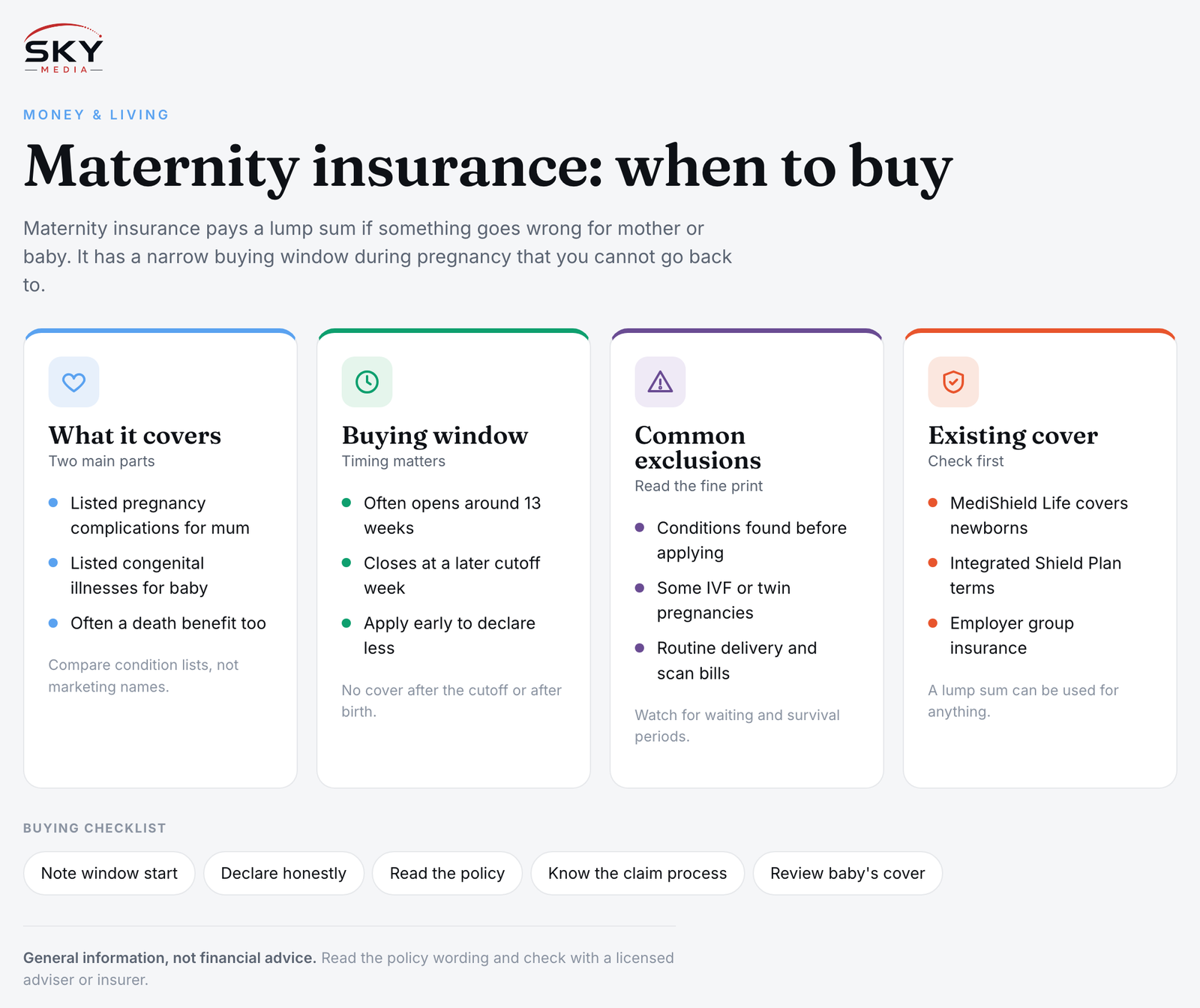
What Maternity Insurance Actually Is
Maternity insurance is a short-term policy bought during pregnancy that protects two people: the mother and the baby. It is separate from the cost of the delivery itself. Your hospital bill for a normal or caesarean birth is usually paid through a mix of cash, MediSave and any hospitalisation plan, subject to their own rules. Maternity insurance instead pays out if something goes wrong.
Most plans in Singapore are built around two main parts:
- Pregnancy complication cover for the mother. A lump sum is paid if she is diagnosed with one of the complications listed in the policy, such as certain serious conditions affecting pregnancy or delivery.
- Congenital illness cover for the baby. A lump sum is paid if the baby is diagnosed with one of the listed congenital conditions, usually within a set period after birth.
Many plans also include a death benefit for mother or baby, and some offer optional riders or an easy route to continue the child’s cover after birth. Every plan has its own list of covered conditions, so compare the lists rather than the marketing names.
When You Can Buy It: The Buying Window
This is the part many parents miss. Maternity plans usually cannot be bought the moment you find out you are pregnant. Many insurers only accept applications from around 13 weeks of pregnancy, after the first trimester and its routine scans, and stop accepting them at a later cutoff point in the pregnancy. The exact start and end weeks vary by insurer and product, so check them early.
Why the window matters:
- The earlier you apply within the window, the less you are likely to have to declare. Every scan and test result after you apply is information you no longer need to disclose, while anything found before you apply generally must be declared and may be excluded.
- Abnormal findings before purchase can limit cover. If a scan has already flagged a concern, the insurer may exclude related conditions or decline the application.
- Miss the window and the option is gone. You cannot buy maternity cover after the cutoff, or after the birth.
A practical habit: note the start of the window on your calendar soon after your first appointment, and gather quotes before then so you can apply promptly.
What Is Usually Covered, and What Usually Is Not
Exact terms vary, but this comparison shows the general pattern you will find when reading policy documents.
| Area | Often covered (check the list) | Often excluded or limited |
|---|---|---|
| Mother’s pregnancy complications | Specified serious complications named in the policy | Conditions diagnosed or suspected before you applied |
| Baby’s congenital illnesses | Specified congenital conditions diagnosed within the policy’s time limit | Conditions picked up on scans before application |
| Pregnancy through assisted reproduction | Some plans accept it, sometimes with different terms | Some plans exclude or restrict IVF pregnancies |
| Multiple pregnancies | Some plans cover twins, sometimes at different terms | Some plans limit cover or charge more |
| Delivery and routine prenatal costs | Generally not the purpose of these plans | Normal delivery bills, check-ups and scans |
Other points to look for in the fine print:
- Waiting or survival periods. Some benefits only pay if the condition is diagnosed after a set waiting period, or if the baby survives for a set period after diagnosis.
- Definitions. A condition may only qualify if it meets a strict medical definition or requires a certain treatment.
- Age limits and health questions for the mother.
- Hospital and doctor requirements, such as diagnosis by a registered specialist.
How It Fits With MediShield Life and Your Existing Cover
Before buying, look at what you already have.
- MediShield Life. Singapore’s basic national health insurance, administered by the CPF Board, covers eligible newborns from birth, including for congenital and neonatal conditions. It is designed for large hospital bills in subsidised wards, and it pays the hospital, not a cash lump sum to you. Check the current scope on the CPF Board or MOH website.
- Integrated Shield Plans. If the mother has a private hospitalisation plan, check whether pregnancy complications are covered and whether there is a waiting period from when the policy began.
- Employer group insurance. Some companies extend cover to dependants, but benefits for newborns are often limited or come with conditions. Ask HR what applies.
- Existing life or critical illness cover. These generally do not replace maternity cover, but read what each covers.
Maternity insurance fills a different gap. Because it pays a lump sum, the money can go towards anything: a parent taking unpaid leave, therapy, home adjustments or follow-up care not covered by hospital plans.
If you are new to Singapore, check eligibility carefully. Some plans require the baby to be a Singapore Citizen or Permanent Resident, or require residency in Singapore, and foreigners may face different terms. Ask the insurer to confirm in writing.
Is It Worth It? Questions to Ask Yourself
There is no single right answer. These questions help you decide:
- What would we do financially if the baby needed long-term care? If one parent would need to stop working, a lump sum could be valuable.
- What cover do we already have? List MediShield Life, any Integrated Shield Plan and employer benefits first.
- Can we afford the premium comfortably? Many maternity plans are a one-off or short-term premium, but some are bundled with longer savings or life policies. Be clear about what you are buying and for how long.
- Are we comparing like with like? Line up the lists of conditions, payout amounts, exclusions and time limits side by side.
- Is there pressure to buy an add-on? Some packages bundle a long-term policy for the child. That may suit you, but it should be a separate decision, not a condition you accept without reading.
A Simple Buying Checklist
- Confirm the insurer’s buying window and your expected week of eligibility
- Collect your scan and test reports before applying, and declare everything honestly
- Read the product summary and full policy wording, not just the brochure
- Check how claims are made, which documents are needed and how long you have to claim
- Keep copies of the policy and your application in a shared family folder
- After the birth, review the baby’s longer-term cover, as maternity plans usually end within a set period
Planning around the birth also involves time off work and choosing where to deliver. See Maternity and Paternity Leave in Singapore and Maternity Hospitals in Singapore Compared. If your work cover is changing, read Employer Group Insurance and Cover Gaps When You Leave a Job.
Frequently Asked Questions
When is the earliest I can buy maternity insurance in Singapore? Not the moment you find out you are pregnant. Many insurers only accept applications from around 13 weeks, after the first trimester and its routine scans, and stop at a later cutoff. The exact weeks vary by insurer and product, so check early.
Does maternity insurance pay for my delivery bill? No, it is not meant to. Delivery and routine prenatal costs are usually paid through cash, MediSave and any hospitalisation plan. Maternity insurance pays a lump sum if a listed pregnancy complication or baby congenital condition is diagnosed.
Will maternity insurance cover an IVF or twin pregnancy? It depends on the plan. Some insurers accept assisted-reproduction or multiple pregnancies, sometimes on different terms, while others exclude, limit or charge more. Compare the policy wording and ask the insurer to confirm in writing.
What happens if a scan already shows a problem before I apply? The insurer may exclude related conditions or decline the application, since anything found before you apply generally must be declared. Findings after you apply are not something you need to disclose. That is why gathering quotes early and applying promptly within the window helps.
Can foreigners or work pass holders buy maternity insurance in Singapore? Possibly, but terms differ. Some plans require the baby to be a Singapore Citizen or Permanent Resident, or require residency here, and foreigners may face different terms. Ask the insurer to confirm eligibility in writing, and speak to a licensed adviser.
Further reading: Women’s Insurance Plans in Singapore: Are Female-Specific Covers Worth It?