

Most people know that hot, humid days call for more water and more shade. Fewer realise that the tablets in their pill box can change how well their body copes with heat. For older adults in Singapore, many of whom take several medicines a day, the link between medication and heat is worth understanding, especially during the warmer months from around April to June and in any unusually hot spell.
This article explains, in general terms, which common types of medicine can affect heat tolerance and what you can do about it. It is general information, not medical advice. Never stop, skip or change a medicine on your own because of the weather. Talk to your doctor or pharmacist first.
How Medicines Can Affect the Way You Handle Heat
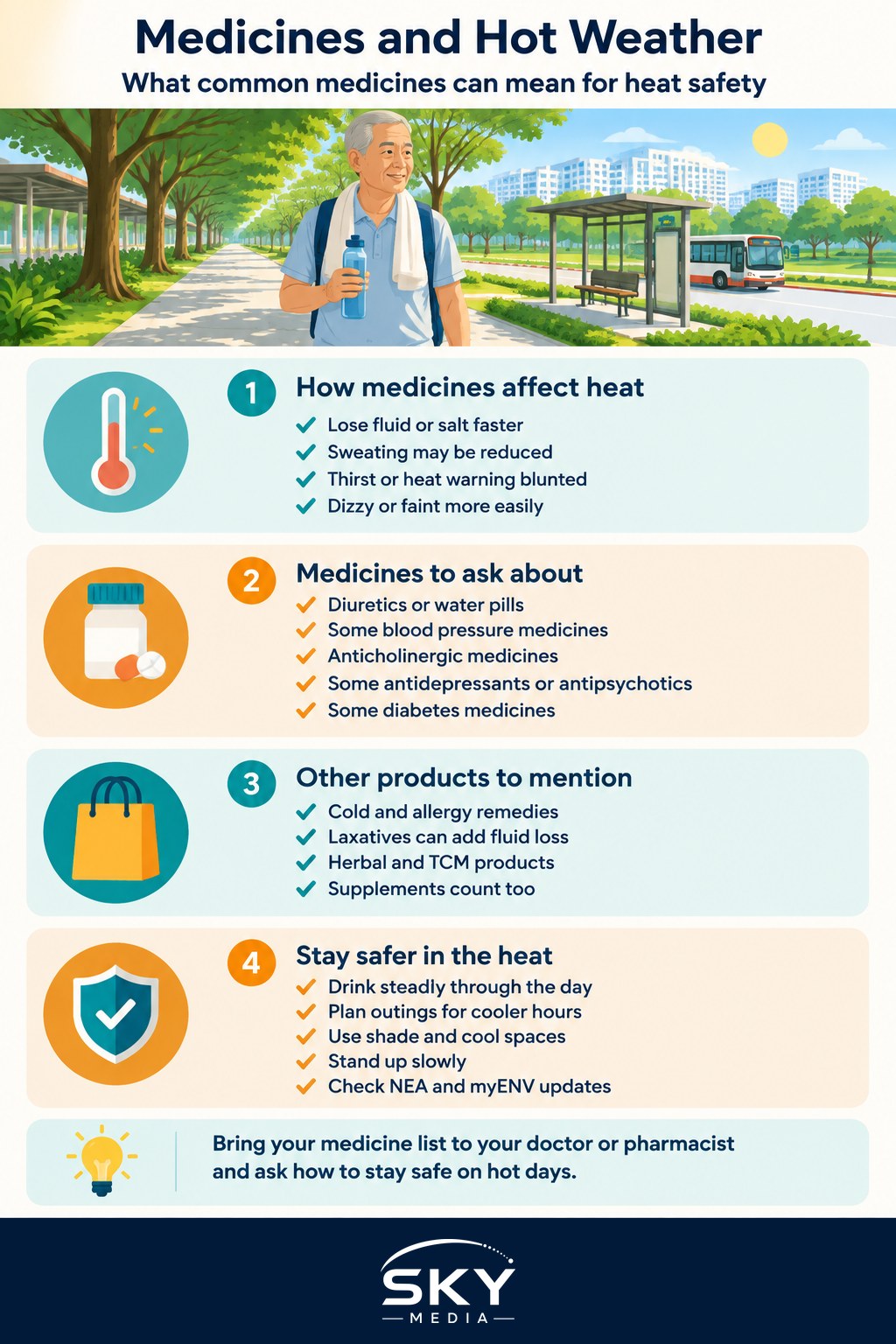
Your body keeps cool mainly by sweating and by sending more blood to the skin so heat can escape. It also relies on you feeling thirsty and drinking enough. Some medicines interfere with one or more of these steps. Broadly, a medicine may:
- Make you lose more fluid or salt, so you become dehydrated faster.
- Reduce sweating, so your body cannot shed heat as well.
- Blunt your sense of thirst or temperature, so you do not notice you are overheating.
- Lower your blood pressure or heart response, so you are more likely to feel faint when hot.
- Make your skin more sensitive to sunlight, so you burn or develop rashes more easily.
Age adds to this. As we get older, our sense of thirst often weakens and the body becomes less efficient at regulating temperature. Put the two together and a hot afternoon at the market or a long wait at a bus stop can affect you more than it used to.
Common Medicine Types to Ask About
The table below lists categories of medicine that are commonly mentioned in heat-health advice. It is not a complete list, and not everyone on these medicines will have problems. Use it as a starting point for a conversation with your doctor or pharmacist.
| Type of medicine | Often used for | How it may affect you in the heat |
|---|---|---|
| Diuretics (“water pills”) | High blood pressure, heart failure, fluid retention | Increase fluid and salt loss, raising the risk of dehydration |
| Some blood pressure and heart medicines (for example beta blockers, ACE inhibitors) | Hypertension, heart conditions | May reduce the heart’s response to heat or make you dizzy when dehydrated |
| Anticholinergic medicines | Some bladder, allergy, stomach and Parkinson’s treatments | Can reduce sweating, making it harder to cool down |
| Some antidepressants and antipsychotics | Mood and mental health conditions | May affect sweating, thirst or temperature control |
| Some diabetes medicines | Diabetes | Dehydration can affect blood sugar control and kidney function |
| Sedatives and sleeping pills | Sleep, anxiety | Can make you less aware that you are overheating |
| Certain antibiotics and skin treatments | Infections, acne | Some increase sun sensitivity |
Other medicines may also matter, including some for epilepsy, thyroid conditions and allergies. The only way to know how your own combination behaves is to ask the professional who knows your full history.
Over-the-Counter Products Count Too
It is easy to forget non-prescription items. Some cold and allergy remedies contain antihistamines with anticholinergic effects, and some laxatives can contribute to fluid loss. Traditional or herbal remedies may also interact with prescribed medicines. When you speak to your pharmacist, mention everything you take, including supplements and TCM products.
Simple Precautions for Hot Days
You do not need to stay indoors all day. A few habits go a long way.
- Drink steadily through the day. Do not wait to feel thirsty. If your doctor has told you to limit fluids, for example because of a heart or kidney condition, follow that advice and ask how to manage hot days specifically.
- Plan outdoor activity for cooler hours. Early morning and evening are usually more comfortable. Our guide to keeping active and safe in hot weather as a senior has practical ideas.
- Dress for the climate. Loose, light-coloured clothing in breathable materials helps sweat evaporate. See our guide to the best breathable fabrics for hot weather.
- Use shade and cool spaces. Community centres, libraries, malls and air-conditioned void deck activity spaces offer a place to cool down during errands.
- Stand up slowly. If your medicines lower blood pressure, rising quickly after sitting in the heat can make you light-headed.
- Protect your skin if you take a medicine that increases sun sensitivity: hat, umbrella and sunscreen.
- Check the forecast. NEA and the Meteorological Service Singapore share weather and heat stress updates, including through the myENV app.
Storing Medicines Safely in Singapore’s Climate
Heat and humidity can also affect the medicines themselves. Many tablets and capsules should be kept in a cool, dry place, and some, such as insulin and certain eye drops, have specific storage instructions.
- Read the label and the leaflet for storage instructions, and ask your pharmacist if anything is unclear.
- Avoid leaving medicines in a parked car, on a sunny windowsill or in a steamy bathroom.
- When you are out for the day, carry what you need in a bag that stays out of direct sun.
- If tablets look discoloured, crumbly or stuck together, or a liquid looks different, check with your pharmacist before using it.
If you are going abroad to a hot destination, our guide to travelling with medication abroad covers packing and paperwork.
Warning Signs of Heat Illness
Know the signs, both for yourself and for older family members.
Possible heat exhaustion: heavy sweating or, sometimes, unusually little sweating, tiredness, weakness, dizziness, headache, nausea, muscle cramps, fast pulse and dark urine. Move to a cool place, loosen clothing, sip water if you are able and rest. If symptoms do not improve, see a doctor.
Possible heatstroke, an emergency: confusion, slurred speech, fainting, hot skin, seizures or collapse. Call 995 immediately. While waiting, move the person somewhere cool and help cool them down with water and fanning.
Seniors on several medicines may show less obvious signs, such as sudden confusion or unusual drowsiness, so family members and caregivers should keep an eye out on hot days.
Questions to Ask Your Doctor or Pharmacist
Bring your medicines, or a list of them, to your next appointment or pharmacy visit and ask:
- Do any of my medicines affect how my body handles heat or fluid?
- How much should I drink on hot days, given my conditions?
- What symptoms should make me call you or seek help?
- Should anything change if I am unwell with vomiting or diarrhoea in hot weather?
- How should I store each of these medicines at home and when I travel?
Polyclinics, GP clinics and retail pharmacies can all help. When you are collecting a refill, it is a good moment to raise these questions; our guide to repeat prescriptions and refilling medication in Singapore explains how refills work. HealthHub also carries general health information from Singapore’s public healthcare system.
The goal is not to worry about every pill, but to understand your own risk and plan around it. With the right information from your doctor, you can stay active and comfortable through Singapore’s hottest months.
Official sources: HealthHub
Further reading: Hot Yoga in Singapore: What to Expect and Who Should Avoid It