

Singapore is warm all year, but the hottest months can feel especially draining when you are expecting. Many mothers-to-be notice they feel hotter, sweat more and tire faster than before pregnancy. That is normal, but it also means it is worth planning your days around the heat rather than pushing through it.
This guide focuses on pregnancy hot weather concerns: why heat affects expectant mothers differently, what warning signs to watch for, and practical changes to clothing, hydration, exercise and sleep. It is general information, not medical advice. Your doctor, midwife or polyclinic team knows your situation and should be your first point of contact for anything specific.
Why Pregnancy Makes You Feel the Heat More
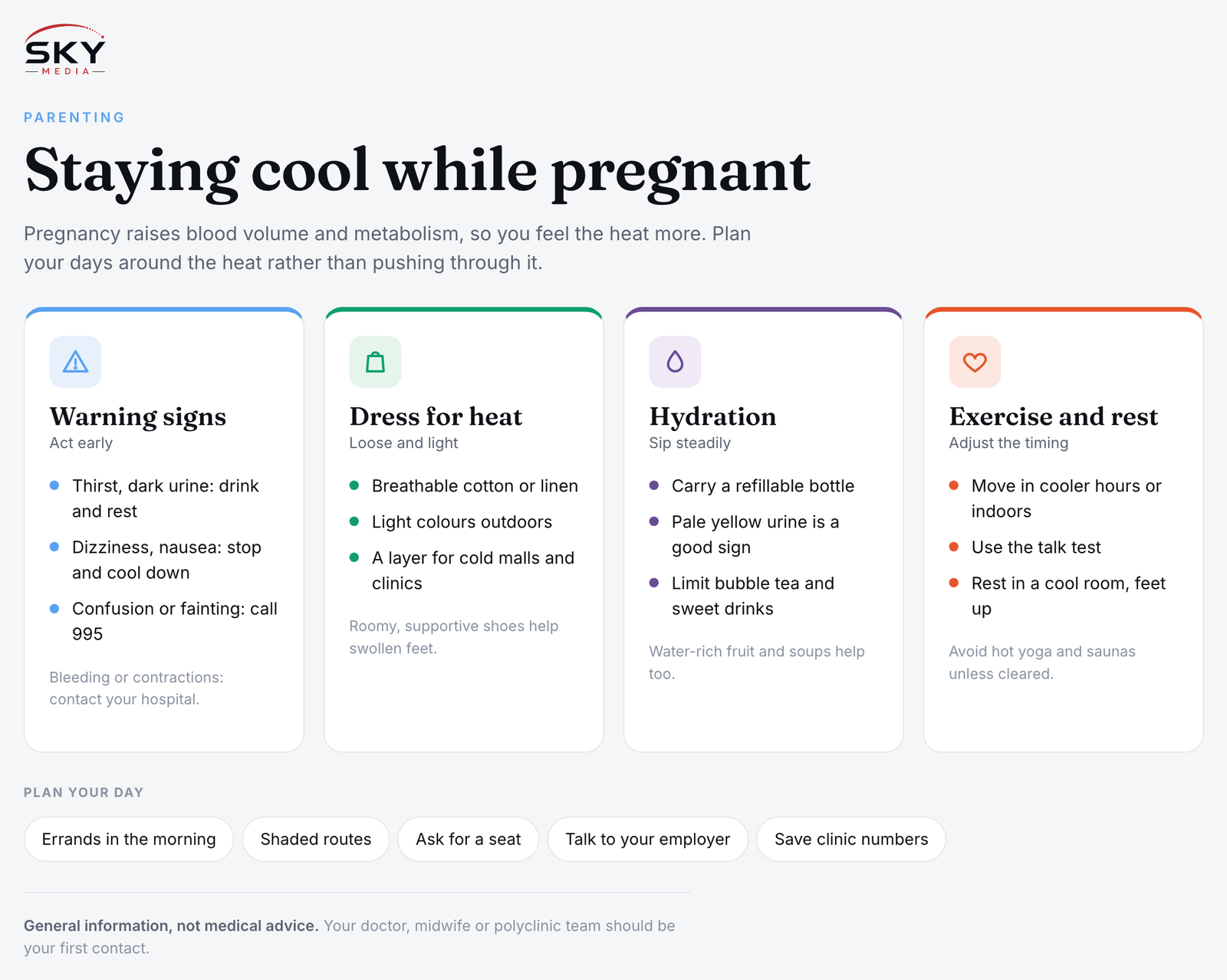
During pregnancy, your body works harder. Blood volume rises, your heart pumps more, and your metabolism speeds up to support the baby. All of this generates extra internal heat. At the same time, you may find you become breathless or tired more easily, so activities that felt easy before can leave you overheated.
Health authorities generally advise pregnant women to avoid becoming overheated, particularly during early pregnancy, and to take dehydration seriously. Dehydration can contribute to dizziness, headaches, constipation and, in some cases, tightening sensations that should be checked. Singapore’s humidity adds another layer, since sweat evaporates slowly and your body cools less efficiently.
If you have an existing condition, such as high blood pressure, gestational diabetes or a heart condition, or if you take regular medication, ask your doctor whether you need extra precautions in hot weather. Some medicines can affect how your body handles heat, a topic covered in Medications That Raise Your Risk in Hot Weather.
Warning Signs to Take Seriously
Knowing the signs of heat stress helps you act early. The table below is a general guide, not a diagnostic tool.
| What you notice | What it may suggest | What to do |
|---|---|---|
| Thirst, dark urine, mild headache | Early dehydration | Move somewhere cool, drink water steadily, rest |
| Heavy sweating, weakness, nausea, dizziness | Possible heat exhaustion | Stop activity, cool down, lie on your side, call your doctor if it does not settle quickly |
| Confusion, fainting, very hot skin, fast heartbeat | Possible heatstroke, a medical emergency | Call 995 for an ambulance and start cooling straight away |
| Contractions, bleeding, reduced baby movements or fluid leaking | Pregnancy concern that needs checking | Contact your doctor or go to your hospital’s delivery suite or emergency department |
Trust your instincts. If something feels wrong, it is always reasonable to get checked, even if you are unsure whether the heat is to blame.
Dressing for the Heat While Pregnant
What you wear makes a real difference on a hot day, especially on public transport or long walks between the bus stop and the clinic.
- Choose loose, breathable fabrics. Cotton, linen and other airy materials let sweat evaporate. Our guide to the best breathable fabrics for hot weather explains which fibres work best in humidity.
- Pick light colours outdoors. Pale clothing reflects more sunlight than dark colours.
- Go for comfortable maternity wear. Tight waistbands and restrictive fabrics trap heat and add discomfort as your bump grows.
- Protect your head and skin. A wide-brimmed hat or umbrella helps when walking in the sun. Ask your doctor or pharmacist which sunscreen suits you, and see Safe Skincare During Pregnancy for general guidance on products.
- Carry a layer for indoors. Malls, offices and clinics can be very cold. A light cardigan prevents the shock of moving between extremes.
- Wear supportive, breathable shoes. Feet and ankles often swell in heat during pregnancy. Shoes with some room and good support help on long days.
Hydration and Eating in Hot Weather
Staying hydrated is one of the simplest and most important things you can do.
- Keep water with you. A reusable bottle you can refill at work, home and on the go makes regular sipping easier.
- Drink steadily through the day. Do not wait until you feel very thirsty. Your doctor can advise how much is right for you, especially if you have swelling or a medical condition.
- Check your urine colour. Pale yellow usually means you are drinking enough. Dark yellow suggests you need more.
- Limit sugary drinks. Bubble tea, sweetened kopi and canned drinks add sugar without hydrating as well as plain water. This matters more if you have been told to watch your blood sugar.
- Eat water-rich foods. Fruit such as watermelon, oranges and papaya, along with soups and salads, add fluid and nutrients.
- Mind food safety. Food left out in Singapore’s heat spoils quickly, and food poisoning during pregnancy can be serious. Read Keeping Food Safe From Spoiling in Hot Weather for storage tips.
- Follow your doctor’s advice on caffeine. Iced coffee is tempting, but caffeine guidance during pregnancy should come from your healthcare team.
Adjusting Exercise for the Heat
Staying active is generally encouraged during a healthy pregnancy, but hot weather means changing how and when you move. Always follow your doctor’s advice on what is safe for you.
- Exercise in the cooler hours. Early morning or after sunset is usually more comfortable than midday.
- Move indoors when it is very hot. Air-conditioned gyms, malls for a gentle walk, or prenatal classes in cool studios are good options. Avoid hot yoga and saunas unless your doctor has specifically said otherwise.
- Use the talk test. You should be able to hold a conversation while exercising. If you are too breathless to talk, slow down.
- Take breaks and drink before, during and after. Rest in the shade and sip water regularly.
- Stop if you feel unwell. Dizziness, chest pain, headache, bleeding, contractions or fluid leaking mean you should stop and seek medical advice.
- Swimming can feel refreshing. Many expectant mothers find swimming comfortable because the water supports their weight and keeps them cool. Check with your doctor first, and avoid very hot pools or spas.
Sleeping and Resting When It Is Hot
Sleep can already be difficult in later pregnancy, and warm nights make it harder.
- Keep the bedroom cool. Close curtains during the day, use fans to move air, and run the aircon at a comfortable setting if you have one.
- Choose breathable bedding. Light cotton sheets and a thin cover usually work better than a thick duvet. Choosing Bedding and Sheets for a Tropical Climate has more ideas.
- Use pillows for support. A pregnancy pillow or a few ordinary pillows can help you rest on your side comfortably.
- Rest during the day when you can. A short break with your feet up in a cool room can ease swelling and fatigue.
- Cool down quickly. A lukewarm shower, a damp cloth on the neck and wrists, or a cool foot soak gives quick relief.
Planning Your Days in the Hot Season
A little planning reduces the heat you face each day.
- Schedule errands for cooler times. Shop or run errands in the morning, or use online delivery on the hottest days.
- Plan routes with shade and air-conditioning. Covered walkways, underground links and malls make getting around easier.
- Ask for a seat on public transport. Many people will offer, and priority seats exist for this reason. Some mothers wear a badge to signal they are pregnant.
- Talk to your employer. If your job involves heat, standing for long periods or outdoor work, discuss adjustments with your manager or HR.
- Keep clinic contacts handy. Save your doctor’s or hospital’s number in your phone so you can call quickly if something worries you.
A Calm, Practical Approach
Hot weather does not have to be a source of worry during pregnancy. With loose clothing, steady hydration, sensible exercise timing and a cool place to rest, most expectant mothers can stay comfortable through the warmest months. Keep listening to your body, keep your appointments, and raise any concerns with your healthcare team. Once your baby arrives, you will face a new set of heat questions, and Keeping Babies and Toddlers Safe in Singapore’s Hot Months is a good place to start.
Official sources: HealthHub