

A missing button, a split seam, a small hole near the pocket. It is amazing how often a perfectly good piece of clothing gets retired for something that would take ten minutes to fix. Mending clothes in Singapore is one of the most satisfying green habits going, partly because it saves money, and partly because it quietly pushes back against the throwaway culture that surrounds fast fashion. You do not need to be crafty or own a sewing machine to start.
This guide covers the simple repairs anyone can learn, the jobs worth handing to a professional, and how to build repair into the way you look after your wardrobe.
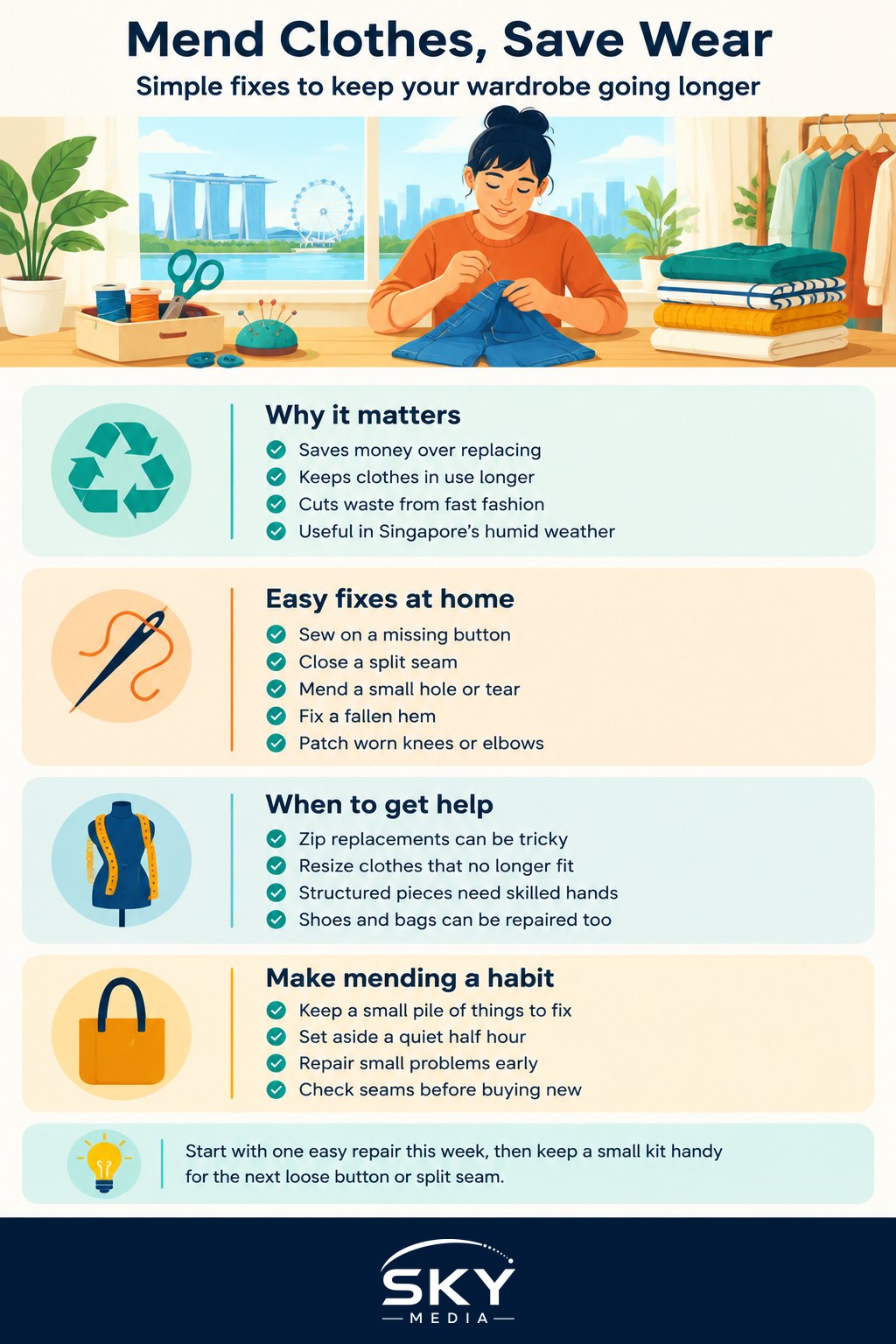
Why Mending Is Worth It
Every garment carries a hidden cost. Growing the cotton or making the synthetic fibres, dyeing, stitching, shipping across the world, all of it uses water, energy and labour before the item ever reaches your cupboard. When a shirt is tossed over a loose thread, that whole effort is thrown away with it, and the item usually ends up incinerated rather than recycled. Our piece on understanding fast fashion explains why the volumes involved have grown so quickly.
Mending flips that story. A repaired garment keeps doing its job for months or years longer, which is one of the single most effective things you can do for a lower-impact wardrobe. It is also genuinely economical. A spool of thread and a packet of needles cost very little and will outlast dozens of repairs. And there is a quiet pleasure in it, the small win of rescuing a favourite pair of shorts instead of shopping for a replacement.
Humid weather does put its own strain on clothes here, from sweat and frequent washing to mould in a stuffy cupboard, so knowing a few fixes is genuinely useful in Singapore. Looking after clothes well in the first place makes repairs rarer too, which our guide on how to make your clothes last longer goes into.
Simple Repairs You Can Learn at Home
You can handle a surprising amount with a basic sewing kit. A few needles, thread in black, white and a couple of common colours, some spare buttons, and a small pair of scissors will see you through most everyday jobs. Keep it in a biscuit tin somewhere handy.
Here are the beginner fixes worth learning first:
- Sewing on a button. The most common repair of all, and the easiest. Line the button up, stitch through the holes several times, then wind the thread around the base to make a neat shank before knotting off.
- Closing a seam that has come apart. Turn the garment inside out and run small, even stitches along the original seam line. This is common on trouser inseams and bag linings.
- Mending a small hole or tear. A simple running stitch or a few careful stitches can close it. For knitwear, gently draw the edges together rather than pulling tight.
- Fixing a fallen hem. Use a slip stitch that barely shows on the outside, working along the fold of the fabric.
- Patching worn areas. An iron-on patch or a sewn patch over a knee or elbow can add life and a bit of character.
Do not aim for perfection at the start. Your early stitches will look uneven, and that is completely normal. Turn the repair to the inside where you can, and it will hold just fine. There are countless short video tutorials online if you want to see a technique in motion.
When to Call in a Professional
Some jobs are better left to skilled hands, and there is no shame in that. Singapore is well served by neighbourhood tailors and alteration shops, often tucked into HDB estates, shopping centres and markets, who can do repairs quickly and cheaply.
Consider a professional for:
- Zip replacements, especially on jackets, jeans and bags, which are fiddly to do well by hand.
- Resizing and taking in clothes that no longer fit, so you keep wearing them instead of replacing them.
- Structured items like blazers, suits and formal wear where the shaping matters.
- Shoes and bags, where a good cobbler can resole, restitch and recondition leather.
Repair cafes and community repair events are another lovely option. Volunteers help you fix clothes and other items, and you pick up skills along the way. Our guide on finding a repair cafe or repair service points you towards them.
Building a Repair Habit
The trick is to make mending easy and normal rather than a chore you dread. A few small systems help. Keep a small pile or a labelled bag for things that need fixing, and set aside a quiet half hour now and then to work through it while you catch up on a show. Fix things sooner rather than later, since a tiny hole is far easier to close than a big one.
It also helps to reframe how you shop. Buying slightly better made clothes, checking seams and stitching before you buy, and choosing natural or blended fabrics that are easier to mend all reduce how often things fail. This sits comfortably alongside the wider ideas in sustainable fashion in Singapore.
Mending is not about being thrifty to the point of stress or turning into a master tailor. It is about seeing your clothes as things worth keeping, and knowing you have the power to give them a second, third and fourth life. Pick one wobbly button this week, thread a needle, and enjoy the quiet satisfaction of a fix well made.
Frequently Asked Questions
What basic items should go in a beginner’s sewing kit? A few needles, black and white thread plus a couple of common colours, spare buttons, small scissors and some pins will cover most jobs. Add a thimble if your fingers get sore. Keeping everything in one tin makes mending quick to start.
How can I stop mould on clothes in a humid cupboard? Make sure clothes are fully dry before storing them, and let air circulate inside the cupboard. Moisture absorbers or a short airing in the sun can help. Wash affected items promptly, since mould can weaken fabric and leave stains.
Can I repair a broken zip myself? Sometimes, if the slider has simply loosened. Gently squeezing it with pliers can restore grip. If teeth are missing or the whole zip has split, replacement is fiddly, so a tailor or alteration shop is the easier route.
Is it better to mend or donate a damaged garment? Mend it if the fix is simple and you will keep wearing it. Donation centres generally want clean, wearable items, so a torn piece is usually not welcome. If it cannot be saved, cut it up for cleaning cloths.
What should I check when buying clothes that will last? Look at the seams, stitching and buttons, and pick fabrics that are easy to repair. Tug gently at seams, and check that stitches are small and even. Better-made items fail less often, so you mend less.
Further reading: How to Fix a Stuck or Broken Zip