
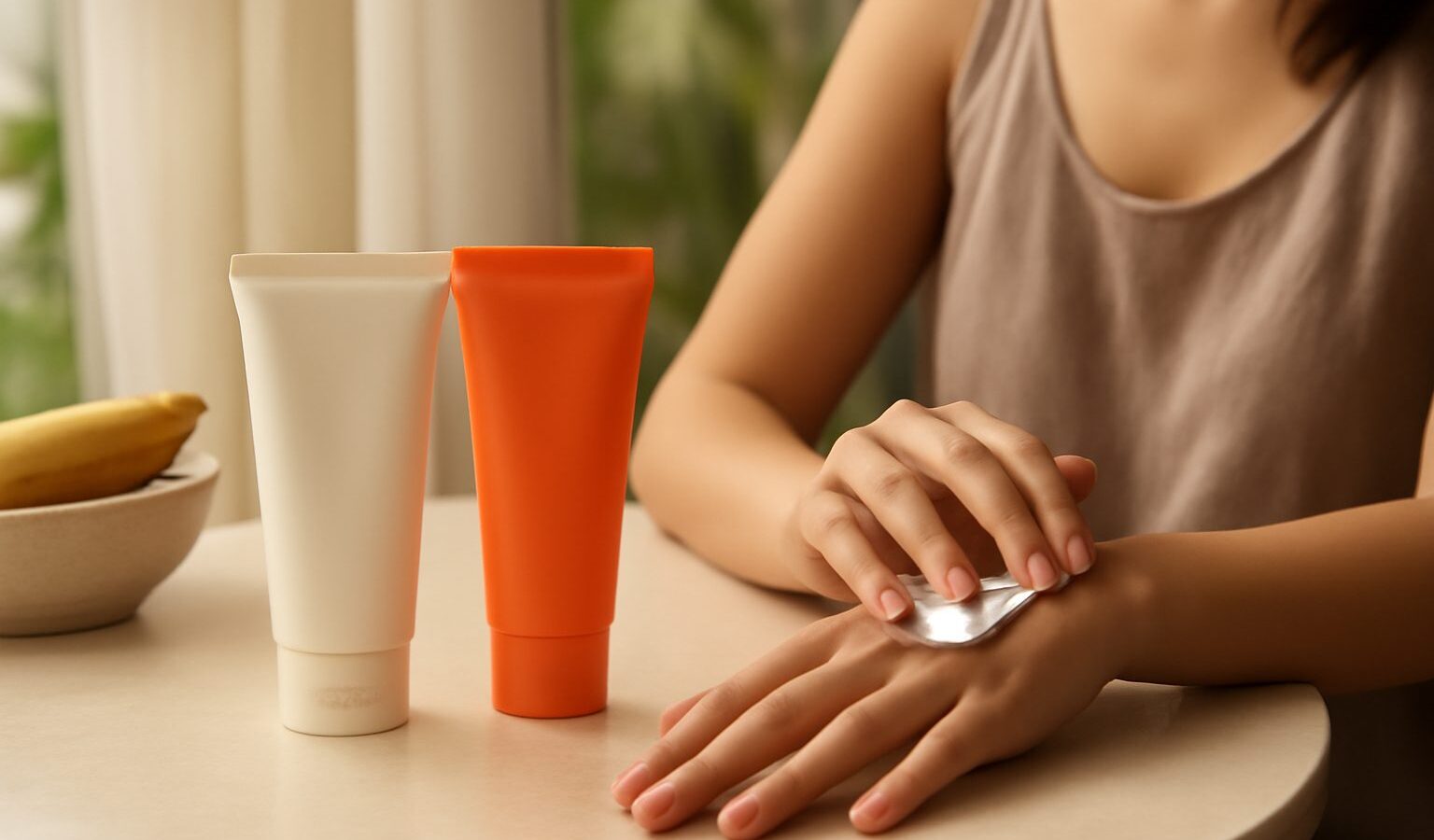
Sunscreen is the single most useful thing you can do for your skin near the equator, so the mineral vs chemical sunscreen question is worth getting right. Both types protect you, but they filter ultraviolet light in different ways, feel different on the skin and suit different faces. In Singapore’s fierce sun and sticky humidity, how a sunscreen wears and how easily you will actually reapply it matters just as much as the label. This guide breaks down how each type works, the honest trade-offs, and how to choose one you will wear every day. It is general information, not medical advice, so see a doctor or dermatologist for sensitive skin or any persistent concern, and patch-test anything new.
How the Two Types Work
The difference comes down to the active filters inside.
Mineral sunscreens (also called physical sunscreens) use mineral filters, most commonly zinc oxide and titanium dioxide. These sit largely on the surface of your skin and work as soon as they are applied, scattering and absorbing ultraviolet light. Zinc oxide in particular gives broad protection across both UVA, the ageing rays, and UVB, the burning rays.
Chemical sunscreens use carbon-based filters that absorb ultraviolet light and convert it into a small amount of heat, which the skin releases. They tend to be lighter and sink in more invisibly. Traditionally they were advised to go on around fifteen to twenty minutes before sun exposure, though many modern formulas act quickly. Always follow the timing on the product you buy.
Neither is automatically stronger. Protection depends on the specific formula, its SPF and broad-spectrum rating, and above all on applying enough and reapplying often. A high-quality sunscreen of either type, used properly, beats a fancier one you apply sparingly.
Mineral vs Chemical Sunscreen at a Glance
Here is a side-by-side look at the practical differences. Treat it as a general guide, since individual products vary widely.
| Feature | Mineral sunscreen | Chemical sunscreen |
|---|---|---|
| Main filters | Zinc oxide, titanium dioxide | Carbon-based UV filters |
| How it protects | Sits on skin, scatters and absorbs UV | Absorbs UV, releases it as heat |
| Feel and finish | Thicker, can leave a white cast | Lighter, sinks in more invisibly |
| Sensitive skin | Often the gentler choice | May irritate very reactive skin |
| White cast on deeper tones | More likely unless tinted | Usually none |
| When it works | Immediately on application | Best after a short wait |
For deeper skin tones, the white cast of traditional mineral formulas has long been a real frustration. Tinted mineral sunscreens and newer micronised formulas have improved this a lot, so it is worth testing shades in daylight before committing.
Choosing for Your Skin and Skin Tone
The best sunscreen is the one you will genuinely wear every day, so comfort and finish matter enormously.
- Sensitive or reactive skin, or eczema-prone skin: mineral filters, especially zinc oxide, are often gentler and less likely to sting. Patch-test first all the same.
- Acne-prone or oily skin: look for lightweight, non-comedogenic, gel or fluid textures that will not feel heavy in humidity. Both types offer these.
- Deeper skin tones: a tinted mineral or a well-formulated chemical sunscreen usually avoids the grey or ashy cast. Swatch in natural light.
- Very dry skin: a hydrating formula in either category, layered over moisturiser, keeps skin comfortable.
- Children and babies: mineral formulas are often preferred for young skin, but check with a doctor or pharmacist for infants.
You do not have to pick a side forever. Many people keep a light chemical or hybrid sunscreen for daily wear under makeup and a mineral one for beach or outdoor days. Hybrid sunscreens that blend both filter types are increasingly common and can offer the best of each.
Reapplication Is the Real Secret in Singapore
This is the part that decides whether your sunscreen actually works. In our climate, sweat, humidity and long hours outdoors wear a sunscreen down no matter how good it is. Applying once in the morning and forgetting it is the most common mistake.
- Reapply roughly every two hours outdoors, and sooner after heavy sweating, swimming or towelling off.
- Use enough. Most people apply far too little. For the face and neck, think around a two-finger length of product, and do not forget ears, hairline and the back of the neck.
- Reapply over makeup using a powder, stick or spray formula so you have no excuse to skip it.
- Keep a small tube in your bag. The haze season and the midday sun both hit hard here, and convenience is what keeps the habit alive.
- Do not rely on SPF in makeup alone. It rarely gives full coverage at the amount people actually apply.
Water resistance helps if you sweat heavily or swim, but no sunscreen is fully waterproof, so reapplication still applies. A sunscreen you top up at lunchtime protects you far better than a pricier one applied only at breakfast.
Common Myths, Cleared Up
A few misunderstandings float around, so let us settle them honestly.
- “Mineral is natural and therefore safer.” Both types are well studied and considered effective. Choose on feel, finish and how your skin reacts, not on marketing language.
- “I do not need sunscreen indoors or on a cloudy day.” UVA passes through cloud and windows, and Singapore’s overcast days still carry plenty of it. Daily wear is the point.
- “Higher SPF means I can apply less often.” No. SPF measures burning protection at a generous application amount, and reapplication still matters regardless of the number.
- “Darker skin does not need sunscreen.” All skin tones benefit. Sunscreen guards against uneven tone, dark spots and long-term damage, not only visible burning.
The Bottom Line
In the mineral vs chemical sunscreen debate, there is no universal winner. Mineral filters tend to suit sensitive skin and work on contact, while chemical filters often feel lighter and vanish more cleanly, and hybrids sit in between. What truly protects you in Singapore is wearing enough of a broad-spectrum SPF every day and reapplying it through the heat and sweat. Pick the texture and finish you will happily reach for, patch-test it, and reapply without fail. If you have a skin condition, are pregnant, or are unsure what suits you, ask a doctor, dermatologist or pharmacist for guidance tailored to you.