
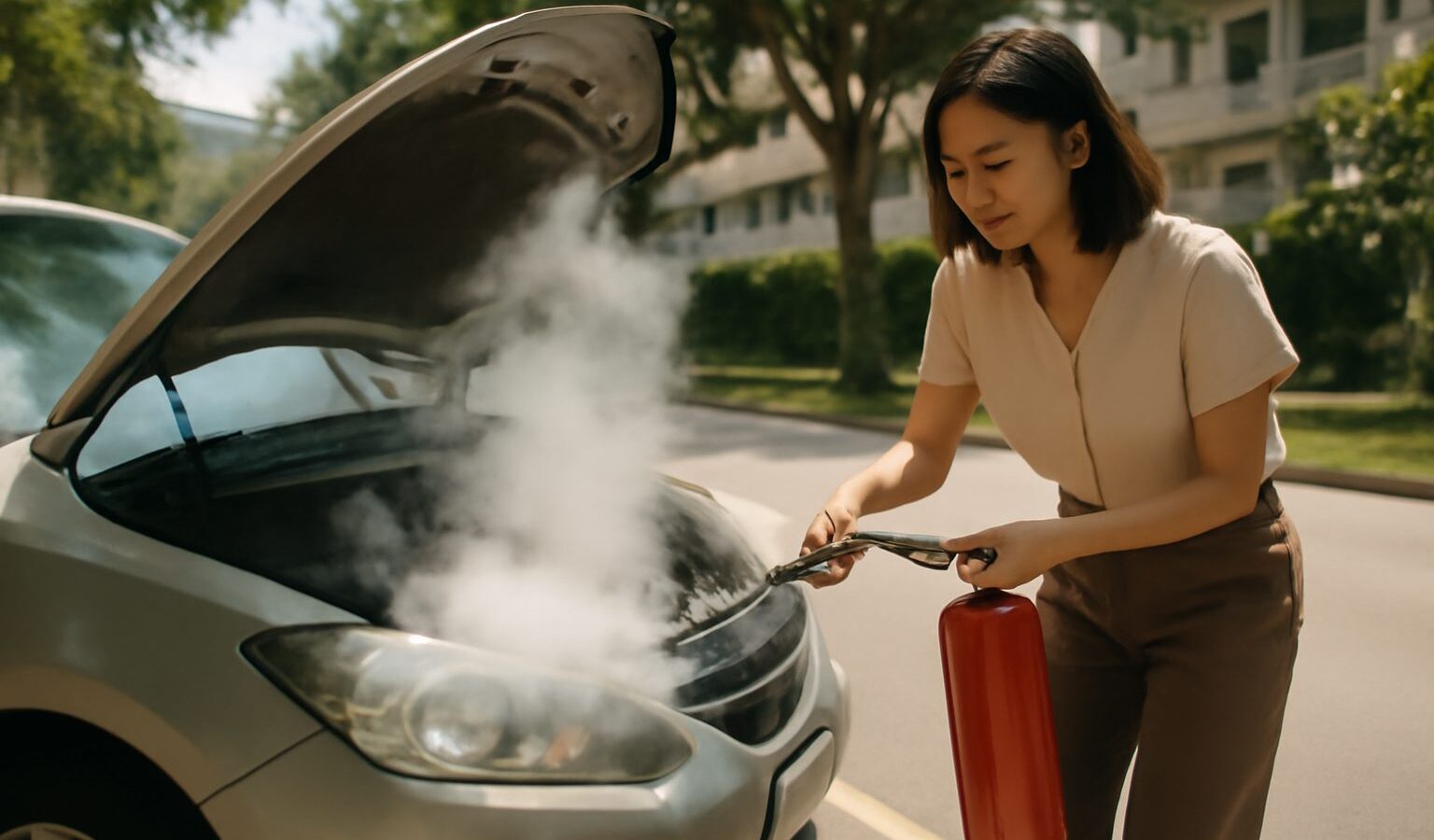
Smoke curling out from under the bonnet is one of the most frightening things a driver can experience. Knowing car fire what to do steps in advance helps you stay calm and act quickly when every second counts. This guide covers the warning signs of a small engine or electrical fire, the safe sequence of actions, and the point at which you should simply get away and leave it to the professionals. It is general safety information, not a substitute for official guidance from the Singapore Civil Defence Force (SCDF).
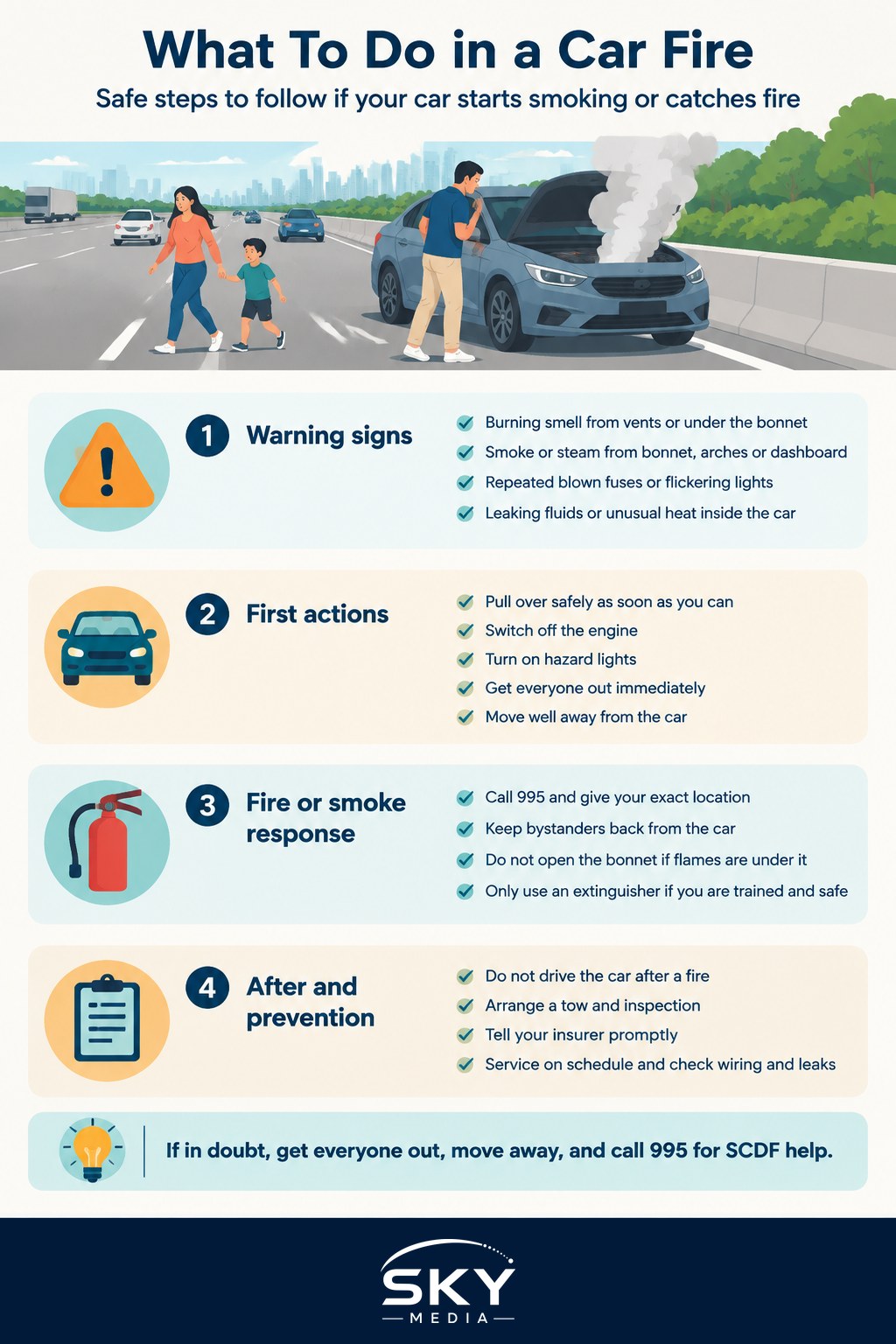
Warning Signs That Something Is Wrong
Car fires rarely appear out of nowhere. Common early signs include:
- A burning smell, such as melting plastic, rubber or hot oil, coming through the vents
- Smoke or steam from the bonnet, wheel arches or under the dashboard
- Repeatedly blown fuses or electrical items that cut in and out
- Flickering lights or warning lights on the dashboard, especially combined with a smell
- Leaking fluids under the car, particularly if you smell fuel
- Unusual heat around the footwell or centre console
White steam from the front of the car may simply be an overheating cooling system, while thicker, darker smoke or a chemical smell is more concerning. You cannot always tell the difference from the driver’s seat, so treat any smoke seriously and stop safely.
What to Do the Moment You See Smoke
Your priority is people, not the car. Follow these steps in order.
- Signal and pull over safely. Move to the road shoulder or a safe spot as quickly as you can do so without causing a collision. On an expressway, aim for the shoulder or an emergency lane.
- Switch off the engine. This cuts fuel and power to many systems and may slow the fire.
- Turn on hazard lights. This warns other drivers that you have stopped.
- Get everyone out immediately. Leave belongings behind. Help children and older passengers out first. Exit on the side away from traffic where possible.
- Move well away from the car. Stand a safe distance away, upwind if you can, and behind a barrier or kerb on fast roads. Keep everyone together and away from the traffic flow.
- Call 995. This is Singapore’s emergency number for fire and ambulance services run by the SCDF. Give your location as precisely as you can, including expressway name, direction and nearby exits or landmarks.
- Warn others. Keep bystanders back and do not let anyone return to the car to fetch items.
If anyone is injured or has breathed in smoke, tell the 995 operator so medical help can be sent.
Should You Try to Put It Out Yourself?
This is where many people take unnecessary risks. A car contains fuel, oil, plastics, pressurised components and, in electric and hybrid cars, high-voltage batteries. A small fire can spread very quickly.
| Situation | Safer choice | Why |
|---|---|---|
| Light smoke, no visible flames, everyone out and safe | Stay back and call 995, let SCDF assess | Smoke can turn into flames suddenly once air reaches the source |
| Very small flame you can see clearly, a suitable extinguisher in hand, a clear escape route | Only if you are trained and confident, aim from a safe distance, then retreat | Small fires can sometimes be knocked down early, but your safety comes first |
| Flames under the bonnet | Do not open the bonnet, move away and wait for SCDF | Opening it lets in a rush of air that can make the fire flare up |
| Fire near the fuel tank or spreading into the cabin | Move far away immediately | Risk of rapid spread and dangerous fumes |
| Electric or hybrid vehicle with smoke from the battery area | Do not tackle it, move far away and tell the 995 operator it is an EV | Battery fires can reignite and release harmful gases |
If you do carry a vehicle fire extinguisher, read its instructions in advance, check it periodically according to the manufacturer’s guidance, and remember that it is a tool for escape and early knockdown, not for fighting a developed fire. When in doubt, step back.
Electrical Fires and Fires Inside the Cabin
Smoke from the dashboard, under the seats or around a charging cable often points to an electrical problem.
- Stop and switch off the engine to cut power to most circuits.
- Unplug any accessories such as phone chargers, dashcams or aftermarket devices, but only if you can do so instantly without reaching into smoke.
- Get out and stay out. Cabin smoke from burning plastics can be toxic. Do not sit in the car waiting to see if it clears.
- Do not restart the car even if the smoke stops. The underlying fault may still be there.
Aftermarket wiring and poorly installed accessories are a known cause of electrical faults in many vehicles. Using qualified workshops for installations reduces the risk.
After the Fire Is Out
Once SCDF has made the scene safe, there are practical steps to take.
- Do not drive the car, even if the damage looks minor. Arrange a tow to a workshop for inspection.
- Take photos of the car, the scene and any damage once it is safe to do so.
- Notify your motor insurer promptly. Follow your policy’s claims process and check what is covered under your policy wording. Your insurer will advise on the next steps.
- Make a police report if required. Your insurer or the authorities will tell you whether one is needed in your situation.
- Look after yourself. A car fire is a shock. If you feel unwell after inhaling smoke, see a doctor.
Reducing the Risk of a Car Fire
Prevention is far easier than dealing with an emergency.
- Service the car on schedule and ask your workshop to check for fluid leaks and damaged wiring.
- Do not ignore burning smells, repeated blown fuses or new warning lights.
- Avoid carrying fuel cans, aerosol cans or lighters loose in the car, especially in Singapore’s heat.
- Use reputable, qualified workshops for electrical accessories.
- For electric vehicles, follow the manufacturer’s charging guidance and use approved chargers and cables.
Fire safety habits at home and on the road go hand in hand. Our guides to fire safety and the SCDF for newcomers and your family’s fire safety and escape plan are a good next read, and home fire safety in Singapore covers prevention indoors.
The Key Points to Remember
If you ever need to recall car fire what to do under pressure, keep it simple: pull over, engine off, everyone out, move away, call 995. Never open a bonnet with flames beneath it, never go back for belongings, and only use an extinguisher on a very small fire when you are confident and have a clear escape. The car can be replaced. The people in it cannot. For official fire safety advice, refer to the SCDF.
Official sources: Singapore Civil Defence Force (SCDF)