

If you are house hunting in Singapore, you will quickly hear people ask whether a unit faces the “morning sun” or the “afternoon sun”. Agents mention it, family members ask about it and listings sometimes highlight it. For many local buyers and renters, a morning sun house is a real selling point, while a unit that takes the full afternoon sun can be a dealbreaker.
If you are new to Singapore, this can sound like a small detail. In a hot, humid country close to the equator, it is not. The direction a home faces affects how warm it feels, how much you use the air-conditioner, how bright the rooms are and even how quickly your furniture fades. This guide explains the basics and shows you simple ways to check for yourself.
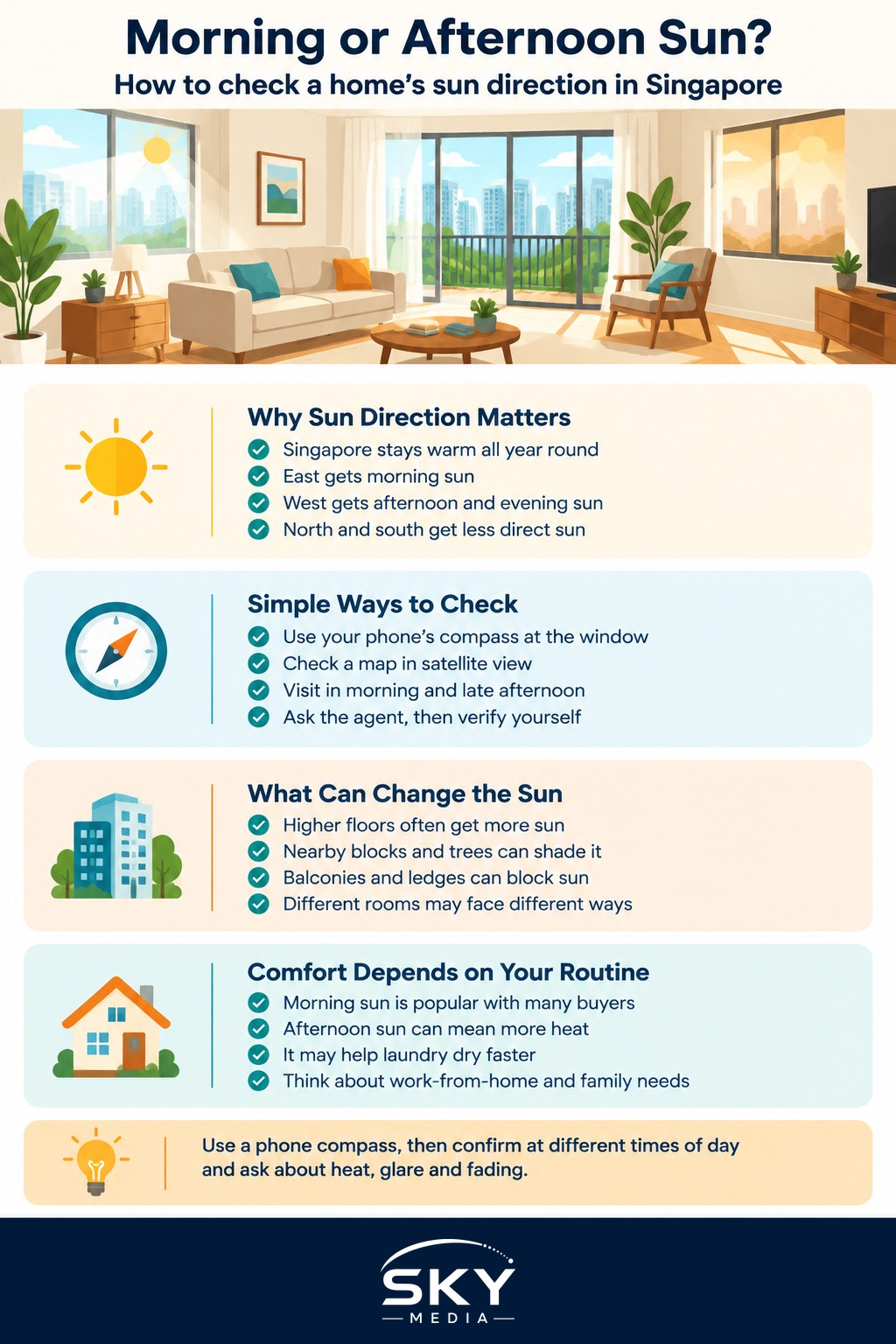
Why Sun Direction Matters So Much in Singapore
Singapore is warm all year round. The sun rises roughly in the east and sets roughly in the west, and because the country sits close to the equator, this pattern stays fairly similar throughout the year. The sun’s path shifts a little to the north or south across the months, but east and west remain the key directions to watch.
That leads to a simple rule of thumb:
- East-facing rooms get the morning sun. Morning sun is usually gentler, and the room has time to cool down later in the day.
- West-facing rooms get the afternoon and evening sun. This is when the day is already hot, so the sun adds heat on top of heat, and walls can stay warm into the night.
- North-facing and south-facing rooms get less direct sun overall. Many people see them as the most comfortable choice in Singapore’s climate.
This is why “no west sun” is such a common request. A west-facing living room or bedroom may feel noticeably warmer in the late afternoon and evening, just when families are home.
Morning, Afternoon and North-South at a Glance
| Facing direction | When the sun comes in | What residents often notice |
|---|---|---|
| East (morning sun) | Early to late morning | Bright mornings, cooler evenings, popular with early risers |
| West (afternoon sun) | Afternoon to sunset | Warmer rooms, more air-conditioning use, possible glare and fading |
| North or south | Less direct sun across the day | Steadier light, often cooler, generally a popular choice |
| Mixed (corner units) | Depends on which sides are exposed | More windows and light, but check which side takes the west sun |
Remember that these are general patterns. Surrounding buildings, trees, balconies, ledges and window size all change how much sun actually reaches a room.
Simple Ways to Check Which Sun a Home Gets
You do not need special tools. A phone and a little patience are enough.
Use your phone’s compass
Stand in the living room and face the main window. Open the compass app on your phone and note the direction. If the window faces roughly east, it gets morning sun. If it faces roughly west, it gets afternoon sun. Repeat this for each bedroom, because rooms in the same unit can face different ways.
Check an online map
Before a viewing, look up the block on an online map in satellite view. North is usually at the top of the map. Find which side of the building the unit sits on and which way its windows face. This also shows you nearby blocks that might shade the unit or block the view.
Visit at different times of day
If you can, view the home in the morning and again in the late afternoon. Feel the walls and the floor near the windows. Notice how bright the room is and whether there is glare. Many buyers and tenants only see a unit once, often in the evening, and miss how hot it gets earlier.
Look at the clues inside
Faded curtains, sun-bleached furniture, heavy blackout blinds or window film on one side of the home are all hints that the room takes strong sun. Ask the owner or current tenant how warm the room gets and how often they use the air-conditioner.
Ask the agent, then verify
Agents often know the orientation, and floor plans sometimes show a north arrow. Use this as a starting point, then confirm with your own compass check. Descriptions in listings are not always precise.
Things That Change the Picture
Orientation is only part of the story. Before you decide, consider:
- Floor level. Higher floors often get more sun and wind. Lower floors may be shaded by trees or nearby buildings.
- Neighbouring blocks. A west-facing unit with a tall block directly opposite may get far less afternoon sun than you expect. Future buildings can also change this, so check what may be built nearby.
- Balconies and ledges. A deep balcony or overhang can shade windows, especially from the higher midday sun.
- Which rooms face which way. Afternoon sun on a kitchen or service yard may matter less than afternoon sun on a bedroom where a child naps.
- Your routine. If you are out at work all day, afternoon sun may matter less than if you work from home or have young children or elderly parents at home.
Is Morning Sun Always Better?
Not always. A morning sun house is popular, but your own lifestyle matters most. Some people love waking up to a bright room and enjoy the natural light, and our article on the benefits of morning sunlight explains why many find it a pleasant start to the day. Others are light sleepers who prefer a darker bedroom in the early hours.
Afternoon sun also has some uses. It can help laundry dry faster and makes rooms bright late in the day. The trade-off is heat, and in Singapore that usually weighs more heavily.
If you do end up with a west-facing unit, there are practical ways to cope:
- Install blackout curtains or blinds and close them in the afternoon.
- Consider heat-reducing window film, after checking any rules from your landlord, HDB or the condo management.
- Use fans and ventilation to move warm air out in the evening.
- Place furniture and artwork away from strong direct sunlight to reduce fading.
A Quick Checklist for Your Next Viewing
Bring this list with you:
- Which way does the living room face?
- Which way do the bedrooms face?
- Is anything opposite the unit that blocks or reflects sun?
- How warm do the walls and floor feel near the windows?
- Are there signs of sun damage, such as faded curtains?
- What do the current occupants say about heat in the afternoon?
Getting used to these checks takes only a few viewings. Once you know what to look for, you can quickly tell whether a home will feel bright and comfortable or warm and glary, and choose the one that suits your daily rhythm. If mornings matter to you, our guide to building a morning wellness routine has ideas for making the most of that early light once you move in.
Further reading: How to Check Natural Ventilation During a Home Viewing · How to Check if a Property Is Near a Future Road Line