

A quiet corner unit with a view of greenery can look very different a few years later if a new road, a widened lane or a slip road ends up running past the window. In Singapore, planned roads are usually mapped long before construction starts, which means a buyer who knows where to look can spot most of them. This guide explains how to check a future road line property before you commit, what the official plans actually show, and how to judge whether a planned road is a dealbreaker or simply something to price in.
This is general information, not legal or property advice. Planning intentions can change, so always confirm the current position with the relevant agency and your conveyancing lawyer.
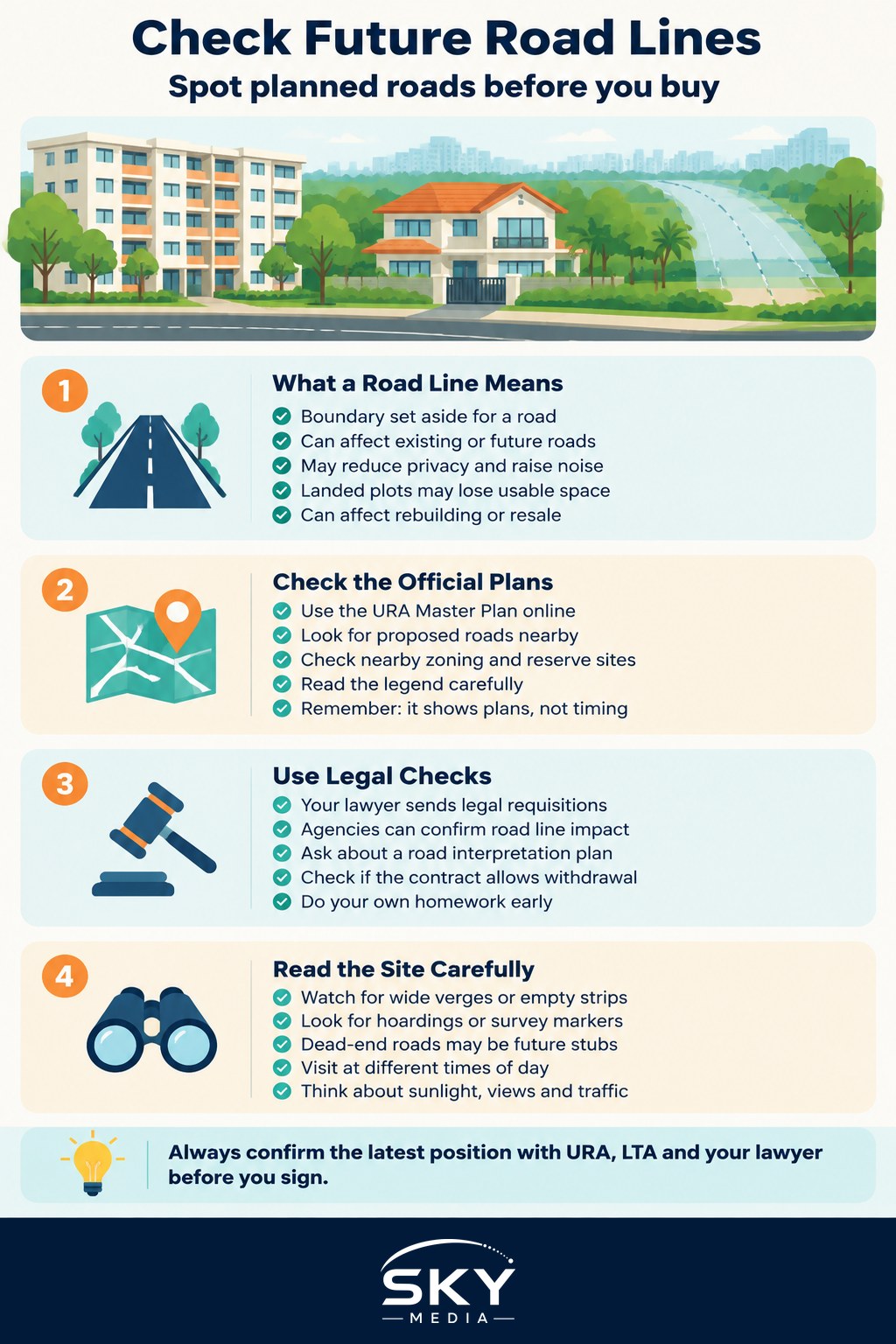
What a Road Line Actually Means
A road line (sometimes called a road reserve line) is the boundary the authorities have set aside for an existing or future road. When a road is planned to be widened, or a new road is planned, the land needed for it is marked on official plans. If part of a property sits inside that line, it may be affected when the road is eventually built.
For buyers, a nearby road line can matter in a few ways:
- Privacy and noise. A widened road can bring traffic closer to bedrooms and balconies.
- Land take. For landed homes in particular, part of the plot, such as a front garden or driveway strip, may fall within the road reserve and could be acquired in future.
- Redevelopment limits. If you plan to rebuild or extend a landed house, the setback from a road line affects what you can build.
- Value and resale. Some buyers will pay less for a home that faces a future expressway ramp, while others see improved access as a plus.
Step 1: Study the URA Master Plan Online
The URA Master Plan is the statutory land use plan prepared by the Urban Redevelopment Authority. It guides development over the medium term and shows existing and proposed roads alongside zoning. You can view it free through URA’s online map service.
When you look up the address, check:
- Whether any proposed road is drawn next to or through the area, often shown differently from existing roads in the map legend.
- Whether the land next to the property is zoned for a use that may bring a new access road, such as a future residential estate, school or business park.
- Whether there are reserve sites or white sites nearby, since their eventual use can bring new road links.
The Master Plan is reviewed periodically, so look at the current edition and read the legend carefully. It is a planning guide, not a construction timetable, so a road on the map does not tell you when, or even whether, it will be built.
Step 2: Ask Your Lawyer About Legal Requisitions
The most reliable check happens during conveyancing. When you buy a property in Singapore, your lawyer normally sends legal requisitions to government agencies. These are formal enquiries asking whether the property is affected by public schemes, such as road lines, drainage reserves, rail lines or land acquisition.
The replies from agencies such as the Land Transport Authority (LTA) can state whether the property is affected by a road line or an approved road scheme. Points worth raising:
- Ask your lawyer to walk you through any reply that says the property is affected, and what the practical effect could be.
- If you are buying a landed home, ask whether a road interpretation plan, which shows the road line in relation to the lot boundary, is available or needed.
- Check what your Option to Purchase says about the results of legal requisitions. Some contracts allow a buyer to withdraw if replies are unsatisfactory, but the terms vary.
Because legal requisitions are usually sent after the Option is exercised or close to it, doing your own homework earlier with the Master Plan and a site visit helps you avoid surprises.
Step 3: Read the Ground on a Site Visit
Plans show intentions. The street often shows clues before anything is announced.
- Unusually wide verges or empty strips along a road can be land kept for future widening.
- Hoardings, survey markers or soil investigation rigs may signal upcoming works.
- Dead-end roads or roads that stop abruptly at a fence line can be stubs for a future connection.
Visit at different times of day to get a feel for traffic patterns, and look at how sunlight and views would change if a structure such as a viaduct were built nearby. Our guide on checking whether a property gets morning or afternoon sun covers a similar on-site routine.
Comparing the Main Ways to Check
| Check | What it can tell you | Limitation |
|---|---|---|
| URA Master Plan map | Proposed roads and land use around the property | Shows intentions, not timing or exact boundaries |
| Legal requisitions via your lawyer | Whether the property is formally affected by a road line or scheme | Usually comes late in the buying process |
| Road interpretation plan from LTA | Where the road line sits against a landed lot boundary | Mainly relevant to landed property and redevelopment |
| Site visit and neighbourhood walk | Physical clues such as wide verges, stubs and hoardings | Clues can be misleading without official confirmation |
| Agency announcements and news | Confirmed projects, consultations and construction start | Only covers projects that have been made public |
How to Weigh What You Find
Finding a future road line nearby does not automatically mean you should walk away. Think about these questions:
- Is the property itself affected, or only the area? A road line crossing your plot is far more serious than a new road two streets away.
- Which way does the unit face? For an apartment, a road on the far side of the block may hardly matter.
- What type of road is it? A local access road is very different from an expressway or arterial road with heavy vehicles.
- How long do you plan to stay? If the road may only be built years from now, the impact on your time there could be small, but it could still affect resale.
- Does it bring benefits? Better access to an expressway, new bus routes or a shorter drive can offset the downsides for some buyers.
Road works are often linked with rail projects too. If you are also weighing transport upsides, read how upcoming MRT lines affect property. For the disruption side of things, our guide to buying a home near a future construction site covers noise, dust and work hours in more detail.
Questions to Ask the Seller and Agent
Before you pay the option fee, ask directly:
- Has the owner received any letters from LTA or other agencies about road works or land acquisition?
- Has any part of the land been acquired before, or has a boundary been adjusted?
- For landed homes, are there approved building plans that show road setbacks?
- Are there known plans for the vacant land or reserve site next door?
An agent may not know everything, but a clear answer, or a refusal to answer, is useful information.
A Simple Checklist Before You Commit
- Look up the address on the current URA Master Plan and note any proposed roads.
- Ask the seller and agent about agency letters and past acquisitions.
- Ask your lawyer to explain the legal requisition replies in plain terms.
- For landed property, ask about a road interpretation plan and building setbacks.
- Factor any likely impact into your offer price, or walk away if the risk is too high for you.
A future road line is usually visible on paper long before the bulldozers arrive. Taking a few hours to check the plans, read the ground and ask the right questions can save you from an unwelcome view and a harder resale later. Since plans and procedures can change, confirm the latest position with URA, LTA and your lawyer before you sign.
Official sources: URA
Further reading: Buying a Landed Home on a Private Road: What to Check · How to Check the URA Master Plan for Any Singapore Property