

The idea of a perfect morning can feel out of reach when the alarm goes off, the group chats are already buzzing and the MRT waits for no one. A good morning wellness routine is not a two-hour ritual of green juices and journaling. It is a short, repeatable set of habits that help you feel steadier before the day takes over. This guide keeps things realistic for busy Singapore life: a few honest, low-effort habits around light, movement, hydration and calm that you can actually keep.
First, an honest note. This is general wellbeing information, not medical advice. Habits like these support how you feel day to day, but they do not replace proper sleep, a balanced diet or medical care. If you have a health condition, take regular medication, are pregnant, or feel persistently low or exhausted, speak to a doctor rather than trying to fix it with a routine alone.
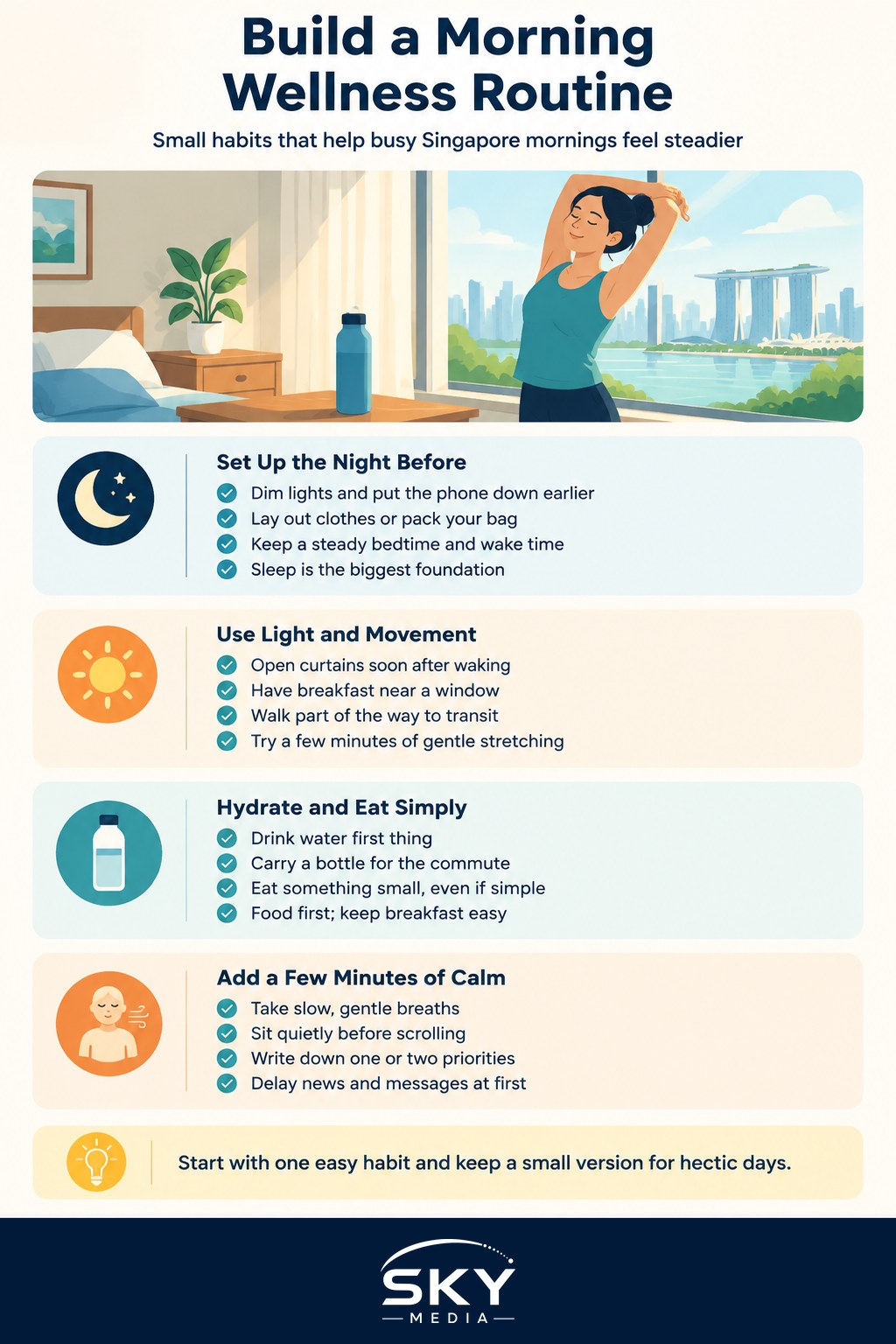
Start the Night Before
A calm morning is really built the evening before. The single biggest lever is sleep, and no amount of morning effort makes up for too little of it. A few gentle habits help:
- Set a realistic wind-down. Dim the lights and put the phone down a little earlier than feels natural. Screens late at night can make it harder to settle.
- Prep one thing. Lay out clothes, pack your bag or fill a water bottle. Removing a single morning decision lowers the friction.
- Keep a steady bedtime. Going to bed and waking around the same time, even at weekends, helps your body clock more than any hack.
If you build nothing else, protect your sleep. Everything below works better on a rested body.
Let in Light and Get Moving
Morning light is one of the most useful and underrated cues for feeling alert. Getting some bright light soon after waking helps signal to your body that the day has started, which can support your mood and your natural sleep and wake rhythm.
In Singapore this is easy, because daylight is generous and reliable. You do not need a special lamp. Try one of these:
- Open the curtains straight away and let real daylight in while you get ready.
- Take your coffee or breakfast near a window, or step onto the balcony or void deck for a few minutes.
- Walk part of the way, to the MRT, the bus stop or the kopitiam, so you catch some outdoor light and move your body at the same time.
Gentle movement matters as much as the light. This is not a workout unless you want it to be. A few minutes of easy stretching, a short walk, or some slow neck and shoulder rolls loosen a stiff body and wake you up. Because our mornings are warm and humid, keep early movement light and hydrate as you go, and save harder exercise for when you have time to cool down and shower.
Hydrate and Eat Something Real
You wake up mildly dehydrated, and in a hot, humid climate you lose fluid quickly once you are up and about. A glass of water early is a simple, honest win. Keep a bottle by the bed or on the kitchen counter so it is the first easy thing you do.
- Water first, before or alongside your coffee. Caffeine is fine for most people, but it is not a substitute for fluids.
- Carry a bottle for the commute. Topping up through the morning beats gulping a lot at once.
- Eat something, even small. A handful of nuts, a piece of fruit, wholemeal toast or a simple local breakfast steadies your energy better than running on empty.
There is no single “correct” breakfast, and you do not need supplements or powders to have a healthy morning. Food first, kept simple, is the sensible default. If you are considering supplements or making bigger changes to your diet, check with a doctor or pharmacist first, especially if you have a medical condition.
Add a Few Minutes of Calm
The mental side of a morning routine is where most of the value hides, and it costs the least. The goal is a short buffer between waking and reacting, so you start the day on your own terms rather than the phone’s. Even two to five minutes helps.
Pick whatever feels natural, not what looks good online:
- Slow breathing. A minute of longer, gentler out-breaths can take the edge off morning tension.
- A short mindfulness pause. Sit with your coffee and simply notice it, without scrolling. Apps can help, but they are optional.
- A tiny plan. Note the one or two things that genuinely matter today, so the day has a shape.
- Delay the doomscroll. Try not to open news or messages for the first few minutes. It is a small boundary that changes the whole tone.
If mornings often feel anxious, heavy or overwhelming rather than just rushed, that is worth taking seriously. A calming habit can support your wellbeing, but it is not a treatment for anxiety or depression. Please speak to a doctor or a mental health professional if low mood or worry is persistent.
A Realistic Routine, Big Versus Small
You do not need the full version every day. The trick is having a generous morning and a bare-minimum morning, so the habit survives busy days. Here is how the same routine can flex.
| Element | The 20-minute version | The 5-minute version |
|---|---|---|
| Light | Breakfast by a window or a short outdoor walk | Open the curtains the moment you wake |
| Movement | A gentle stretch or a proper walk to transit | A few neck and shoulder rolls |
| Hydration | A glass of water plus a simple breakfast | A few sips from the bottle by the bed |
| Calm | A few minutes of breathing or a quick plan | One slow breath before you touch the phone |
Aim for the small version on hectic days rather than skipping everything. Consistency, even a tiny bit, beats an ambitious routine you drop after a week.
Making It Stick
Most morning routines fail because they are too big, too rigid or copied wholesale from someone with a very different life. Keep yours light on its feet:
- Start with one habit, not five. Water by the bed, or curtains open first. Add another only once the first is automatic.
- Attach it to something you already do. Stretch while the kettle boils, breathe while your coffee brews. Anchoring a new habit to an old one helps it stick.
- Forgive the off days. A missed morning is not a failure. Just pick it up again tomorrow.
- Make it yours. Prayer, a slow kopi, a short walk with the dog, tidying one surface: if it grounds you, it counts.
A morning wellness routine is not about doing more before work. It is about a few small, kind habits that help you meet the day feeling a little more like yourself. Keep it short, keep it realistic, and let it grow only as far as your real life allows.
Frequently Asked Questions
How long does it take to form a morning routine habit? There is no fixed number of days, because it depends on the person and how big the habit is. Smaller habits, such as a glass of water or opening the curtains, tend to stick faster than a long list. Focus on doing it most days rather than counting days.
Is it better to exercise or stretch first thing in the morning? For most people, light stretching or a short walk is the easier starting point, with harder exercise saved for when you can cool down and shower. Singapore mornings are warm and humid, so gentle movement is more comfortable. If you have a heart or joint condition, ask your doctor what suits you.
What can I do if I am not a morning person? Start by protecting your sleep and keeping a steady wake-up time, since a tired body resists any routine. Then pick one tiny habit, like drinking water by the bed, instead of copying someone else’s long ritual. You can build slowly from there.
Should I drink coffee before or after my morning water? Water first, or alongside your coffee, is a sensible habit. Coffee is fine for most people, but it does not replace fluids after a night without drinking. If caffeine makes you jittery or affects your sleep, a doctor or pharmacist can advise on your own limits.
Can a morning routine help with stress and low mood? It can support how you feel, mainly through sleep, light, movement and a few calm minutes. It is not a treatment, though. If worry or low mood is persistent, heavy or getting in the way of daily life, speak to a doctor or mental health professional.
Further reading: Grounding and Earthing Explained · Building a Gratitude Practice · Adaptogens and Herbal Wellness