

Moving to a new home is a big upset for animals, who read safety in familiar smells, routines and territory. Moving house with a pet means managing that stress on top of your own packing, so a little planning goes a long way toward a calm dog or cat and a smooth first week. This is general guidance for caring owners, not veterinary advice, and if your pet has a health condition or the move is a long one, speak to your licensed vet first.
In flat-living Singapore, a move often also means new neighbours, a new block and fresh rules to check, so it pays to sort the admin as early as the boxes. Here is how to prepare, survive moving day, and help your pet feel at home.
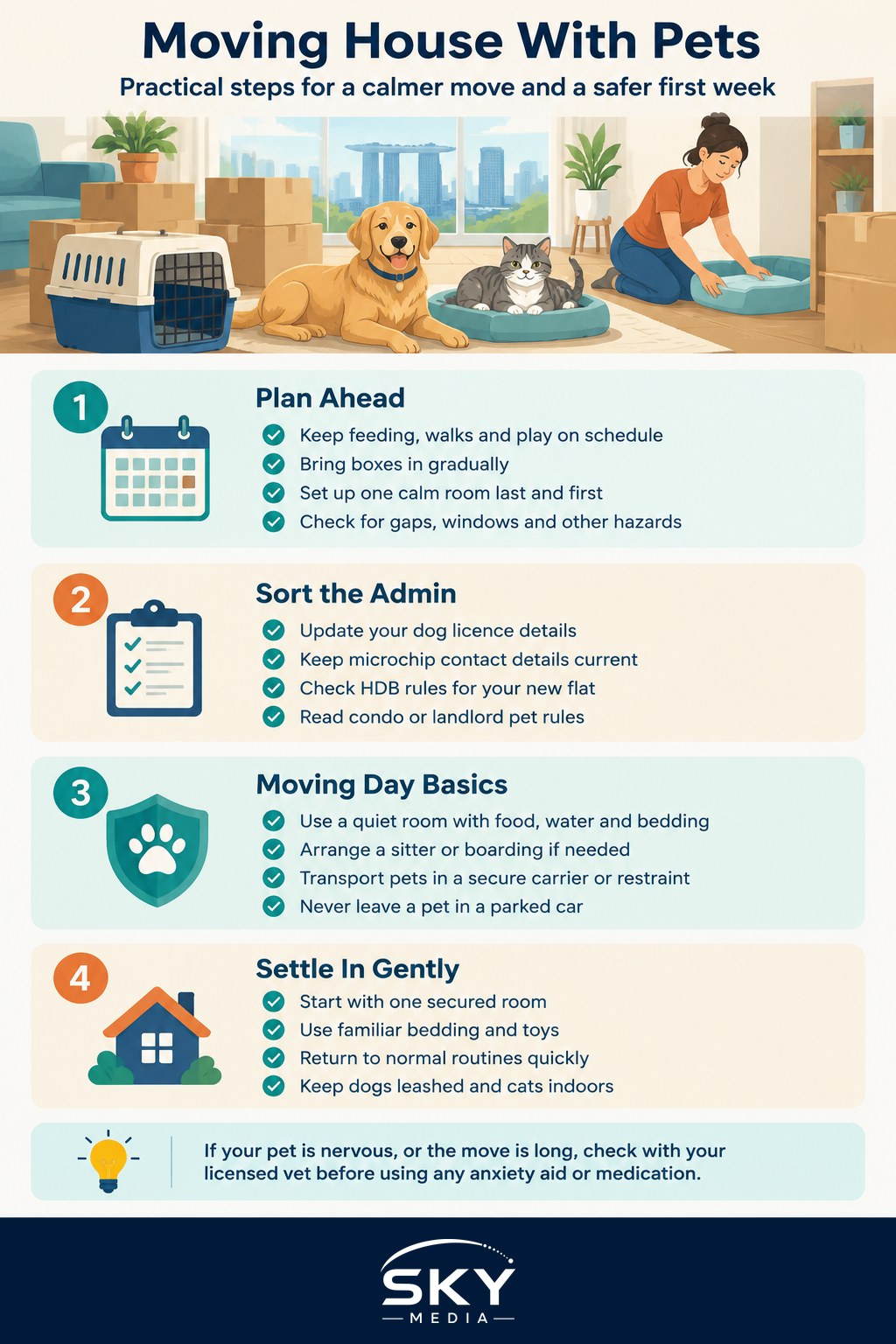
Before the Move: Plan Around Your Pet
Start weeks ahead, not the night before. The more you keep your pet’s world steady while the human chaos builds, the easier the transition.
- Keep the routine. Feed, walk and play at the usual times even as the flat fills with boxes. Predictable rhythm is reassuring when everything else is changing.
- Introduce boxes early. Bring packing materials in gradually so the sight and smell become normal rather than a sudden alarm.
- Protect a calm zone. Pack one room last and unpack it first, so your pet always has a familiar corner with their bed, bowls and a favourite toy.
- Check the new place. Look for gaps in fencing, unsecured windows, loose grilles, and any hazards a curious animal could reach. Cats in particular need secured windows, as high-rise falls are a real risk in our tower blocks.
- Book essentials. If you use a groomer, sitter or day care, sort the new-area options before you need them.
If the move is stressful for a nervous animal, ask your vet in advance about safe ways to reduce anxiety. Do not give any human medication or supplement without veterinary guidance.
Sort the Admin: Licence, HDB and Microchip
Singapore has rules worth checking before you move, because requirements and fees change over time. Confirm the current details with AVS (Animal and Veterinary Service, under NParks) and, for flats, with HDB.
- Dog licence. Dogs must be licensed, and your licence records an address. Update your details when you move so the record stays current.
- Microchip. Make sure your microchip contact information is up to date, since an outdated address or phone number defeats the point if your pet ever goes missing during the upheaval.
- HDB flat rules. HDB has rules on which pets and how many are allowed in a flat, including approved dog breeds and cat keeping. Check the current requirements for your new flat type rather than assuming they match your old one.
- Condo or rental rules. Private estates and landlords often set their own pet conditions, so read your tenancy or estate by-laws before committing.
Getting this right early avoids a scramble later and keeps you on the right side of the rules.
Packing and Moving Day
Moving day is the loudest, most disruptive stretch, with open doors, strangers and heavy items on the move. The safest plan is to keep your pet out of the thick of it.
- Set up a safe room. Put your pet in a quiet, closed room with food, water, bedding and a litter tray or pee pad, and a clear sign on the door so movers do not open it.
- Consider day boarding. For an anxious dog or cat, a trusted friend, sitter or boarding place for the day removes the risk of a bolt through an open door.
- Use a secure carrier. Transport cats and small pets in a sturdy carrier, never loose in the car. Keep dogs safely restrained.
- Mind the heat. Never leave a pet in a parked car, even briefly. Our climate turns a car into a dangerous oven within minutes, and heatstroke is a genuine emergency.
- Pack a pet bag. Keep a day’s food, water, a bowl, medication, poop bags, a leash and their comfort item with you, not buried in a lorry.
Move the safe-room items into the new home first, so your pet arrives to something that already smells like theirs.
Settling Into the New Home
Give your pet time and space to explore on their own terms. Rushing the process usually backfires.
- Start small. Open just one secured room at first, then let your pet widen their range over days as confidence grows.
- Spread familiar scents. Their unwashed bedding, toys and even a worn t-shirt of yours help the new place smell safe.
- Rebuild the routine fast. Return to normal feeding, walking and play times as soon as you can.
- Supervise the outdoors. Keep new dogs on leash while they learn the estate, and hold off on off-leash freedom until recall is solid in the unfamiliar area.
- Watch cats closely. Keep cats indoors while they adjust, and double-check that every window and any access to ledges is secured.
- Meet the neighbours kindly. In close HDB living, a quick hello and keeping barking in check smooths relations from day one.
Most pets settle within days to a few weeks. Patience and consistency do more than any gadget.
Dogs vs Cats: What Each Needs Most
Dogs and cats handle a move differently, so tailor your approach. The table below sums up the key contrasts.
| Consideration | Dogs | Cats |
|---|---|---|
| Biggest stressor | Change of routine and territory | Loss of familiar territory and hiding spots |
| First few days | Leash walks to learn the new area | Confined to one safe, quiet room |
| Safety priority | Recall and secure gates on walks | Secured windows to prevent high-rise falls |
| Comfort trick | Regular walks and play to burn energy | Familiar-smelling bedding and hiding boxes |
| Signs of struggle | Barking, clinginess, toileting indoors | Hiding, off food, over-grooming |
Use this as a starting point, and adjust to your individual animal, since temperament varies more than species.
When to Check With Your Vet
A move can unmask stress or illness, so watch your pet in the settling-in weeks. Book a vet visit if you notice worrying signs such as refusing food for more than a day, repeated vomiting or diarrhoea, hiding for days on end, or a marked change in toileting or behaviour. Seek urgent care for red flags like collapse, difficulty breathing, a bloated hard abdomen, seizures, suspected poisoning, or signs of heatstroke. If you are transferring to a new vet, bring your pet’s records so their history follows them.
With early planning, tidy admin and a patient first week, moving house with a pet can be calm rather than chaotic, and your dog or cat will soon treat the new place as home.
Explore more
A new area brings new seasonal risks, so read our guide on keeping pets safe during the haze and on festive-season hazards for pets to stay ready year round. If your move has you rethinking your household, our guide to fostering a pet in Singapore is a gentle way to help an animal in need.
Frequently Asked Questions
Do I need to update my dog’s licence and microchip details when I move? Yes, update your address and contact details so the records stay current. A dog licence records your address, and an outdated microchip entry defeats the purpose if your pet goes missing during the upheaval. Check the current process with AVS under NParks.
Will my cat or dog be allowed in my new HDB flat or rental? It depends on the flat type, the pet and, for rentals, the landlord. HDB has rules on which pets and how many are allowed, so check the current requirements on its website rather than assuming. Private estates and landlords may set their own conditions, so read your tenancy or by-laws first.
How long does it take for a pet to settle into a new home? Most pets settle within days to a few weeks, though temperament matters more than species. Keep feeding, walking and play times the same, and let your pet explore one secured room first. If a pet is still refusing food or hiding after a few days, speak to your vet.
Should I leave my pet at a boarding place on moving day? It is worth considering for an anxious dog or cat, since a trusted friend, sitter or boarding place removes the risk of a bolt through an open door. If your pet stays home, shut it in a quiet room with a clear sign on the door. Pack its food, water and comfort items separately.
How do I stop my cat falling from a window in a high-rise flat? Secure every window and check for loose grilles or access to ledges before your cat has the run of the new home. High-rise falls are a real risk in tower blocks, so keep the cat indoors while it adjusts. Check this on your first day, before unpacking everything else.
Further reading: What to Do When You Move House: A Checklist