

Plenty of Singapore households share one car. A parent drives to work, an adult child takes it out at the weekend, and a spouse handles the school run. Who is actually covered when each of them is behind the wheel depends on how the motor policy treats named drivers. Named driver insurance in Singapore is not a separate product. It is the part of your car insurance that sets out who may drive, and what happens if someone not listed has an accident.
This guide explains how named driver coverage generally works for families and shared cars. It is general information, not insurance or legal advice. Your policy wording and your insurer are the final word.
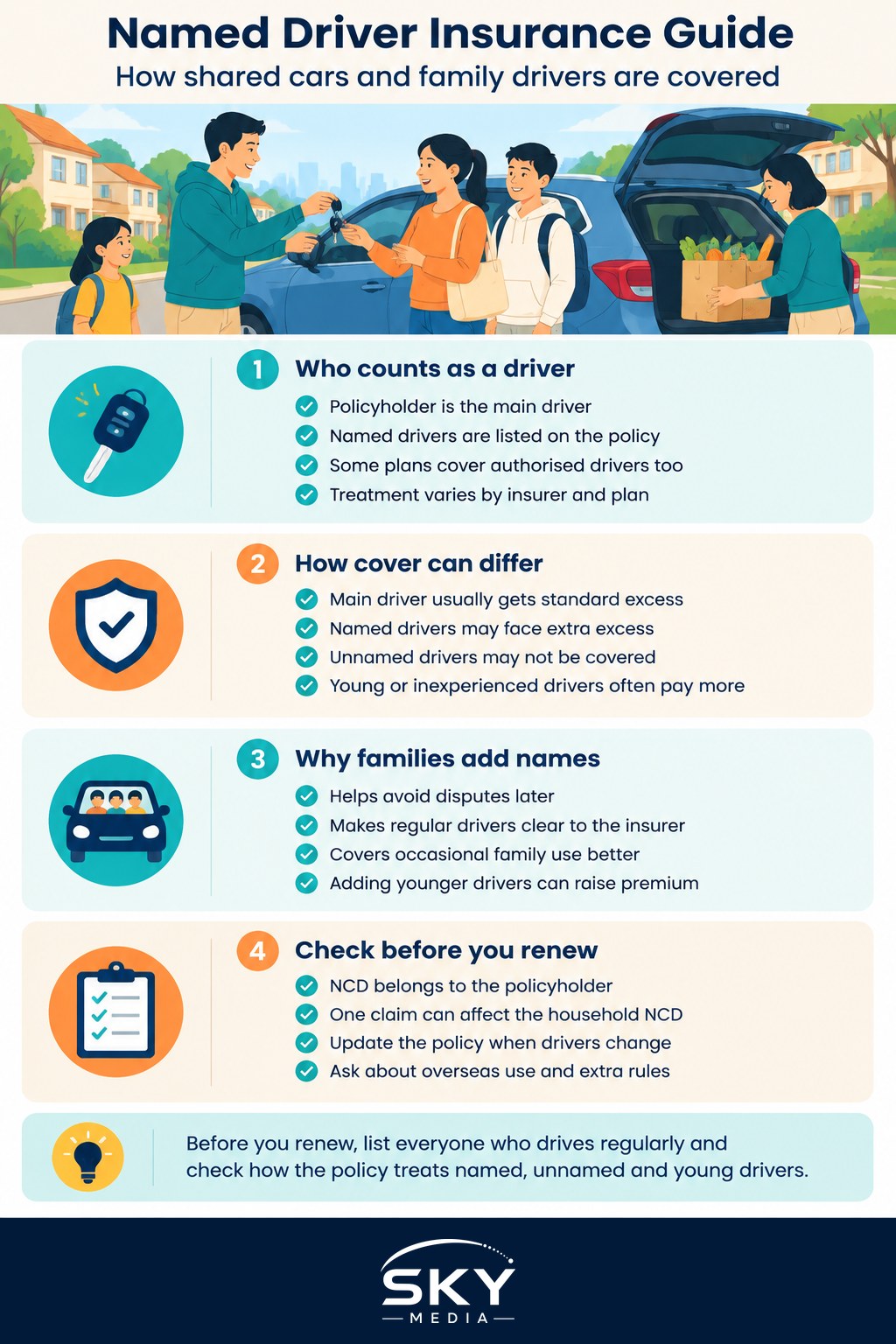
What a Named Driver Is
When you buy car insurance, the person who takes out the policy is the policyholder, usually also the main driver. A named driver is any additional person you list on the policy as someone who will drive the car. Insurers ask for their details, such as age, driving experience and claims history, and use these when pricing the policy.
Policies typically recognise three broad groups:
- The policyholder or main driver, who is the primary user of the car.
- Named drivers, who are listed on the policy by name.
- Unnamed or authorised drivers, who are not listed but are driving with the policyholder’s permission.
How each group is treated varies a lot between insurers and plans. Some policies cover any authorised driver who meets certain conditions. Others restrict cover to the policyholder and named drivers only, often in exchange for a lower premium.
How Cover Differs Between Driver Types
The main differences usually show up in the excess, which is the amount you pay yourself before the insurer pays the rest of a claim.
| Driver type | Typical treatment | What to check in your policy |
|---|---|---|
| Policyholder or main driver | Standard excess applies | The standard excess amount and any conditions |
| Named driver | Usually standard excess; extra excess may apply if young or inexperienced | Age and experience thresholds for additional excess |
| Unnamed authorised driver | Often an additional excess, or no cover under some plans | Whether unnamed drivers are covered at all, and the extra excess |
| Young or inexperienced driver | Additional excess commonly applies, named or not | How your insurer defines young and inexperienced |
| Driver not authorised by you | Generally not covered for your own car’s damage | Exclusions and third-party obligations under the law |
The exact amounts and age or experience definitions differ by insurer, so read the policy schedule carefully rather than relying on what a friend’s policy says.
Why Families Add Named Drivers
Lower out-of-pocket costs if something happens. If your adult child is a named driver and has an accident, the claim may be handled with a lower excess than if they were an unnamed driver.
Clear, honest declarations. Insurers price the policy on who is expected to drive. Listing everyone who drives regularly avoids disputes later.
Peace of mind with occasional drivers. A grandparent who drives a few times a month, or a spouse who borrows the car for errands, is properly accounted for.
Adding a young or newly qualified driver can raise the premium. That is the trade-off for clearer cover. If a new driver in the family is still building confidence, our guide to driving tips for new drivers in Singapore is a useful starting point.
Named Drivers and Your No Claim Discount
The No Claim Discount (NCD) is the discount on your premium that builds up for each claim-free year. It belongs to the policyholder, not the named drivers. If a named driver causes an accident and a claim is made on your policy, your NCD can be affected, depending on the claim and whether your plan includes NCD protection.
Some insurers offer NCD protector add-ons, but the conditions vary. Read our explainer on the No Claim Discount for how NCD works in general, and check your policy for the specific rules.
This is one reason families think carefully about who drives. A single claim by a less experienced driver can affect the household’s premium for several years.
Common Mistakes With Shared Cars
- Not declaring a regular driver. If someone drives your car often, insurers generally expect them to be declared. Leaving them off to save on premium can lead to problems if a claim is made.
- Naming the wrong main driver. Listing an older parent as the main driver when a young adult actually uses the car most is misrepresentation. Insurers can investigate and may reject a claim or void the policy.
- Assuming all policies cover any driver. Some cheaper plans cover only named drivers. Lending the car to a friend could leave you without cover for your own car’s damage.
- Forgetting about overseas driving. If you drive into Malaysia, check whether your policy extends there and whether named driver rules apply the same way.
- Not updating the policy. Children get licences, relatives move in, helpers or caregivers start driving. Update your insurer when the regular drivers change, not at renewal.
How to Add or Change a Named Driver
The process is usually straightforward:
- Contact your insurer or agent, or log in to the insurer’s online portal.
- Provide the driver’s full name, NRIC or FIN, date of birth, licence date and claims history.
- Ask how the change affects your premium and excess.
- Get the updated policy schedule or endorsement in writing before that person drives.
Some changes take effect immediately; others may need approval. Confirm the effective date so there is no gap in cover.
Questions to Ask Before You Renew
- Who will drive the car regularly over the next year?
- Does this plan cover unnamed authorised drivers, and at what excess?
- How does the insurer define young and inexperienced drivers?
- Is there a limit on the number of named drivers?
- What happens to my NCD if a named driver makes a claim?
- Are there restrictions for private-hire use or overseas driving?
If an older family member is still driving, it is also worth having an honest conversation about their confidence on the road. Our article on elderly drivers and when to stop may help.
Named driver cover is ultimately about matching your policy to how your family really uses the car. Spend ten minutes with your policy schedule, list who drives, and you will know exactly where you stand if something goes wrong.
Frequently Asked Questions
Is it cheaper to name only one driver on my car insurance? It can lower the premium, but it is risky if others actually drive the car. Policies that cover only listed drivers may leave you without cover for your own car’s damage when someone else is at the wheel. Compare quotes and be honest about who drives regularly.
Can my domestic helper or a friend drive my car if they are not named? Only if your policy allows unnamed authorised drivers, and even then an extra excess often applies. Some plans cover named drivers only. Check your policy wording before lending the car, since an accident could otherwise leave you paying for the repairs.
What happens if my son or daughter has an accident while driving my car? A claim is made under your policy, so you pay the applicable excess, and your No Claim Discount may be affected. An extra excess for young or inexperienced drivers can also apply. Whether the child was named matters, so check your schedule and speak to your insurer.
Does adding a young driver to my car insurance raise the premium? Usually it does, because insurers price in the age and experience of everyone listed. The increase varies by insurer and plan. Get quotes with and without the new driver, and ask how the insurer defines young and inexperienced before you decide.
Can I add a named driver in the middle of my policy term? Often yes. Contact your insurer or agent with the driver’s details, ask how the premium and excess change, and get the updated schedule in writing. Confirm the effective date, and do not let that person drive until the change is confirmed.