

Before synthetic dyes existed, every colour on cloth came from plants, roots, insects or minerals. Natural dyeing with plants is still a satisfying craft today, and you do not need a studio to try it. Many of the best starter dyes are already in a Singapore kitchen: onion skins from the wet market, butterfly pea flowers used for nasi kerabu and kueh, and avocado pits or turmeric. Indigo, the classic blue, is a step up but very doable at home.
This guide focuses on plant-based dyeing in an ordinary HDB kitchen. If you want bright, predictable colours and patterns from synthetic dye kits, our tie-dye and fabric dyeing guide covers that approach instead.
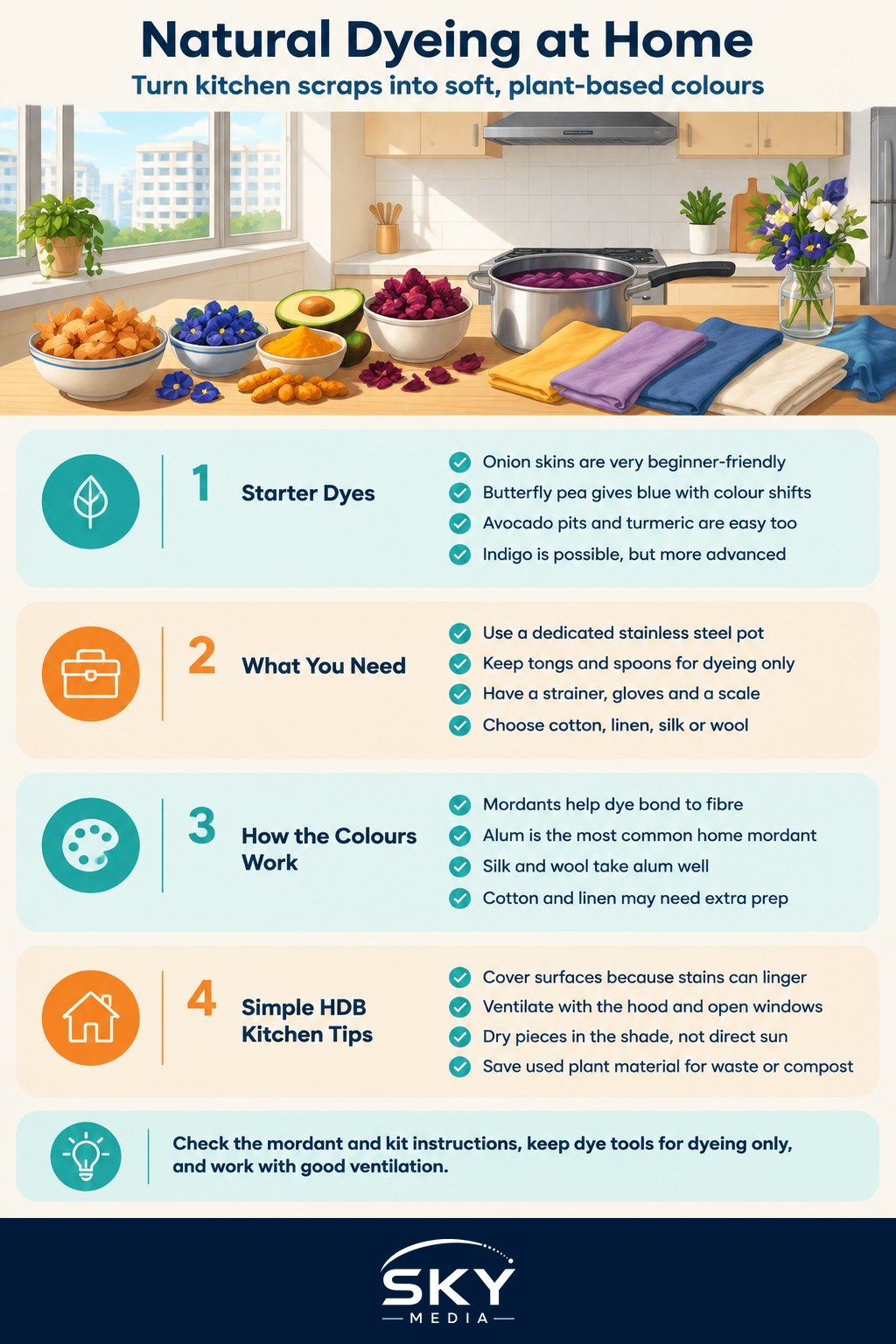
What You Need to Get Started
Natural dyeing needs very little specialist equipment, but some tools should be kept for dyeing only and never returned to food use.
- A dedicated stainless steel pot. Aluminium and iron pots react with dyes and change the colour. Buy a cheap stainless pot just for dyeing.
- Tongs or a wooden spoon reserved for dyeing.
- A strainer and old cloth for filtering dye baths.
- Rubber gloves to protect your hands.
- A kitchen scale for weighing fabric and mordant.
- Natural fibre fabric or yarn. Cotton, linen, silk and wool take natural dyes best. Polyester and most synthetic blends barely absorb plant colour.
- A mordant, explained below.
Wash new fabric first with a mild detergent to remove factory finishes, which block dye. This step is called scouring.
Understanding Mordants
A mordant is a substance that helps dye bond to fibre. Without one, many plant colours wash out or fade quickly in sunlight. The most common home mordant is alum (potassium aluminium sulphate), which is sold as a craft or pickling supply. Other options include soy milk for cotton, and iron (often called “iron water”) for darkening colours.
Fibres behave differently:
- Protein fibres (silk, wool) bond well with alum on its own.
- Cellulose fibres (cotton, linen) usually need an extra step, such as a tannin soak or a soy milk pre-treatment, before or alongside the alum.
Follow the instructions on the mordant you buy, including the suggested amount relative to fabric weight. Work in a ventilated kitchen, wear gloves, keep mordants labelled and out of reach of children and pets, and never use dyeing pots or utensils for food afterwards.
Comparing Common Kitchen and Plant Dyes
Here is what to expect from the dyes most beginners try first. Results vary with fibre, water, mordant and how long you dye, so treat these as starting points.
| Dye source | Typical colour | Mordant needed | Difficulty | Notes |
|---|---|---|---|---|
| Onion skins (brown or red) | Golden yellow to orange and rust | Alum improves fastness, but colour takes even without | Easy | The most reliable beginner dye, very forgiving |
| Butterfly pea flowers | Blue, shifting to purple or pink with acid | Alum recommended | Easy to moderate | Colour can be less lightfast, sensitive to pH |
| Avocado pits and skins | Soft pink to peach | Optional | Easy | Needs long simmering for deeper shades |
| Turmeric | Bright yellow | Optional | Easy | Vivid but fades in sunlight, stains hands and benchtops |
| Indigo | Blue | No mordant, uses a reduction vat | Moderate to advanced | Colour builds with repeated dips and oxidises in air |
Dyeing With Onion Skins, Step by Step
Onion skins are the perfect first project. Save dry outer skins in a paper bag for a few weeks, or ask a market stallholder if they have spare peelings.
- Scour and mordant your fabric as above. For a first try, a small cotton tote, napkin or silk scarf works well.
- Make the dye bath. Put the onion skins in your dyeing pot, cover generously with water and simmer gently for around an hour until the water turns deep amber. Turn off the heat and strain out the skins.
- Wet the fabric in plain water first so the dye spreads evenly.
- Dye. Add the damp fabric to the dye bath and heat gently, stirring now and then to avoid patches. Keep it below a rolling boil. The longer it stays in, the deeper the colour.
- Cool and rinse. Let the fabric cool in the bath, ideally overnight for a richer shade, then rinse in cool water until the water runs clear.
- Dry in the shade. Direct sun can fade natural dyes quickly.
Red onion skins tend to give warmer rust and brown tones. A small amount of iron water added at the end shifts the colour towards olive or khaki.
Butterfly Pea Blues and Colour Shifts
Butterfly pea flower (bunga telang) is familiar in Singapore from blue rice and kueh. On fabric it gives a soft blue that reacts to acidity, which is fun to experiment with.
- Steep dried or fresh flowers in hot water to make a blue bath, then dye mordanted silk or wool, which takes this colour more easily than cotton.
- Add a little lemon juice or vinegar to part of the bath and watch it turn violet or pink.
- Dip-dye one end of a scarf to create a gradient.
Butterfly pea colour can fade faster than onion, especially in sunlight, so it suits decorative pieces more than everyday clothes.
Trying Indigo at Home
Indigo works differently from other plant dyes. The dye does not dissolve in plain water, so it must be “reduced” in a special vat that removes oxygen. When fabric comes out of the vat, it looks greenish yellow, then turns blue as it meets the air. Each dip and air exposure deepens the shade.
Beginners usually start with a pre-reduced indigo kit, which includes the indigo and reducing agents with instructions. Use it outdoors on a ventilated service yard or near an open window, follow the kit’s safety guidance carefully, wear gloves and keep children and pets away. Shibori techniques, where fabric is folded, clamped or stitched before dyeing, make striking patterns with indigo.
Making It Work in an HDB Kitchen
- Protect surfaces. Cover benchtops with old newspaper or a plastic sheet, since turmeric and indigo stain.
- Ventilate. Turn on the hood and open windows while simmering.
- Mind your neighbours. Onion simmering has a strong smell. Our tips on how to remove cooking smells help afterwards.
- Dispose of spent baths sensibly. Plant material can go out with general waste or into compost. Pour small amounts of used dye down the sink with plenty of water, and follow the disposal instructions on any mordant or indigo kit.
- Dry indoors on rainy days. Hang dyed pieces on a rack away from direct sun.
Caring for Naturally Dyed Fabric
Wash naturally dyed items by hand in cool water with a gentle, pH-neutral soap, dry them in the shade, and expect some gradual softening of colour over time. Many dyers enjoy this gentle fading as part of the charm. If a colour fades too much, you can simply over-dye the piece.
Natural dyeing pairs well with other low-waste habits. Once you start saving onion skins and avocado pits, you may also enjoy regrowing kitchen scraps or handling food scraps without a garden.
Frequently Asked Questions
Can I dye polyester or synthetic blends with plant dyes? Not well. Polyester and most synthetic blends barely absorb plant colour, so stick to natural fibres such as cotton, linen, silk and wool. Wash new fabric first to remove factory finishes that block dye.
Why shouldn’t I use my everyday cooking pot for natural dyeing? Aluminium and iron pots react with dyes and change the colour, and dyeing pots and utensils should never return to food use. Buy a cheap stainless steel pot just for dyeing, and keep mordants labelled and away from children and pets.
How do I stop natural dye from fading in sunlight and washing? A mordant such as alum helps dye bond to fibre. Dry pieces in the shade, hand wash in cool water with gentle pH-neutral soap, and expect gradual softening. If a colour fades too much, you can over-dye the piece.
Is indigo hard to do at home compared with onion skins? It is a step up. Indigo needs a reduction vat, so beginners usually start with a pre-reduced kit. Use it in a ventilated spot, follow the kit’s safety guidance, wear gloves and keep children and pets away.
How do I dispose of leftover dye baths from an HDB kitchen? Plant material can go out with general waste or into compost. Pour small amounts of used dye down the sink with plenty of water, and follow the disposal instructions on any mordant or indigo kit.