

The long year-end break is a good time to get children outside and curious about the natural world. Singapore is small, but it has nature reserves, mangroves, parks, coastal areas and gardens, and a range of organised activities designed for young explorers. Nature programmes for kids in Singapore range from free guided walks run by volunteers to paid multi-day camps, and from casual park outings to real citizen science projects where children help collect data.
This guide explains the main types of programmes, how to find and choose one, what to prepare, and how to keep the learning going at home. Programme names, schedules and registration methods change often, so always check the current details with the organiser before you plan around a date.
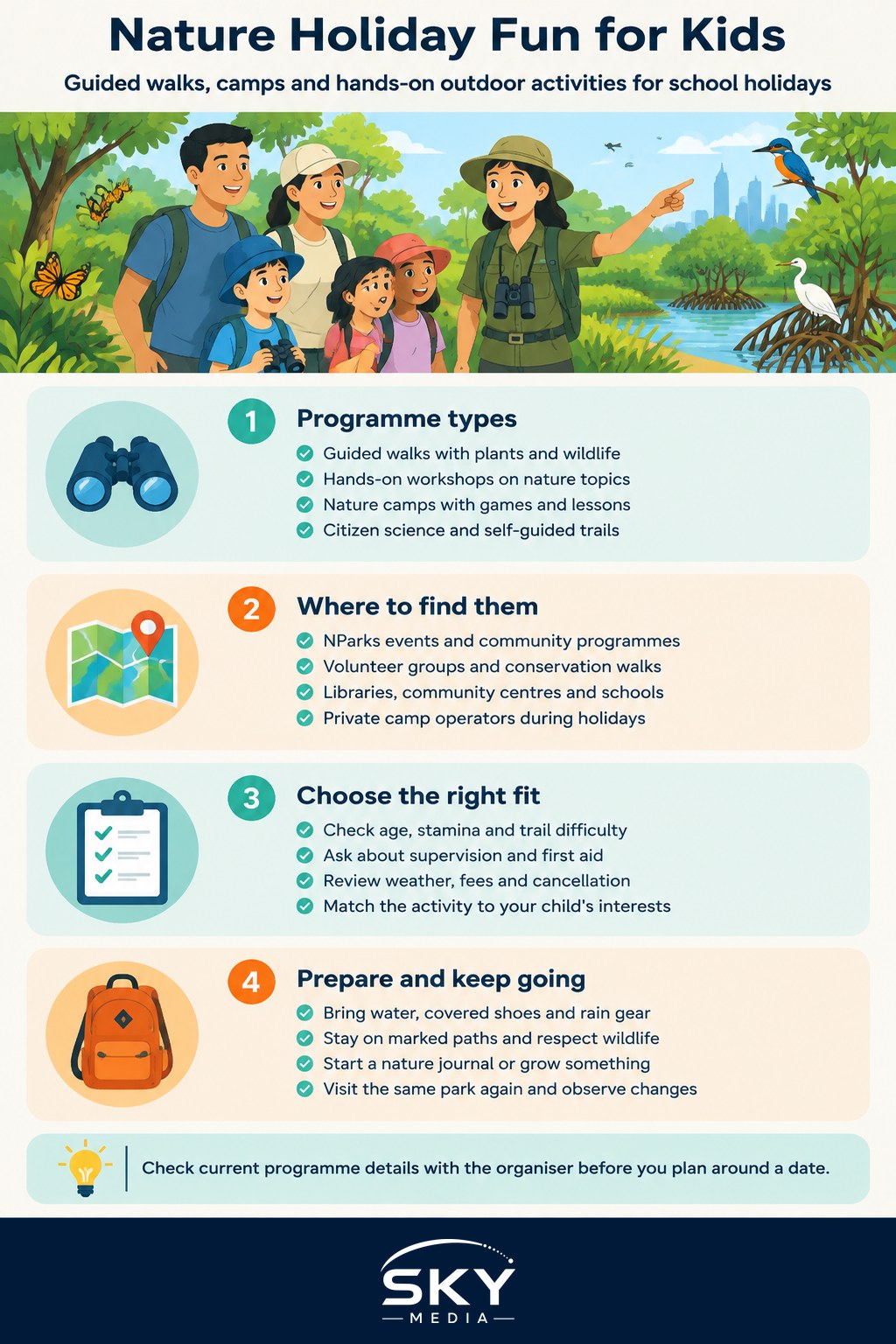
Types of Nature Programmes for Children
Most options fall into a handful of categories. Knowing the differences helps you match a programme to your child’s age, stamina and interests.
- Guided walks. A trained guide or volunteer leads a group along a trail, pointing out plants, insects, birds and other wildlife. Walks usually last a couple of hours and suit families who want to explore together.
- Hands-on workshops. Short sessions on topics such as composting, seed planting, insect spotting or making nature crafts. These often take place at gardens, community spaces or libraries and suit younger children.
- Nature camps. Day camps or multi-day programmes, usually run by private operators or non-profit groups, that combine outdoor exploration, games and lessons. Children attend without parents.
- Citizen science activities. Children help with real data collection, such as counting birds, recording butterflies or surveying shoreline life. These suit older primary and secondary students who enjoy a sense of purpose.
- Self-guided trails and activity sheets. Some parks and gardens offer trail guides, quiz sheets or signage designed for families to explore at their own pace.
| Programme type | Typical age fit | Parent involvement | What to check before joining |
|---|---|---|---|
| Guided walk | Around 6 and up, with adults | Parents usually join | Minimum age, walk difficulty, meeting point |
| Hands-on workshop | Preschool to lower primary | Often parent-accompanied | Materials provided, group size, fees if any |
| Nature camp | Primary school ages | Drop-off | Safety ratios, first aid, cancellation terms |
| Citizen science activity | Upper primary and older | Varies | Training needed, commitment, weather plans |
Where to Find Programmes in Singapore
You do not need to rely on one source. Families usually find the best options by checking a few channels at the start of each holiday period, because popular sessions fill quickly.
- NParks. The National Parks Board runs and publicises guided walks, talks, workshops and family activities at parks, gardens and nature reserves. Its events listings and community programmes are a good first stop. Our guide to free guided nature walks in Singapore explains how these sessions typically work and how to sign up.
- Community and interest groups. Volunteer-run nature societies and conservation groups organise walks, shore explorations and surveys, some of which welcome families with children.
- Libraries. Public libraries regularly hold children’s programmes, and some have nature or science themes. See our overview of public library programmes and activities for how to find them.
- Community centres. Holiday activities through community centres sometimes include nature outings or gardening sessions.
- Private camp operators. Many enrichment providers run outdoor and nature camps during school holidays. Quality varies, so use the checks below before paying.
- Schools. Some schools share information about holiday programmes from partner organisations, so keep an eye on school communications.
Citizen Science: Real Projects Children Can Join
Citizen science means ordinary members of the public helping scientists gather information. It is one of the most rewarding ways for children to connect with nature, because their observations contribute to something bigger.
Common activities include:
- Bird and butterfly counts. Participants record what they see in a set area over a set time. Children practise patience, observation and identification.
- Shoreline and intertidal surveys. Groups record marine life on rocky shores or seagrass areas during low tide, under the guidance of experienced leaders.
- Biodiversity recording apps. Families can photograph plants, insects and animals and upload observations to recording platforms. Check each platform’s age requirements and have an adult manage the account for younger children.
- Backyard and balcony observations. Even an HDB corridor garden attracts insects and birds that children can note in a simple journal.
When joining an organised survey, ask whether there is a short briefing for beginners, what equipment is supplied, and whether children of your child’s age can take part. Intertidal activities depend on tide times, so they may start very early in the morning or in the evening.
Choosing the Right Programme for Your Child
A good fit matters more than a famous venue. Ask yourself and the organiser a few questions before signing up.
- Age and stamina. Is the walk or activity suitable for your child’s age? Some trails involve long distances, slopes or uneven ground.
- Group size and supervision. For drop-off camps, ask about the ratio of instructors to children and whether staff are trained in first aid.
- Safety plans. How does the organiser handle lightning, heavy rain and heat? Outdoor activities in Singapore are often paused when there is a lightning risk.
- Content and approach. Does the programme emphasise observation and respect for wildlife rather than collecting or handling animals?
- Cost and cancellation. Check fees, what is included, and the refund policy if your plans change or the session is cancelled because of weather.
- Your child’s interest. A child who loves insects may enjoy a bug-focused workshop more than a general walk.
If you want to combine nature with other activities, our roundup of school holiday camps and activities covers wider options.
Preparing for a Nature Outing With Kids
Good preparation makes the difference between a memorable morning and a cranky one.
What to bring:
- Water bottles for everyone, refilled before you start
- Hats, light long-sleeved clothing or sunscreen, and insect repellent
- Comfortable covered shoes with good grip; avoid slippers on trails
- A small towel and a change of clothes, especially for shore or wet trails
- A simple notebook, pencil and magnifying glass for younger explorers
- A light raincoat or poncho
Safety reminders:
- Plan around the heat. Mornings are usually cooler and more pleasant.
- Stay on marked paths and boardwalks, both for safety and to protect plants and animals.
- Do not feed or touch wildlife, including monkeys and birds. Keep food packed away.
- Do not collect plants, shells or animals. Follow NParks rules for the area you are visiting.
- Watch for weather changes and head for shelter if lightning is likely.
- For shoreline activities, go only with guided groups that track tide conditions.
Talk to children beforehand about what they might see and the “look, don’t touch” rule. Setting expectations early means less disappointment if they do not spot a particular animal.
Keeping the Curiosity Going at Home
The best programmes spark interest that lasts beyond the holidays. A few simple activities help that happen.
- Start a nature journal. Children can draw or note what they saw, the date and the weather. Over time it becomes a record of their own discoveries.
- Grow something. A pot of herbs, a few seedlings or a simple worm bin teaches patience and responsibility.
- Visit the same park every month. Seeing how one place changes builds observation skills.
- Read and research together. Use library books on local wildlife to identify what you photographed or sketched.
- Join a recurring activity. If a child enjoyed a citizen science session, look for regular opportunities through the same group.
Nature programmes for kids in Singapore offer something different from indoor enrichment: fresh air, real discovery and a sense of care for the environment. Start with a short guided walk or a family workshop, see what excites your child, and build from there.
Official sources: National Parks Board (NParks)
Further reading: Teaching Kids Photography in the School Holidays: Cameras and Simple Projects · Booking School Holiday Sports Programmes for Kids at ActiveSG