
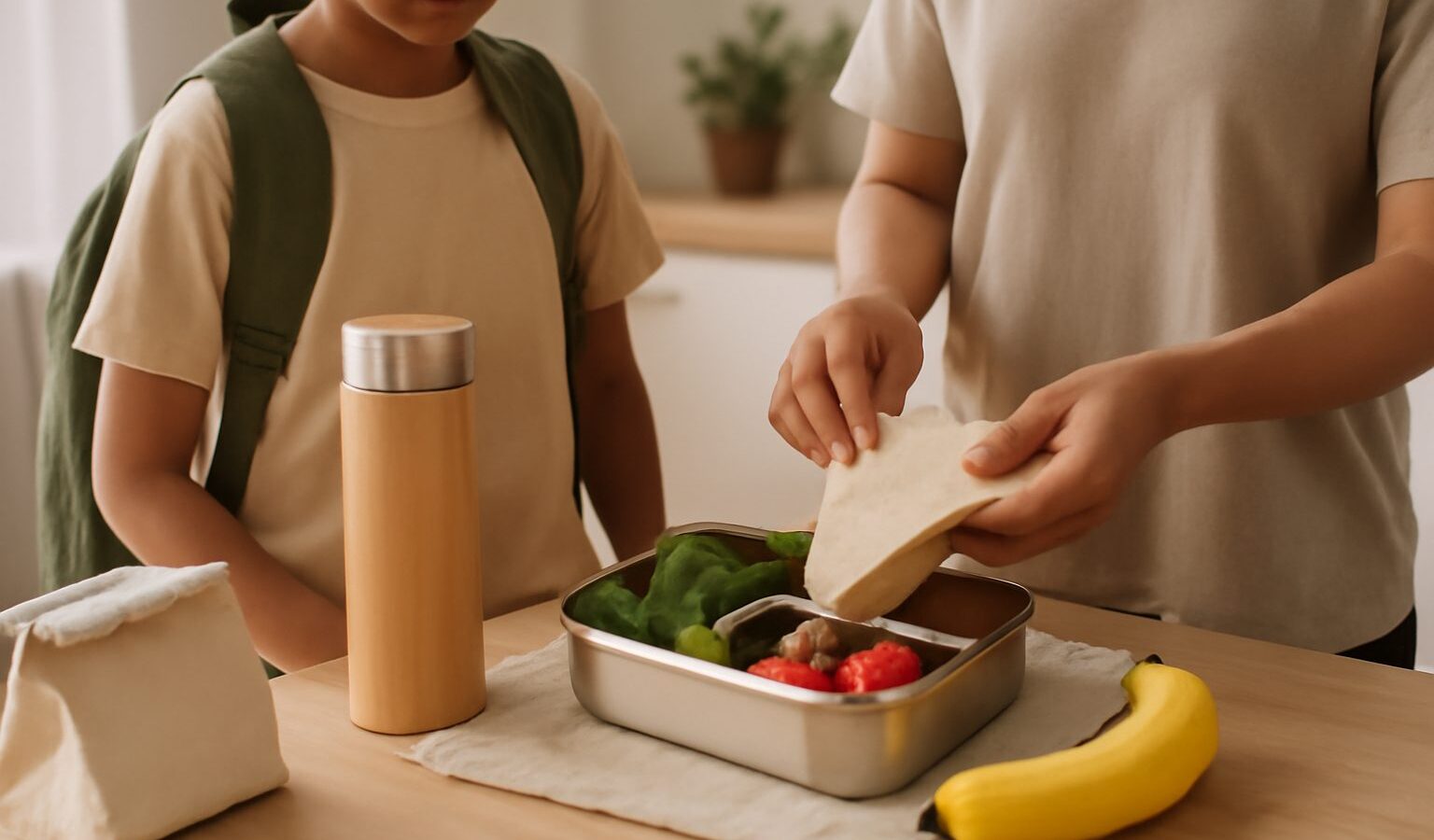
Eco lunch packing in Singapore is easier than it sounds. Whether your child takes a snack box to recess, a full lunch to student care or a meal for CCA days, the packaging adds up quickly: cling film, foil, plastic bags, juice packets and disposable cutlery, five days a week, for years. Switching to a low-waste routine cuts that rubbish down sharply and often saves money over time.
This guide focuses on the packing side: what to buy, what to swap and how to keep food safe in our heat. For ideas on what to put inside, our guide to packing a healthy school lunchbox kids will eat covers the nutrition and fussy-eater angle.
Start With What You Already Have
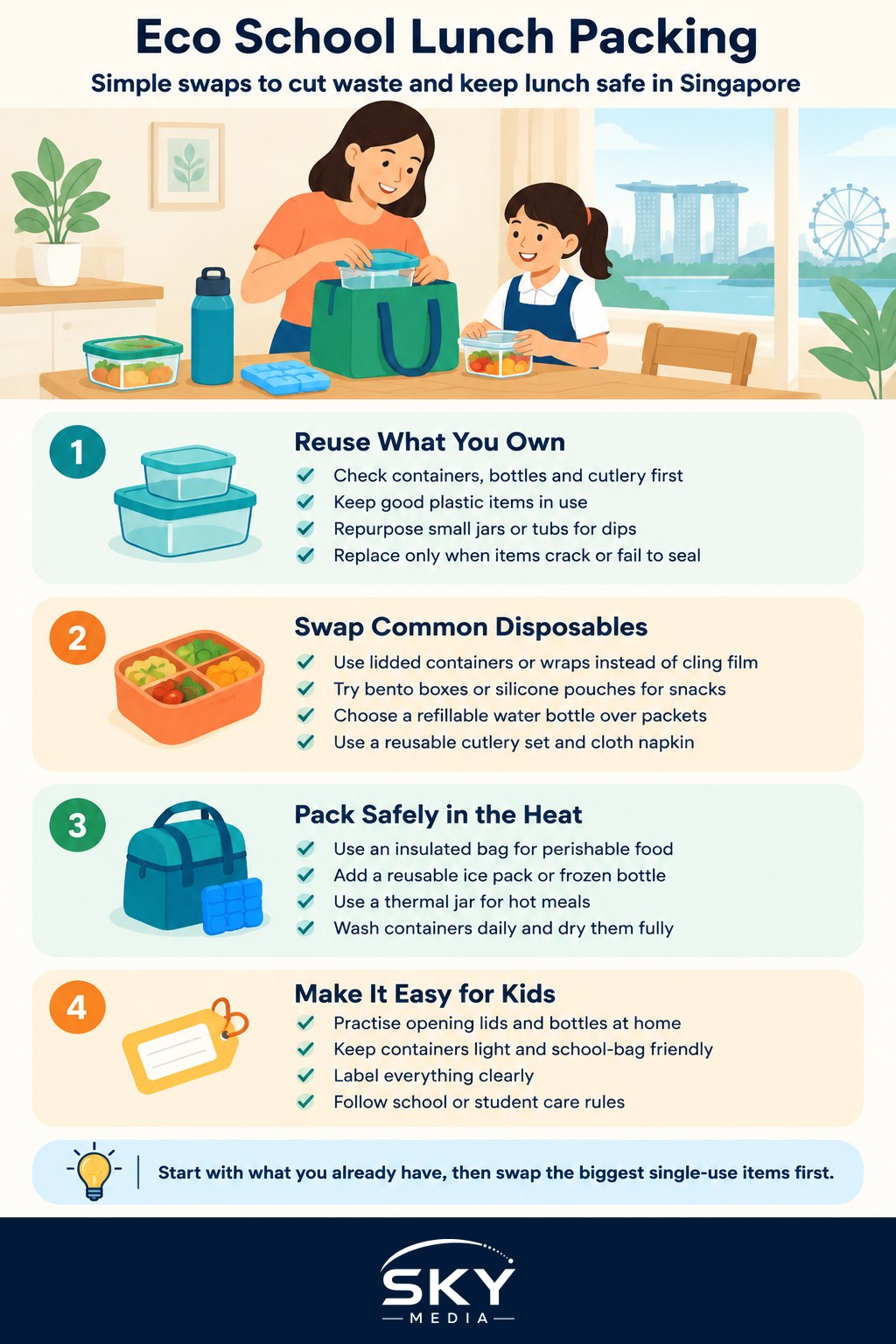
The most eco-friendly lunchbox is often the one already in your kitchen cabinet. Before buying anything new:
- Gather the containers, bottles and cutlery you own and check which ones seal well and are the right size.
- Keep plastic containers in use if they are in good condition. Throwing them out to buy “greener” ones creates waste too.
- Repurpose small jars or tubs for dips and sauces at home, but think twice about glass for younger children, as it can break.
Only replace items when they crack, warp, stain badly or no longer seal. When you do buy, choose durable pieces that will last several school years.
Reusable Swaps for Common Single-Use Items
Most lunch waste comes from a handful of items. Here is how they compare with reusable options.
| Single-use item | Reusable swap | Things to know |
|---|---|---|
| Cling film and foil | Lidded containers, beeswax or silicone wraps | Wraps suit sandwiches and fruit; avoid beeswax with hot food |
| Small plastic snack bags | Divided bento boxes or silicone pouches | Dividers keep wet and dry food apart without extra packaging |
| Juice packets and bottled drinks | Refillable water bottle | Choose one your child can open and close easily |
| Disposable cutlery and straws | A child-sized reusable cutlery set in a case | Label it, as cutlery is easily lost |
| Paper napkins | Small cloth napkin or handkerchief | Wash with the regular laundry |
| Plastic carrier bag | Washable lunch bag, ideally insulated | Pick one that fits in the school bag |
Stainless steel containers are popular because they are durable and do not hold smells, though they cannot go in the microwave. Food-grade plastic and silicone are lighter and cheaper. There is no single right answer; pick what suits your child’s age and routine.
Keeping Food Safe in Singapore’s Heat
Food can sit in a school bag for hours in warm, humid conditions, so food safety matters as much as waste reduction:
- Use an insulated bag for anything perishable, such as rice, noodles, eggs, meat or dairy.
- Add a cold element. A reusable ice pack, or a frozen water bottle that thaws by recess, helps keep food cool.
- Use a thermal food jar for hot meals. Pre-heat it with hot water before adding food so it holds its temperature longer.
- Pack dry or sturdy foods if the meal will wait a long time, such as wholemeal sandwiches, cut fruit with skins like grapes, or plain crackers.
- Wash containers daily with hot soapy water and let them dry fully before the next use, paying attention to lid seals where moisture can hide.
If you are unsure how long a particular food keeps, follow general guidance from the Singapore Food Agency (SFA) and err on the side of caution.
Making It Work for Your Child
Even the best eco setup fails if your child cannot use it. A few tips:
- Practise at home. Let younger children open and close lids, bottles and pouches before school starts. If they struggle, they may give up and bring the food home uneaten.
- Keep it light. Primary school bags are already heavy. Choose lightweight containers where possible.
- Label everything. Name stickers or engraved labels help lost items find their way back.
- Check school rules. Some schools or student care centres have guidelines on what can be brought in, such as food restrictions or limits on certain containers. Follow them.
- Pack the right amount. Overpacking leads to food waste. Ask your child what they usually finish and adjust.
- Plan for canteen days. On days your child buys food from the canteen, a reusable bottle and a small container for snacks still help.
Reducing Food Waste, Not Just Packaging
Low-waste lunches are also about wasting less food:
- Cook a little extra at dinner and repack it as the next day’s lunch.
- Use up fruit that is nearly overripe as cut snacks or in muffins.
- Ask your child to bring home what they did not eat, so you can see patterns and adjust portions.
- Compost peels and scraps if your estate or home setup allows it, or check whether your town council or community garden runs a composting initiative.
Building the Habit as a Family
Eco lunch packing works best when it becomes a family routine rather than a parent’s chore. Involve children in choosing their own lunch bag or bottle, let older kids pack their own snacks, and explain simply why you are cutting down on plastic. Children who understand the reason are more likely to bring containers home instead of throwing them away. Our guide to teaching your family eco-friendly habits has more ideas for making green choices stick at home.
A simple nightly routine helps:
- Wash and dry containers after school.
- Refill the water bottle and put the ice pack back in the freezer.
- Prepare dry items the night before; add perishables in the morning.
- Keep a spare set of containers for days when one goes missing.
Budget-Friendly Ways to Get Started
You do not need an expensive matching set. To keep costs low:
- Start with one good water bottle and one reusable container, then add pieces over time.
- Look for durable items rather than novelty designs that children may outgrow.
- Ask relatives or friends with older children if they have spare containers or bags.
- Replace parts such as lids or seals where possible instead of the whole item.
Over a school year, cutting out cling film, foil, snack bags and packet drinks can make a noticeable difference to both your household rubbish and your grocery bill.
Getting the Routine Right
Eco-friendly lunch packing is about steady, realistic habits rather than perfection. Reuse what you have, swap the biggest single-use items first, keep food safe in the heat and involve your child in the process. Once the routine settles in, packing a low-waste lunch takes no longer than the old way, and your family produces far less rubbish every school week.
Further reading: Starting an Eco Club or Sustainability Project at School · Eco-Friendly Stationery and School Supplies in Singapore