
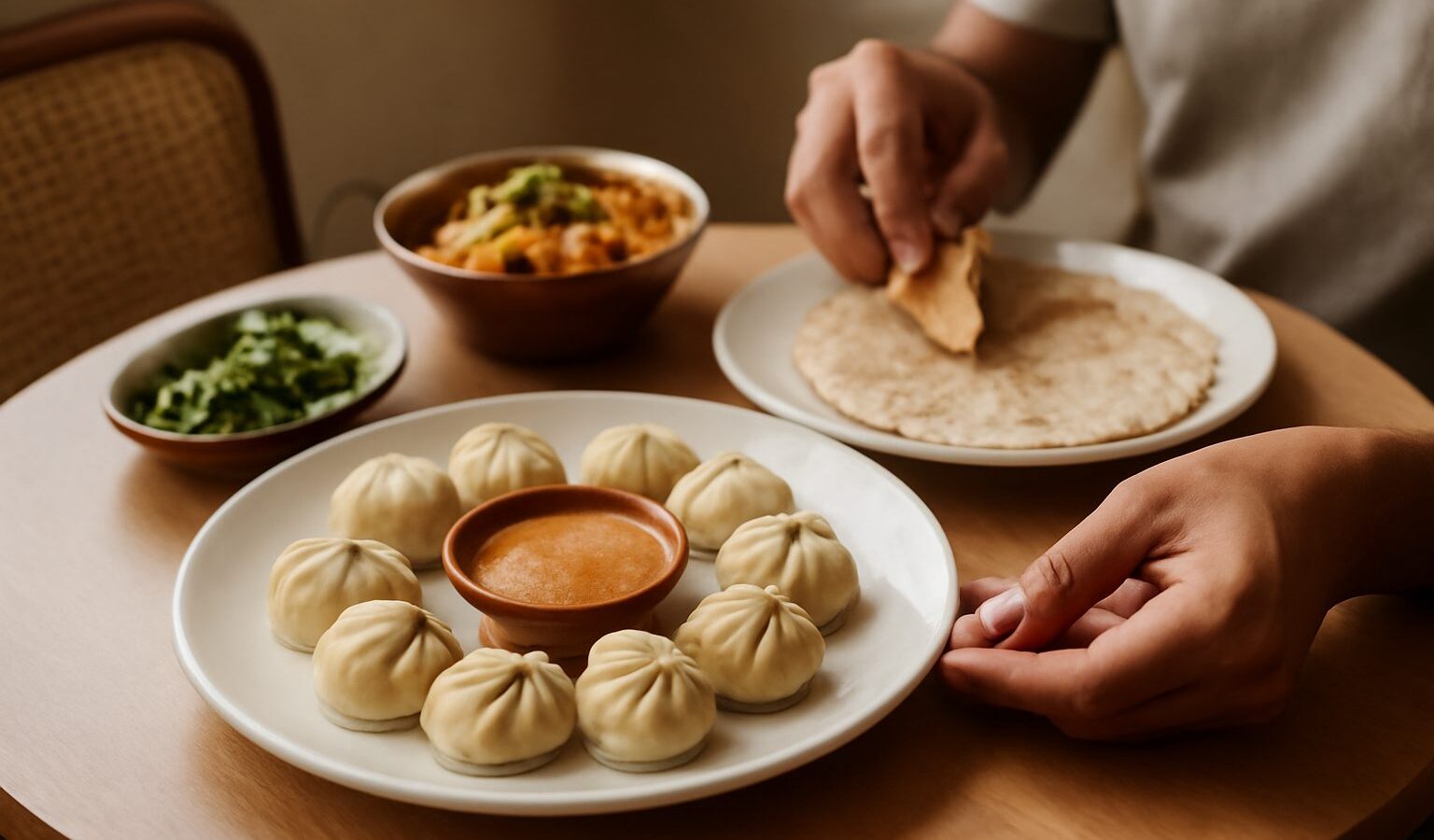
Tucked between the world’s tallest mountains, Nepal has a cuisine built for comfort and warmth, and Nepali food in Singapore is one of the city’s quietly rewarding discoveries. It sits at a delicious crossroads, drawing on Indian spice, Tibetan simplicity and its own mountain traditions to produce food that is nourishing rather than flashy. If you have only ever tried a momo, there is a whole table waiting. This guide walks through the key dishes, explains how a Nepali meal is put together, and offers tips on ordering and enjoying it.
A Cuisine Shaped by the Mountains
Nepali cooking reflects its geography. In the warmer lowlands, rice, lentils and vegetables dominate, seasoned with the same aromatic spices you meet across the subcontinent. Higher up, where the air is thin and crops are scarce, the food turns hearty and simple, leaning on wheat, barley, potatoes and warming broths that suit the cold. Add the influence of neighbouring Tibet, and you get the wider Himalayan table, a group of related cuisines that share dumplings, noodle soups and a love of comforting, restorative food.
The result is a kitchen that values balance over heat. Nepali food can carry a gentle warmth from chilli, but it rarely sets out to burn. Instead it aims for depth, letting spices, herbs and slow simmering do the work. It is respectful, homely cooking, and understanding that spirit is the key to enjoying it.
The Dishes to Know
A few dishes anchor almost any Nepali or Himalayan meal, and knowing them makes ordering easy.
- Momo: the famous dumplings, filled with minced meat or vegetables and either steamed or pan-fried, served with a tangy tomato and sesame dipping sauce called achar. They are the perfect starter and often the gateway dish.
- Dal bhat: the national comfort meal, a plate of steamed rice with a bowl of lentil soup, a vegetable curry, greens and pickles. It is wholesome, balanced and endlessly satisfying.
- Thukpa: a hearty Himalayan noodle soup with vegetables and meat in a warming broth, perfect on a rainy Singapore evening.
- Sel roti: a sweet, ring-shaped rice bread, crisp outside and soft within, often eaten at festivals and with tea.
- Choila: spiced grilled meat, smoky and punchy, a favourite from the Newar community and a great dish to share.
- Gundruk: fermented leafy greens turned into a tangy soup or side, a mountain staple that adds real depth.
If you are new to the cuisine, begin with momo and dal bhat. Between them they show off the two sides of Nepali eating, the moreish snack and the balanced full meal.
How a Nepali Meal Comes Together
The heart of everyday Nepali eating is dal bhat, and it works differently from a single-plate meal. Rather than one dish, you get several small components arranged around rice, and you mix and eat them together, taking a little curry with a little dal and a bit of pickle in each mouthful. In many places the dal and rice are refillable, which reflects the culture of hospitality behind the food.
Traditionally the meal is eaten with the right hand, though cutlery is always available and no one will mind if you use it. The idea is to combine flavours as you go, so nothing is meant to be eaten in strict isolation. Take your time, and let the balance of soft rice, savoury lentils, spiced vegetables and sharp pickle build across the plate.
Nepali Versus Indian Food
Because both cuisines share spices, visitors sometimes assume Nepali food is simply a regional Indian style. There are real overlaps, but the differences matter, and this table sorts them out.
| Feature | Nepali and Himalayan | North Indian |
|---|---|---|
| Spice level | Gentle to moderate, balanced | Often richer and more intense |
| Signature dish | Momo and dal bhat | Curries with naan or roti |
| Fats and dairy | Lighter, less cream and ghee | Frequent cream, butter and ghee |
| Staple format | Rice with many small sides | Breads alongside gravies |
| Mountain influence | Strong, via Tibetan dishes | Minimal |
Ordering, Sharing and Eating Well
A little know-how helps you get the best from a Nepali table, whether you are at a casual eatery in the heartlands or a small specialist kitchen tucked into a shophouse.
- Start with momo to share, then move to dal bhat or thukpa for the main event.
- Ask for the achar and pickles. The tangy, spicy condiments are central to the experience, not an optional extra.
- Mix as you eat. Dal bhat is designed to be combined, so do not treat each element as a separate course.
- Pace the chilli. Nepali food is usually mild to moderate, but some pickles and choila pack a punch, so taste before you pile it on.
- Finish with sweet, milky tea if it is offered, a fitting close to a homely meal.
On allergens, be aware that dumplings and breads contain gluten, some dishes use dairy or ghee, and sesame appears in dipping sauces, so tell the kitchen about any allergy before ordering.
Where to Find It in Singapore
Nepali and Himalayan food is a growing presence here, served in modest neighbourhood eateries, a few dedicated restaurants, and casual spots that also cater to the Nepali community. You are most likely to find it in the heartlands and in pockets of the city rather than in the big malls, so a little searching pays off. Because such eateries can open, close and change often, check current details and opening hours before you make the trip.
Look for kitchens that fold their momo by hand and cook dal bhat the traditional way, with proper refills and a spread of pickles. Those are the signs of a place that honours the cuisine rather than trimming it for convenience. Come with an open mind and a healthy appetite, and Nepali food in Singapore will reward you with some of the most comforting, quietly soulful eating in the city.
Explore more
If mountain and world flavours appeal, browse our guides to Persian and Iranian food in Singapore and the hearty comfort of American diners and soul food. For something closer to home, our look at Malaysian versus Singaporean food is a tasty next read.